Guides
Sudden confusion in older people: delirium
The Aldera team Published 5 October 2026

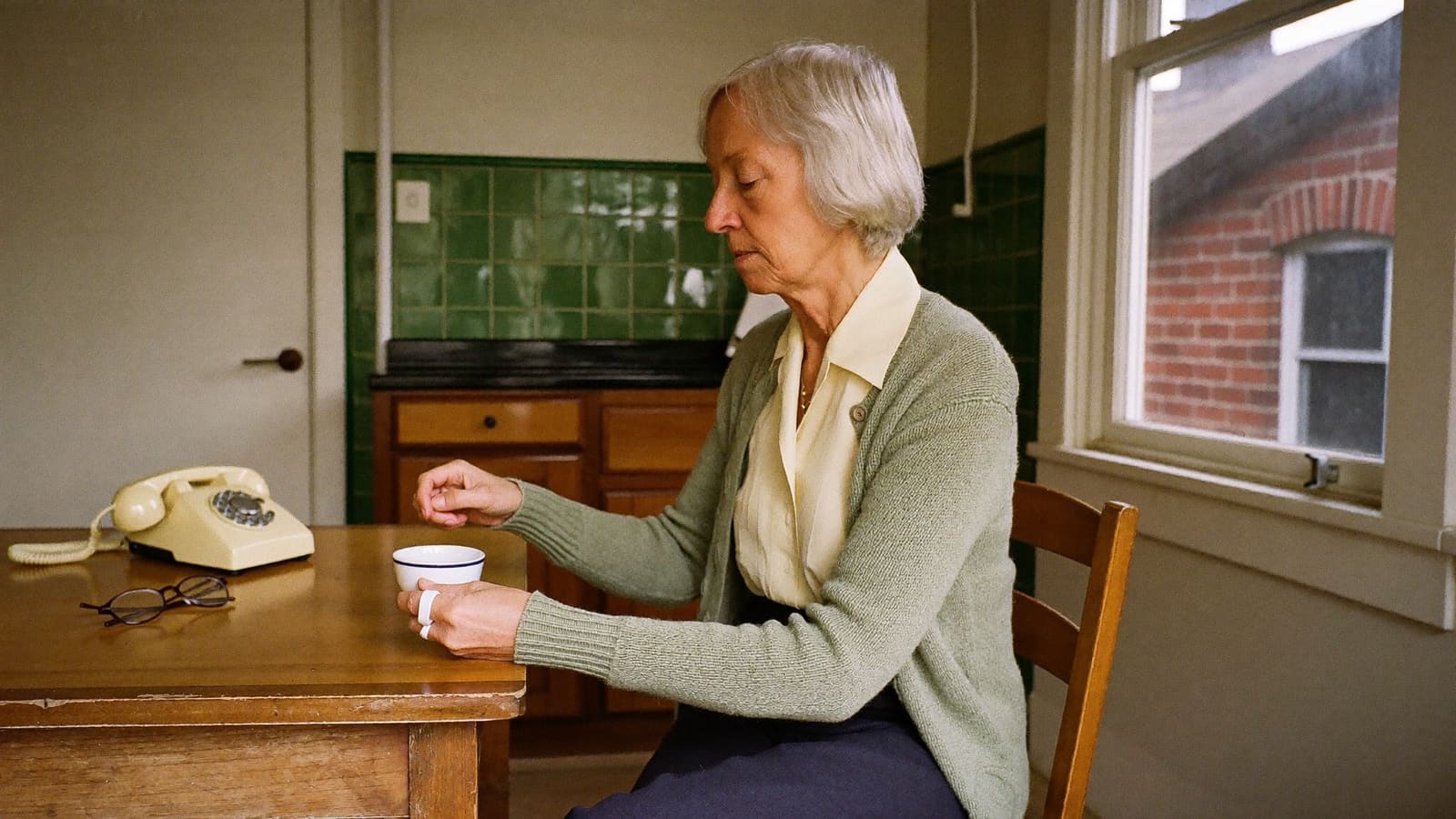
Illustrative. Does not depict Aldera clients or staff.
This is general information, not medical advice. If someone is suddenly very unwell, confused and you are worried, call 000.
You ring your father on a Thursday and he is not himself. He has the day wrong, he loses the thread halfway through a sentence, and he asks a question he asked five minutes ago. On Monday he was fine.
It is natural to assume this is ageing catching up, or the start of dementia. Often it is neither. A sudden change in thinking in an older person is frequently delirium, and delirium usually has a cause that can be found and treated.
What delirium looks like
Delirium is a sudden disturbance in attention and thinking. The things families tend to notice:
- It came on quickly, over hours or a few days, rather than creeping up over months.
- It comes and goes. Brighter in the morning, muddled by late afternoon, or the other way round.
- Trouble paying attention. Drifting off mid-conversation, unable to follow a TV programme they normally enjoy.
- Confusion about time and place.
- Changes in sleep. Awake at night, drowsy in the day.
- Seeing or hearing things that are not there, or being suspicious and frightened.
- Being unusually quiet, sleepy and withdrawn. This version is common and easy to miss.
The single most useful fact you can give a doctor is how the person was before. “She does her own crossword every morning and today she could not hold a pen to it” tells a clinician far more than “she seems confused”.
What causes it
Usually something in the body, and often more than one thing at once. Common triggers include:
- An infection, including a urinary or chest infection
- Not drinking enough
- A new medicine, a change of dose, or stopping something suddenly
- Constipation, or being unable to pass urine
- Pain that is not being managed
- A stay in hospital, especially after surgery
- Poor sleep, a fall, or a move to unfamiliar surroundings
This is why the response is a medical one. The confusion is a symptom, and the job is to find what is behind it.
What to do today
- Treat a sudden change as urgent. Ring the GP and ask to be seen that day. Say the words “sudden change in thinking”. Out of hours, or if they are very drowsy, cannot be woken properly, are breathing differently or seem seriously unwell, call 000.
- Bring the medicine list, including anything new from the last few weeks and anything bought over the counter.
- Write down what changed and when. If someone keeps a care diary, take it. If not, a few lines on paper.
- Stay with them if you can. A familiar face and voice is steadying, and you can tell the doctor what normal looks like.
Helping someone recover at home
Once the cause is being treated, some simple things support recovery and lower the chance of it happening again:
- Glasses on, hearing aids in. Not being able to see or hear properly makes confusion worse.
- Regular drinks through the day, and meals at the usual times.
- Daylight and activity in the day, dark and quiet at night, to help the body clock reset.
- Gentle orientation. Mention the day and what is happening next in ordinary conversation, rather than testing them.
- Familiar people and familiar things. Fewer strangers, and the same faces where possible.
- Getting up and moving, safely, as soon as the doctor says it is fine.
That last point about familiar faces is one of the reasons we work the way we do. A Care Circle of the same small group of support workers notices a sudden change because they know what normal looks like for that person. A worker who has seen someone every Tuesday for months can tell the Care Lead “he is not himself today” in a way a stranger cannot. The Care Lead then decides whether it is a note for the One Story record or a phone call to the family this afternoon.
After a hospital stay
Delirium often starts in hospital, or shows up in the first days home. If your family member is being discharged and was confused on the ward, ask the team whether it was delirium, what caused it, and what to watch for. Our questions to ask before hospital discharge help you get those answers on the ward, and our post-hospital support page explains how we help.
If the confusion has not cleared once the cause is treated, ask the GP about a fuller review. Getting a memory assessment explains what that involves.
For a plain-language overview of delirium, see healthdirect. For aged care assessments and support, start at myagedcare.gov.au.
Part of our Our services guide.
Not sure where you fit?
Call us and a real person will talk it through, no obligation and no script.
Call 1300 998 928Common questions
How is delirium different from dementia?
Speed is the main clue. Dementia changes over months and years. Delirium comes on over hours or days, and it often comes and goes across the same day, clear in the morning and muddled by evening. Someone can have both, and people living with dementia are more likely to develop delirium. Only a doctor can work out which is which, which is why a sudden change always needs to be seen.
Does delirium go away?
It often improves once the cause is found and treated, although recovery can take days or weeks and some people take longer to get back to how they were. That is why finding the cause quickly matters. Ask the doctor what to expect for your family member specifically.
My mother is quieter and sleepier than usual, not agitated. Could that still be delirium?
Yes. Delirium does not always look like agitation. A quiet, drowsy, withdrawn kind is common and is the one most often missed, because a person who is sleeping more and saying less does not cause alarm. If the change is sudden, mention it to a doctor even if it seems mild.
More guides
-

Guides
Drinking enough water in later life
Why older people drink less without noticing, the signs of dehydration to watch for, and small habits that make drinking easier at home.
15 October 2026
-
Guides
Recognising elder abuse and where to get help
The forms elder abuse takes, the quiet signs families and workers notice, and who to contact in NSW if you are worried about an older person.
15 October 2026
-

Guides
Talking to a parent about giving up driving
Signs driving is getting harder, how to raise it without a fight, who can give an independent view, and how to keep a parent getting out once the keys go.
15 October 2026