Guides
Drinking enough water in later life
The Aldera team Published 15 October 2026
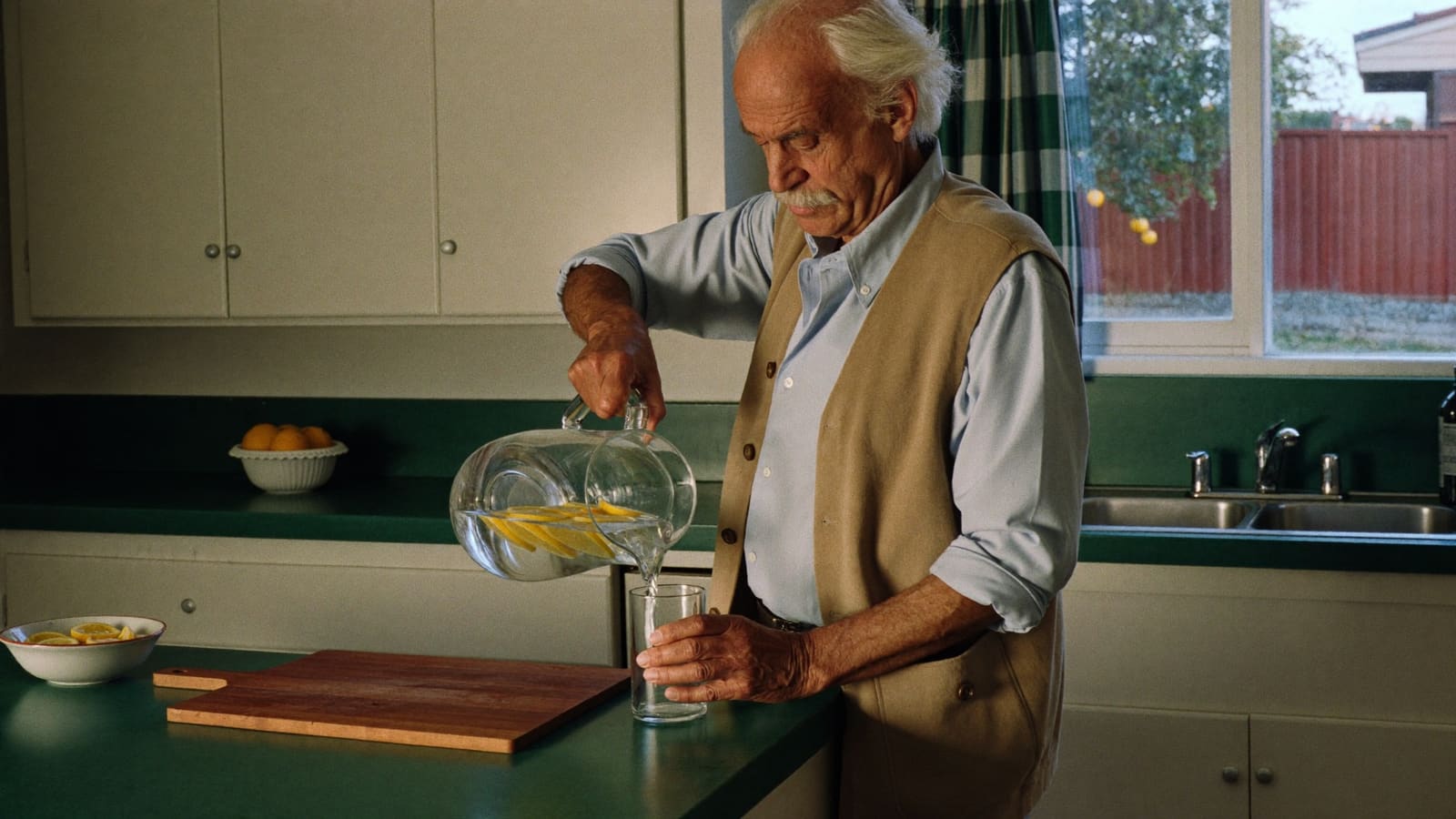
Illustrative. Does not depict Aldera clients or staff.
This is general information, not medical advice. Fluid needs vary with health conditions and medications, so talk to a GP about what is right for a particular person.
Thirst is one of the quieter things that changes with age. Many older people simply stop feeling it the way they used to, and a day can go by on a cup of tea at breakfast and half a glass at dinner without anyone noticing, least of all them.
Low fluids are linked to falls, constipation, urinary infections and sudden confusion, which is why it is worth paying attention to before it becomes a problem.
Why older people drink less
Usually it is a mix of small reasons:
- The thirst signal fades. The body’s cue to drink is weaker in later life.
- Worry about the toilet. People who have bladder urgency, or who find getting to the toilet hard at night, often drink less on purpose. The answer is to manage the continence problem, not the fluids. Our guide to continence support at home explains what help exists.
- Medications. Some tablets increase how much fluid the body loses, or dry the mouth.
- Effort. A heavy kettle, stiff hands, or a long walk to the kitchen are enough to put someone off.
- Living alone. A drink is often something we make because someone else is having one.
- Memory changes. People living with dementia may forget to drink, or believe they already have.
Signs to watch for
- Dark yellow urine, or going to the toilet much less than usual
- Dry lips and mouth
- Headaches, tiredness or feeling lightheaded when standing up
- Constipation
- New or worsening confusion, which can be a sign of delirium and needs a doctor promptly. See sudden confusion and delirium.
Hot weather makes all of this worse. Our heat and cold safety resource covers how to prepare for a heatwave.
Small habits that help
None of these needs a big change. Pick the two or three that suit the person.
- Link drinks to things that already happen. A glass with each tablet, a cup when the news comes on, a drink when a visitor arrives.
- Keep it within reach. A full jug or bottle in the room where they sit, not in the fridge at the other end of the house.
- Make it easy to lift. A lighter jug, a cup with two handles, or a tumbler that is only half filled.
- Offer what they like. Water is not the only option. Milk, soup, weak tea, diluted juice and jelly all count. Check with the GP about caffeine and sugar if diabetes or other conditions are involved.
- Eat water. Watermelon, oranges, cucumber, yoghurt, custard and soups all add fluid.
- Front-load the day. If night-time toilet trips are the worry, drink more in the morning and early afternoon and taper off in the evening.
- Make it visible. Some families use a jug that is filled in the morning, so everyone can see how much has gone by evening.
When fluids need limiting
Not everyone should drink more. People with some heart, kidney or liver conditions are told to stick to a fluid limit, and some people with swallowing difficulties need drinks thickened. If either applies, the GP’s or speech pathologist’s instructions come first. Our guide to speech pathology and swallowing explains the swallowing side.
How Aldera helps
Hydration is one of those things that only gets noticed when someone is watching over weeks rather than minutes. Because the same small Care Circle visits each week, a worker is more likely to spot that the jug is still full at four in the afternoon, or that urine is darker than usual.
Everything goes into the One Story record, so the next worker knows to offer a drink first, and your Care Lead can raise it with you and the GP if a pattern appears. Help with preparing meals, shopping and keeping drinks within reach can be part of a Support at Home plan.
Part of our Our services guide.
Not sure where you fit?
Call us and a real person will talk it through, no obligation and no script.
Call 1300 998 928Common questions
How much should an older person drink each day?
It depends on the person, their health conditions and their medications, so ask the GP. Some people, for example those with certain heart or kidney conditions, are told to limit fluids, and pushing more water on them can do harm. The GP can give a target that is right for that individual.
What are the signs an older person is dehydrated?
Common signs include dark urine or passing less of it, a dry mouth, headaches, dizziness when standing, constipation, tiredness and new confusion. Older people often do not feel thirsty even when they are low on fluids, so do not wait for them to say so. Sudden confusion always needs a doctor.
Can a support worker help with drinking enough?
Yes. A worker can make sure drinks are within reach, offer a cup at each visit, prepare foods with plenty of water in them and note in the care record how much seemed to be drunk. They follow any fluid instructions from the GP rather than setting their own.
More guides
-
Guides
Recognising elder abuse and where to get help
The forms elder abuse takes, the quiet signs families and workers notice, and who to contact in NSW if you are worried about an older person.
15 October 2026
-

Guides
Talking to a parent about giving up driving
Signs driving is getting harder, how to raise it without a fight, who can give an independent view, and how to keep a parent getting out once the keys go.
15 October 2026
-
Guides
Living with persistent pain at home
Practical ways to manage persistent pain at home in later life, who can help, and how in-home support can work around good and bad days.
7 October 2026