Guides
Speech pathology, swallowing and speaking
The Aldera team Published 2 September 2026
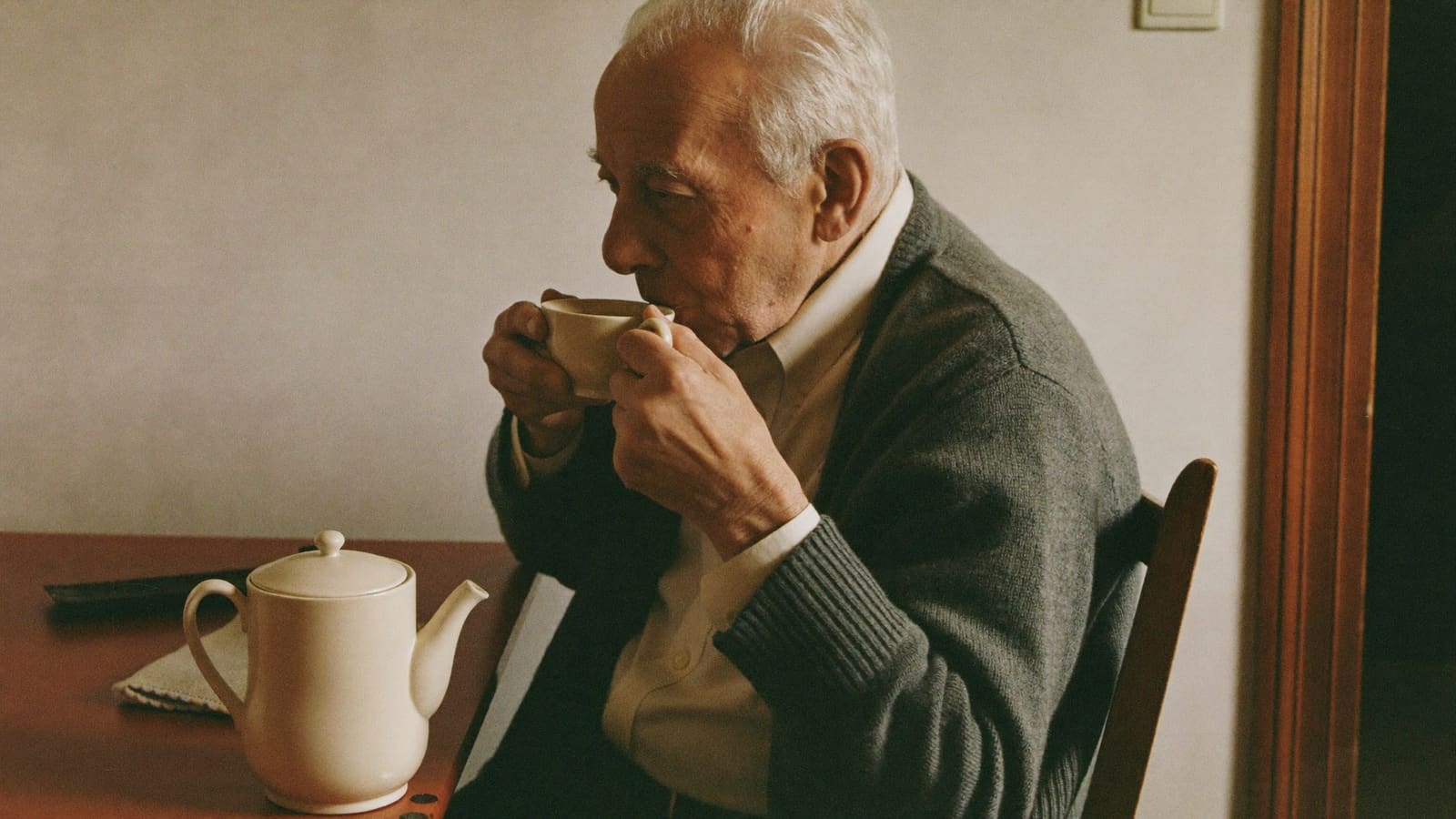
Illustrative. Does not depict Aldera clients or staff.
Two quite different problems sit under one profession, and most people only know about one of them.
Speech pathologists work on swallowing, which is a safety issue, and on communication, which is a quality of life issue. Both matter enormously in later life and both are routinely left too long.
This is general information, not advice. Swallowing difficulty is a clinical problem and needs a GP and a speech pathologist.
Swallowing, and why it is not a small thing
Swallowing is a fast, coordinated action involving a lot of muscles, and it gets less reliable with age, after a stroke, and with conditions like Parkinson’s disease and dementia.
When it goes wrong, food or fluid can go the wrong way, into the airway rather than the stomach. That can cause a chest infection, and repeated chest infections in an older person are serious. It is also frightening, and frightened people eat less, which brings weight loss and weakness along behind it.
So the coughing at meals that a family has got used to is worth acting on.
The signs
- Coughing or choking during or just after eating or drinking
- A wet, gurgly or hoarse voice after swallowing
- Food that seems to stick, or repeated throat clearing
- Meals taking much longer than they used to
- Avoiding certain foods or textures, often quietly
- Food left in the mouth, or drooling
- Unexplained weight loss
- Repeated chest infections
The last one is the signal most often missed, because a chest infection gets treated as a chest infection and nobody asks why it keeps happening.
What not to do yourself
The instinct when someone coughs on a drink is to thicken it. Do not, until someone has assessed it.
Thickened fluids are right for some people and wrong for others. The wrong consistency can be less safe, not more. And because thickened drinks are unpleasant, people drink less of them, so the intervention meant to protect the lungs causes dehydration instead, and dehydration brings confusion, constipation and falls.
The same applies to puréeing everything. It is sometimes correct and often unnecessary, and it strips the pleasure out of eating for someone who may not have much pleasure left. Get the assessment.
What an assessment involves
Usually a conversation, then watching the person eat and drink a range of textures, looking at their mouth and dentition, and checking how the swallow behaves. Sometimes further investigation is arranged where more detail is needed.
What comes out is a plan: which textures, which fluid consistency, how to sit, how fast to go, whether medications need to be given differently, and what to watch for. It should also say who reviews it and when, because swallowing changes.
Practical things that commonly appear in such a plan, and which are safe general advice: sitting fully upright to eat rather than reclined, staying upright for a while afterwards, small mouthfuls, no talking with food in the mouth, no rushing, and good mouth care, because a mouth in poor condition raises infection risk if anything does go the wrong way.
The communication half
This is the part that gets forgotten, and it is where a great deal of isolation comes from.
After a stroke, someone may know exactly what they want to say and be unable to get to the word. With Parkinson’s disease, the voice often becomes quiet and hard to hear, and there is effective therapy for that. With dementia, language narrows gradually, and a speech pathologist can help a family find what still works.
Being unable to make yourself understood is exhausting and humiliating, and people withdraw rather than keep failing in public. Our piece on loneliness and companionship is closely related, because withdrawal is very often a communication problem rather than a social one.
Some things that help, whoever the person is: face them, get their attention before you start, one idea at a time, slow down rather than raise your voice, ask questions that can be answered with yes or no when it is hard, allow silence rather than filling it, and never finish their sentence unless they want you to.
Where support work fits
A support worker is not a speech pathologist and does not set or change a swallowing plan. What they do is follow it exactly: the right texture, the right consistency, upright seating, unhurried pace, mouth care afterwards, and reporting anything that looked different.
That reporting is where the value sits. A plan written in March may not suit the person in September, and the person who sits at that table three times a week is the one who notices the coughing has come back. A rotating roster does not notice, because nobody has a baseline to compare against, which is one of several reasons we keep the same small Care Circle around a household.
If eating has become difficult more generally, read this alongside when an older person stops eating properly and seeing a dietitian about eating at home, since the two professions usually work together.
For current information start at myagedcare.gov.au. If you want the speech pathology arranged and the swallowing plan followed at home, that is part of what we coordinate. Ring us and a person will answer.
Part of our Our services guide.
Not sure where you fit?
Call us and a real person will talk it through, no obligation and no script.
Call 1300 998 928Common questions
What are the signs of a swallowing problem?
Coughing or choking during or just after eating and drinking, a wet or gurgly voice after a swallow, food that seems to stick, taking much longer over meals, avoiding particular textures, drooling, unexplained weight loss, or repeated chest infections. Any of those is a reason to see a GP rather than to start adjusting food at home.
Should you thicken drinks if someone is coughing?
Not on your own initiative. Thickened fluids help some people and are the wrong answer for others, and the wrong texture can make things less safe rather than more. It is also unpleasant enough that people drink less and become dehydrated. Get it assessed and follow the plan you are given.
What does a speech pathologist do besides swallowing?
Communication, which is the other half of the job. That includes speech and language after a stroke, voice and speech changes with conditions such as Parkinson's disease, and finding ways to keep conversation possible as dementia progresses. They also coach families on how to make being understood easier.
More guides
-
Guides
Drinking enough water in later life
Why older people drink less without noticing, the signs of dehydration to watch for, and small habits that make drinking easier at home.
15 October 2026
-
Guides
Recognising elder abuse and where to get help
The forms elder abuse takes, the quiet signs families and workers notice, and who to contact in NSW if you are worried about an older person.
15 October 2026
-

Guides
Talking to a parent about giving up driving
Signs driving is getting harder, how to raise it without a fight, who can give an independent view, and how to keep a parent getting out once the keys go.
15 October 2026