Guides
When an older person stops eating properly
The Aldera team Published 2 September 2026
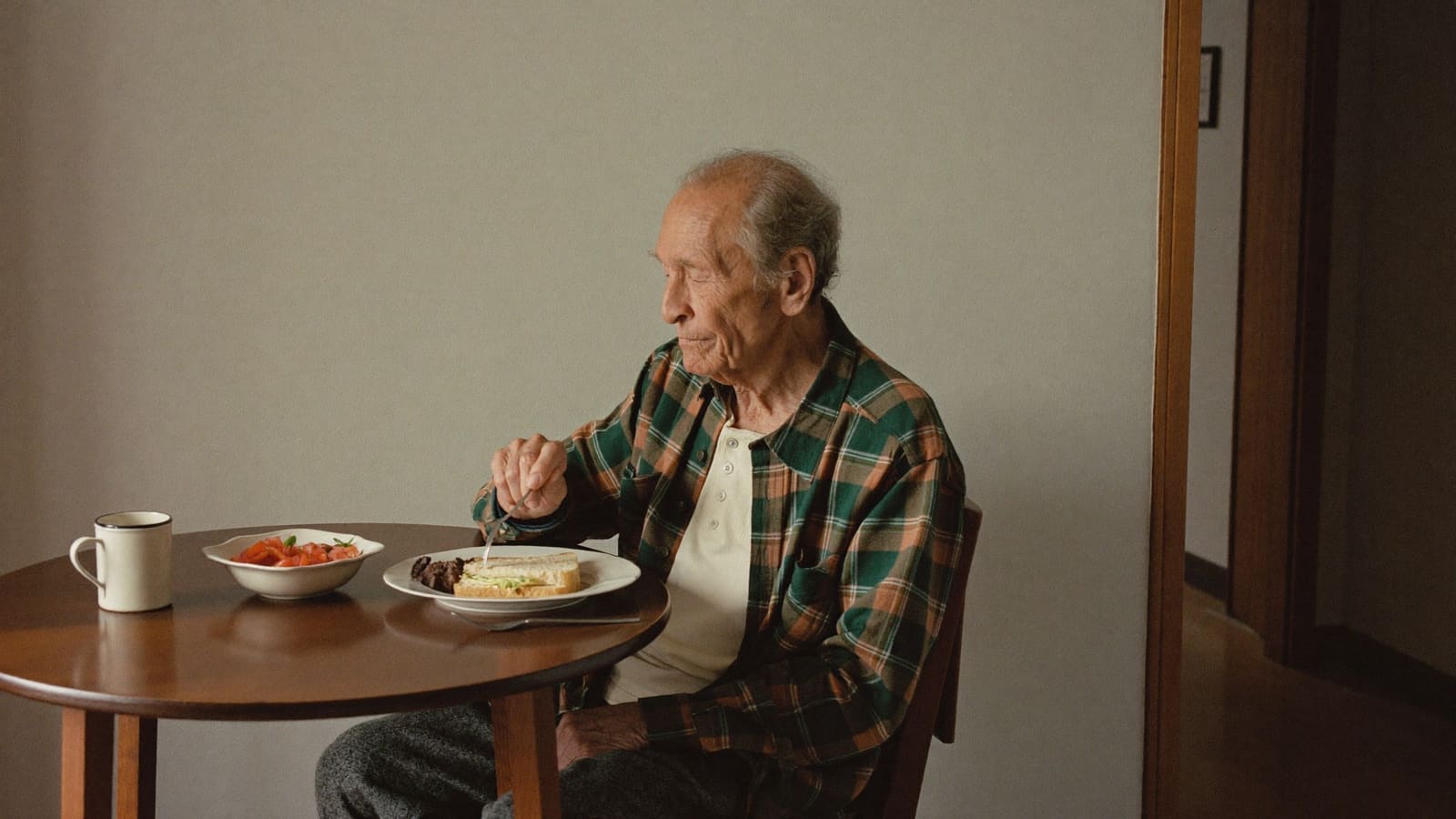
Illustrative. Does not depict Aldera clients or staff.
It rarely announces itself. Nobody stops eating on a Tuesday. What happens is that lunch turns into a biscuit, then dinner turns into toast, and eight months later a jumper hangs off a person who used to fill it.
By the time family notice, the pattern is usually well set, and the first instinct is almost always the wrong one: cook more, cook better, and try harder to persuade. That rarely works, because the food was never the problem.
This is general information, not advice. Unplanned weight loss, difficulty swallowing and changes in appetite are medical matters, and they belong with a GP.
What is usually going on
Appetite in later life is not one switch. It is a stack of small frictions, and any one of them alone is survivable.
Taste and smell dull. Food that was correct for fifty years now tastes of very little, so it stops being interesting. This is why heavier seasoning, sharper flavours and hot food beat carefully bland nutrition almost every time.
Medications get in the way. Plenty of common ones flatten appetite, dry the mouth or leave a metallic taste. This is worth raising at the next GP appointment rather than working around at home, because sometimes there is an alternative.
The mouth hurts. A cracked tooth, sore gums or a denture that stopped fitting after weight was lost. It is an easy thing to miss and an easy thing to fix, and people often do not mention it because it seems too small to bother anyone with.
Effort outgrew reward. Standing at a bench for twenty minutes, cooking, then washing up, all for a meal eaten alone. At some point that stops being worth it, and the toast wins.
Mood. Grief, depression and anxiety close appetite down hard. A widower eating badly two years after his wife died is very often not a nutrition problem at all.
The part nobody names
Most people eat more in company. That is not sentiment, it is just how eating works, and it runs the other way too: someone who eats every meal alone will slowly eat less of it.
This matters because it is the one factor family can change without a prescription. A shared meal twice a week does more for appetite than a fridge full of the right food. It is also why loneliness and eating tend to show up together, which we have written about in why companionship is real care.
What actually helps at home
Small and often beats three proper meals. Six small things across a day are far easier to face than a full plate, and the total usually ends up higher.
Serve what they already like. This is not the moment to introduce healthy new food. Familiar, strongly flavoured, easy to chew.
Put food where it can be reached without a decision. A bowl of fruit on the table, cheese and crackers in the front of the fridge, a tin of the biscuits they actually eat. Most people graze if grazing is easy.
Cook in the house if you can. The smell of onions in a pan does more to prompt hunger than any amount of encouragement.
Make drinks count. Milk, soup and juice all carry more than tea does, and dehydration itself blunts appetite.
Sit down and eat too. Not watching them eat. Eating.
And stop counting out loud. Commentary on how little someone has eaten turns every meal into a test, and people avoid tests.
Where a support worker fits
This is one of the things in-home support is genuinely good at, and it is broader than cooking. Our meals and nutrition support covers the shopping, the preparation, portioning and labelling for the freezer, warming something through at the right hour, and being there while it is eaten.
That last part is the one families underestimate. A worker who sits down at the table for twenty minutes is doing the most useful part of the visit.
At Aldera it is the same small Care Circle each week rather than whoever is rostered, which matters more here than almost anywhere else. Someone who has sat at that table thirty times knows what a normal plate looks like for that person, and notices the week it changes. A stranger has nothing to compare it to.
What belongs with a GP, not a cook
Ring the GP rather than adjusting the menu if you see any of these.
- Weight loss that nobody planned, especially if clothes or rings are visibly looser
- Coughing, choking or a wet voice during or after eating and drinking
- Pain on chewing or swallowing, or food that seems to stick
- A sudden change in appetite over days rather than months
- Food left because they forgot it was there, or forgot how to start the meal
- Low mood, withdrawal, or loss of interest in things beyond food
A useful thing to bring is a rough record of what was actually eaten over three or four days. Not a diet diary, just notes. It turns “she is not eating much” into something a GP can work with.
Worth reading next
If the person themselves does not think anything is wrong, the conversation matters more than the plan. How to talk to a parent who refuses help at home covers that ground.
You can find assessment and eligibility information at myagedcare.gov.au, and if you would rather talk it through with a person, ring us and one will answer.
Part of our Our services guide.
Not sure where you fit?
Call us and a real person will talk it through, no obligation and no script.
Call 1300 998 928Common questions
Why do older people lose their appetite?
Usually several small reasons at once rather than one big one. Taste and smell dull with age, some medications flatten appetite or dry the mouth, sore teeth or a poorly fitting denture make chewing tiring, low mood and grief close it down, and cooking for one stops feeling worth the effort. Each of those is small on its own. Together they take a person from three meals to a slice of toast without anyone deciding anything.
What should you do if a parent is losing weight?
Book a GP appointment rather than trying to solve it with food first. Unplanned weight loss is a symptom, and it needs a look at medications, mouth, swallowing and mood before anyone changes the shopping list. Take a rough note of what they have actually eaten across a few days, because that is the information the GP will ask for and nobody can recall it accurately.
Can a support worker help with meals at home?
Yes. A worker can shop, prepare food in the kitchen, portion and label meals for the freezer, warm something through at the right time of day, and sit down while it is eaten. What a support worker cannot do is provide clinical nutrition advice or manage a therapeutic diet. That comes from a GP or a dietitian, and the worker follows it.
More guides
-
Guides
Drinking enough water in later life
Why older people drink less without noticing, the signs of dehydration to watch for, and small habits that make drinking easier at home.
15 October 2026
-
Guides
Recognising elder abuse and where to get help
The forms elder abuse takes, the quiet signs families and workers notice, and who to contact in NSW if you are worried about an older person.
15 October 2026
-
Guides
Talking to a parent about giving up driving
Signs driving is getting harder, how to raise it without a fight, who can give an independent view, and how to keep a parent getting out once the keys go.
15 October 2026