Guides
How to talk to a parent who refuses help at home
The Aldera team Published 1 September 2026
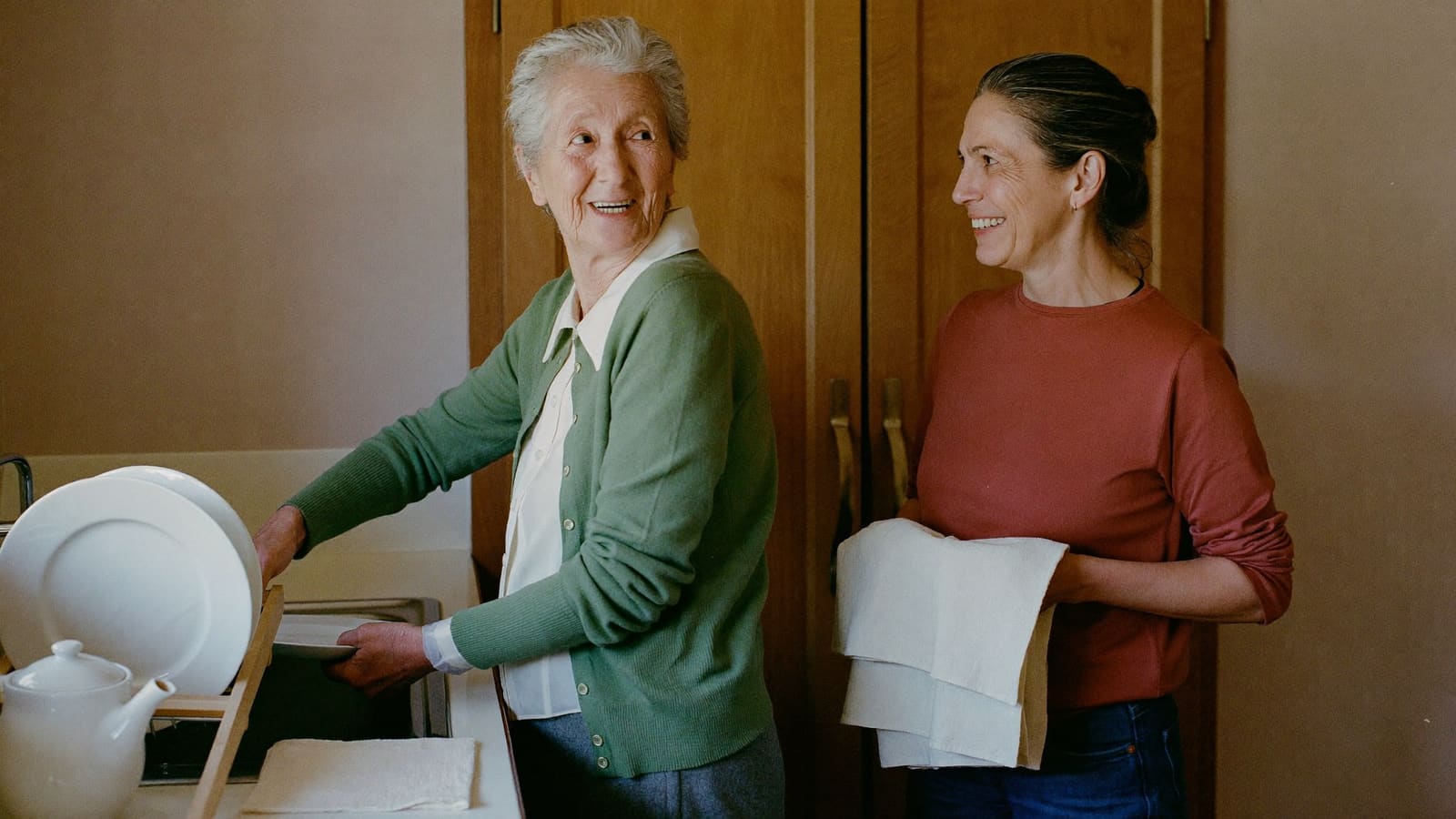
Illustrative. Does not depict Aldera clients or staff.
Most families have this conversation more than once, and most of them open it the wrong way. Not because they are careless, but because the obvious opening, which is to explain why help is needed, is the one that guarantees a no.
Here is what refusal usually means and what tends to work instead. This is general information about a common situation, not advice about your family.
The refusal is rarely about the task
Almost nobody objects to having their floors done. What people object to is what accepting it seems to say about them.
Four things sit underneath most refusals.
Losing authority in their own house. The house is the last place where they decide everything. Help arrives looking like an inspection.
A stranger in the home. Perfectly reasonable, and worse if they imagine a different face every week. Nobody wants to explain where the linen cupboard is nine times.
Money. Older Australians who have never been in debt are often quietly certain they cannot afford it, and would rather refuse than ask.
The slippery slope. The real fear is not the cleaner. It is that the cleaner is the first step toward leaving the house altogether.
If you do not know which of the four you are dealing with, you are negotiating in the dark. Ask, and then be quiet long enough to get an answer.
What tends to make it worse
Leading with the evidence. A list of everything they have stopped managing is experienced as a case being built, and people defend themselves against a case.
Speaking for them while they are in the room. If three of you are discussing them in the third person at their own table, the answer is going to be no.
Arriving with it decided. “I have booked someone for Tuesday” wins the week and loses the year.
Framing it as safety. It is often true, and it is heard as an accusation of frailty. Save it for when it actually matters.
What tends to work
Start with the smallest, least personal thing. Lawns, windows, the heavy shop, a lift to the specialist. Nothing about the body. Once one arrangement is running quietly, the second is a much smaller conversation. Our page on what we do sets out where most people start.
Make it about you. “I would worry less” is honest, and it is not a judgement of them. Parents will accept for their children’s peace of mind what they will refuse for their own comfort.
Give them something real to decide. Which day. Which jobs. Whether it is a man or a woman. Whether it is fortnightly to begin with. A choice restores the authority that the offer of help took away.
Set a trial with an end date. “Six weeks, then we talk about it again, and if you hate it we stop.” Reversible is much easier to say yes to than permanent.
Answer the money question with facts, not reassurance. Support at Home is means tested and the numbers depend on their circumstances, so do not guess at them. Go to myagedcare.gov.au or ring 1800 200 422 and get their figure. Our funding pillar explains how the assessment fits together.
Let a third voice carry it. A GP saying it lands differently to a daughter saying it. So does a neighbour who already has help and is happy with it.
Say the consistency part out loud
If the objection is a stranger in the house, then the answer is not more reassurance about vetting. It is telling them how many people will actually come.
That is the part we built the model around. A small Care Circle of the same few people, one Care Lead as the number to ring, and One Story so nobody has to be told the same thing twice. “It will be Anna, and when Anna is away it will be one of two people you have already met” is a far better answer than “all our staff are police checked”.
When to stop pushing
If a parent can make their own decisions, they can decide to go without help, and they can decide badly. That is their right, and pushing past it usually costs you the standing you will need later.
Stop, keep the door open, and say plainly what would change your mind about pressing again. Then be the one who rings weekly rather than the one who won the argument.
Two exceptions are worth naming. If you genuinely believe someone is at serious risk, or if their capacity to weigh the decision has changed, that is a conversation with their GP, not another conversation at the kitchen table.
If the disagreement is between the two of you
Sometimes the parent is willing and the family is not aligned. That is a different problem, and it has its own piece: when siblings disagree about a parent’s care.
A reasonable next step
Get the assessment done even if nothing follows it. It costs nothing, it commits them to nothing, and it means the option exists on the day it is wanted. Our assessment guide walks through it.
If you would rather talk it through with someone first, get in touch. A real person answers, and we are happy to say when the answer is not us.
Part of our The Aldera way guide.
Not sure where you fit?
Call us and a real person will talk it through, no obligation and no script.
Call 1300 998 928Common questions
Why does my parent refuse help at home?
Usually because of what accepting help seems to mean, rather than the help itself. The common reasons are losing control of their own house, having a stranger in it, worrying about the cost, and treating the first bit of help as the start of a slide toward moving out. Ask which one it is before arguing about the vacuuming.
Can I arrange aged care for a parent who does not want it?
An adult who can make their own decisions has the right to refuse support, and a good provider will not work around that. You can register a concern with My Aged Care and you can keep the conversation going, but the decision is theirs unless capacity is formally in question, which is a matter for their doctor.
What is the easiest kind of help to start with?
Almost always something practical and impersonal. Lawns, heavy cleaning, the shopping, a lift to an appointment. Personal care is the hardest first step for most people, and starting there is what turns a maybe into a no.
More guides
-
Guides
Drinking enough water in later life
Why older people drink less without noticing, the signs of dehydration to watch for, and small habits that make drinking easier at home.
15 October 2026
-
Guides
Recognising elder abuse and where to get help
The forms elder abuse takes, the quiet signs families and workers notice, and who to contact in NSW if you are worried about an older person.
15 October 2026
-

Guides
Talking to a parent about giving up driving
Signs driving is getting harder, how to raise it without a fight, who can give an independent view, and how to keep a parent getting out once the keys go.
15 October 2026