Guides
Recognising elder abuse and where to get help
The Aldera team Published 15 October 2026
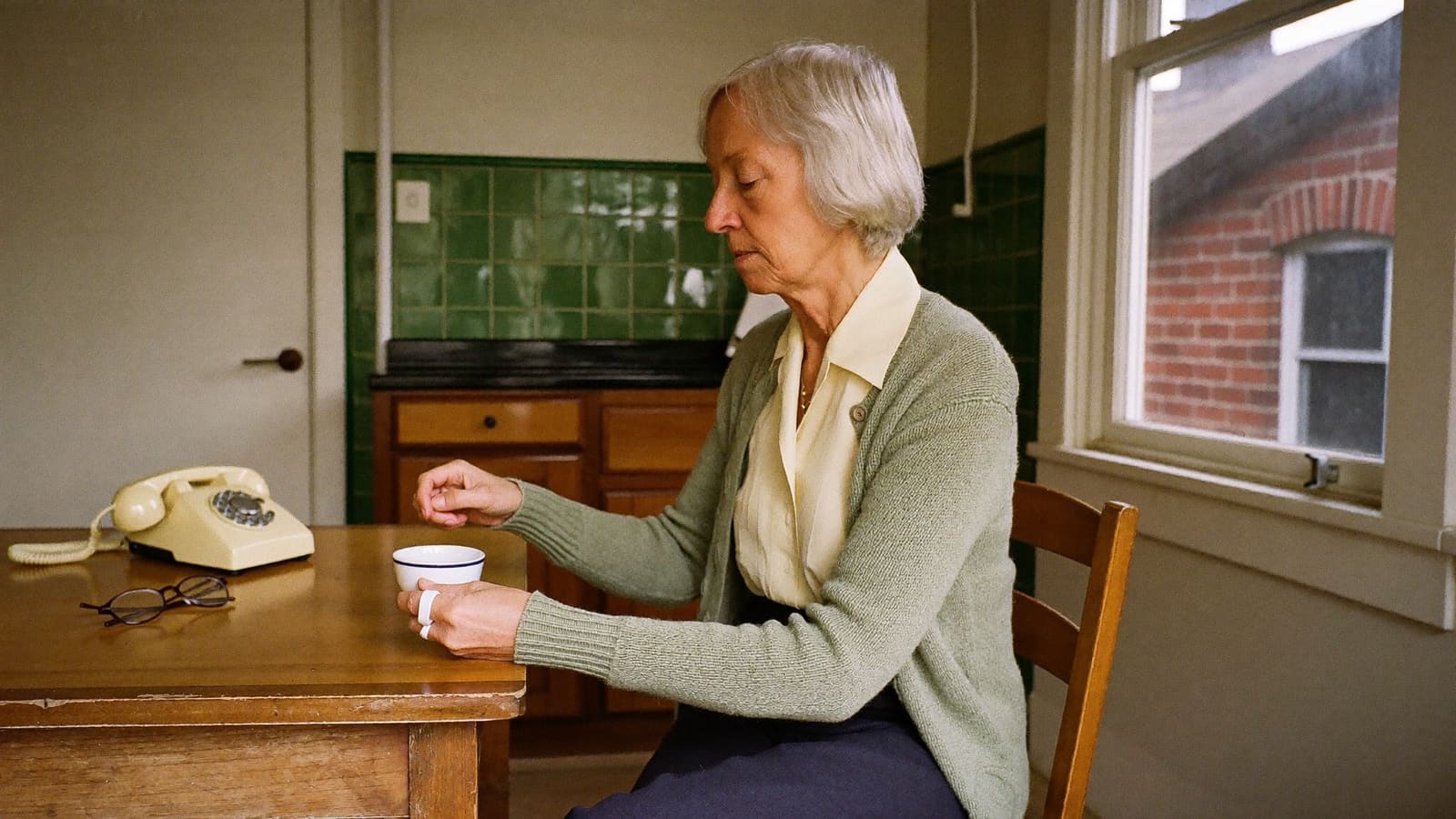
Illustrative. Does not depict Aldera clients or staff.
This is general information, not legal advice. If someone is in immediate danger, call Triple Zero (000).
Elder abuse is rarely what people picture. It is usually not a stranger. It is more often someone the older person knows and trusts, and it tends to happen slowly, in ways that are easy to explain away. That is exactly why it goes unnoticed for so long.
This guide covers the forms it takes, the signs worth paying attention to, and where to go for help.
The forms it takes
Elder abuse is any act, or failure to act, within a relationship of trust that causes harm or distress to an older person. It usually falls into one or more of these:
- Financial. Taking money or property, misusing a bank card or power of attorney, pressuring someone to change a will, or “borrowing” without any intention of paying back.
- Psychological or emotional. Threats, humiliation, constant criticism, or making someone afraid. Including “if you complain, you’ll end up in a home.”
- Social. Cutting a person off from friends, family, their church or mosque, or the phone.
- Neglect. Not providing food, medication, warmth, hygiene or care that someone has taken on responsibility for.
- Physical. Hitting, pushing, rough handling or inappropriate restraint.
- Sexual. Any sexual contact without consent.
Signs worth noticing
None of these proves anything on its own. Together, or as a change from how things used to be, they are worth a gentle question.
- Bills going unpaid when there should be enough money, or new debts nobody can explain
- A new “helper” or relative who suddenly controls the money, the mail or the phone
- The person seems anxious, withdrawn or frightened, especially around one particular person
- Visitors are discouraged, or someone always stays in the room during conversations
- Weight loss, poor hygiene, missing glasses, hearing aids or dentures, or medications not being taken
- Unexplained bruises, or explanations that do not match the injury
- Legal documents signed recently that the person does not seem to understand
Money matters overlap with scams, and our checklist on protecting an older parent from scams covers the safeguards that help with both.
How to raise it with the person
Choose a quiet moment alone. Start with what you have noticed, not an accusation: “I’ve noticed you seem worried when the phone rings. Is everything all right?” Many older people feel ashamed, or fear losing the relationship, or worry they will be moved out of home if they speak up. Tell them that is not what you are trying to do.
Then listen. Respect that an adult who can make their own decisions gets to make them. You can still tell them what help exists and offer to make the first call together.
Where to get help
- Immediate danger: call Triple Zero (000).
- Confidential advice: the national elder abuse phone line connects you to the service in your state. The number is on our aged care contacts and hotlines page, which we check regularly.
- In NSW: the Ageing and Disability Commission can respond to reports that an older person is being abused, neglected or exploited in their home.
- Free advocacy: an aged care advocate can support the older person to speak up and understand their rights. See free aged care advocacy.
- Concerns about a care provider: raise it with the provider first if it is safe to do so, and you can go to the Aged Care Quality and Safety Commission at any time. Our guide on how to raise a concern about home care walks through the steps.
Where in-home care fits
A support worker who visits regularly often notices things family who live away cannot. That only works when the same people keep coming back, because a change is only visible to someone who knew what normal looked like.
That is part of why we build a small Care Circle around each person rather than sending whoever is free, and why everything a worker notices goes into the One Story record, not just one person’s memory. A worker who sees something worrying tells their Care Lead the same day, and the Care Lead decides with the person, and where appropriate with family, what happens next.
If you are worried about someone right now, please do not wait to be certain. A confidential conversation with an advice line costs nothing and commits you to nothing.
Part of our The Aldera way guide.
Not sure where you fit?
Call us and a real person will talk it through, no obligation and no script.
Call 1300 998 928Common questions
Who can I call if I think an older person is being abused?
If someone is in immediate danger, call Triple Zero (000). Otherwise you can call the national elder abuse phone line for confidential advice, which is listed on our aged care contacts and hotlines page. In NSW, the Ageing and Disability Commission takes reports about older people being abused or neglected in their own homes.
Is it still abuse if it is a family member?
Yes. Most elder abuse happens inside relationships of trust, often with family. It can include taking money, pressuring someone to sign documents, cutting them off from friends, or neglecting their care. It does not have to be intended as cruelty to cause serious harm.
What if the person does not want me to do anything?
An adult who can make their own decisions has the right to choose, even when others disagree. You can still listen, tell them what help exists, and get confidential advice yourself. If you believe they are in danger or cannot protect themselves, talk to the police or the Ageing and Disability Commission.
More guides
-
Guides
Drinking enough water in later life
Why older people drink less without noticing, the signs of dehydration to watch for, and small habits that make drinking easier at home.
15 October 2026
-

Guides
Talking to a parent about giving up driving
Signs driving is getting harder, how to raise it without a fight, who can give an independent view, and how to keep a parent getting out once the keys go.
15 October 2026
-

Guides
Living with persistent pain at home
Practical ways to manage persistent pain at home in later life, who can help, and how in-home support can work around good and bad days.
7 October 2026