Guides
Seeing a dietitian about eating at home
The Aldera team Published 2 September 2026
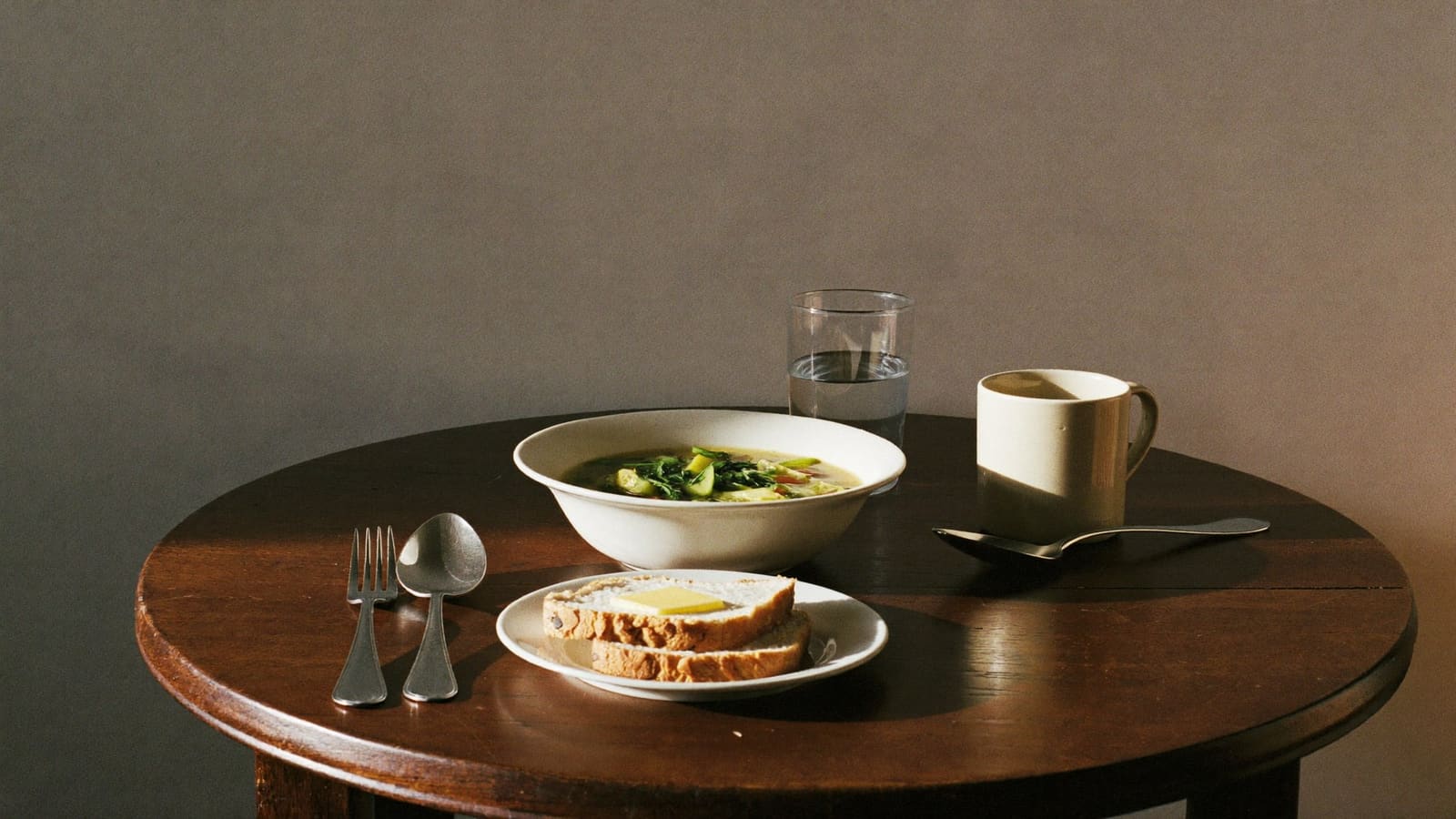
Illustrative. Does not depict Aldera clients or staff.
Nutrition in later life is the area where general health advice does the most harm.
Most people arrive with forty years of messaging about cutting fat, cutting salt and eating more fibre. For a frail eighty-five year old who has lost six kilos, close to all of that is wrong, and following it makes things worse.
That inversion is the main reason to get individual advice rather than to guess.
This is general information, not advice. Weight loss, swallowing problems and diabetes management are clinical matters and belong with a GP and a dietitian.
What a dietitian does
Works out why someone is not eating. Rarely one reason. Taste and smell dulling, medications, a sore mouth or a poor denture, low mood, and the sheer effort of cooking for one. Our guide to when an older person stops eating properly goes through the usual causes.
Makes each mouthful count. For someone eating small amounts, the answer is not a bigger plate. It is more energy and protein in the food they already accept, which often means going the opposite way to conventional advice.
Sorts out texture and swallowing, working alongside a speech pathologist where swallowing is the issue. See speech pathology, swallowing and speaking.
Manages conditions, including diabetes, kidney disease, heart failure and coeliac disease, in a way that a person can actually live with rather than in theory.
Supports healing. Pressure wounds and post-surgical recovery both need protein and energy, and a wound that is not healing is sometimes a nutrition problem.
Advises on supplements, including whether the ones already being bought are doing anything. Frequently the answer is that food would work better and cost less.
Why weight loss matters more than weight
Families tend to worry about an older person being overweight. In practice, unplanned weight loss is the far more serious signal, and it is routinely missed because it happens slowly and clothes hide it.
What goes with it is loss of muscle, and muscle is what gets someone off a toilet and out of a chair. Losing it produces weakness, then falls, then hospital, then more loss, and that cycle is much easier to interrupt early than to reverse.
Practical markers that beat the scales: rings turning, watch straps loosening, a belt on a new notch, dentures that have stopped fitting, and clothes hanging differently. Any of those is a reason for a GP appointment.
Practical things that usually help
While you wait for an appointment, these are safe and general.
Small and often beats three meals. Six small things across a day is far less confronting than a full plate, and the total usually ends up higher.
Fortify what is already being eaten. Milk powder into milk, butter into vegetables and mashed potato, cream into soup, cheese into everything. Adding energy to familiar food works far better than introducing new food.
Make drinks work. Milk, milky coffee, smoothies and soup all carry energy where tea and water do not.
Keep food within reach and requiring no decision, because most people graze if grazing is easy.
Eat together where you can. People eat more in company, reliably, and it is the one factor a family can change without a prescription.
And stop commenting on how little they have eaten. Every remark turns the meal into a test, and people avoid tests.
What sends you to the GP rather than the kitchen
- Weight loss nobody planned
- Coughing, choking or a wet voice during or after eating and drinking
- Pain on chewing or swallowing, or food that seems to stick
- A sudden change in appetite over days rather than months
- A wound that is not healing
- New or worsening confusion
Bring a rough note of what has actually been eaten over three or four days. Nobody can reconstruct that from memory, and it is the information a dietitian will ask for first.
Where support work fits
A support worker is not a dietitian and does not give nutrition advice. What they do is make the plan happen: shopping to it, cooking to it, portioning and labelling for the freezer, warming something through at the right hour, sitting down while it is eaten, and reporting honestly what went in.
That last part is the piece a clinician cannot get any other way. A dietitian sees someone occasionally. Somebody at that table three times a week knows what a normal plate looks like in that house and notices the week it changes.
Our meals support page covers what that involves. For current aged care information start at myagedcare.gov.au. If you want a dietitian arranged and the eating plan then followed between visits, that is part of what we coordinate. Ring us and a person will answer.
Part of our Our services guide.
Not sure where you fit?
Call us and a real person will talk it through, no obligation and no script.
Call 1300 998 928Common questions
When should an older person see a dietitian?
Unplanned weight loss is the clearest trigger, and it should be acted on early rather than watched. Others are a poor appetite that has lasted more than a few weeks, difficulty swallowing, diabetes that is hard to manage, pressure wounds that are not healing, and a recent hospital stay. A GP referral is the usual route.
Is the advice the same as normal healthy eating advice?
Often the opposite, and this surprises people. For a frail older person who is losing weight, the priority is energy and protein in whatever form is actually eaten, which can mean full-cream milk, butter, cream and small frequent meals rather than low-fat, high-fibre eating. Advice that suits a healthy fifty year old can be actively harmful at eighty-five, which is exactly why it is worth getting individual advice.
Can a dietitian help if someone will not eat much?
Yes, and that is much of the job. Rather than trying to increase volume they work on making every mouthful count, changing textures and timing, adding energy to familiar foods, and sorting out which supplements are worth using if any. They also look for the causes behind poor appetite rather than treating it as a fixed fact.
More guides
-
Guides
Drinking enough water in later life
Why older people drink less without noticing, the signs of dehydration to watch for, and small habits that make drinking easier at home.
15 October 2026
-
Guides
Recognising elder abuse and where to get help
The forms elder abuse takes, the quiet signs families and workers notice, and who to contact in NSW if you are worried about an older person.
15 October 2026
-
Guides
Talking to a parent about giving up driving
Signs driving is getting harder, how to raise it without a fight, who can give an independent view, and how to keep a parent getting out once the keys go.
15 October 2026