Guides
Continence support at home
The Aldera team Published 2 September 2026

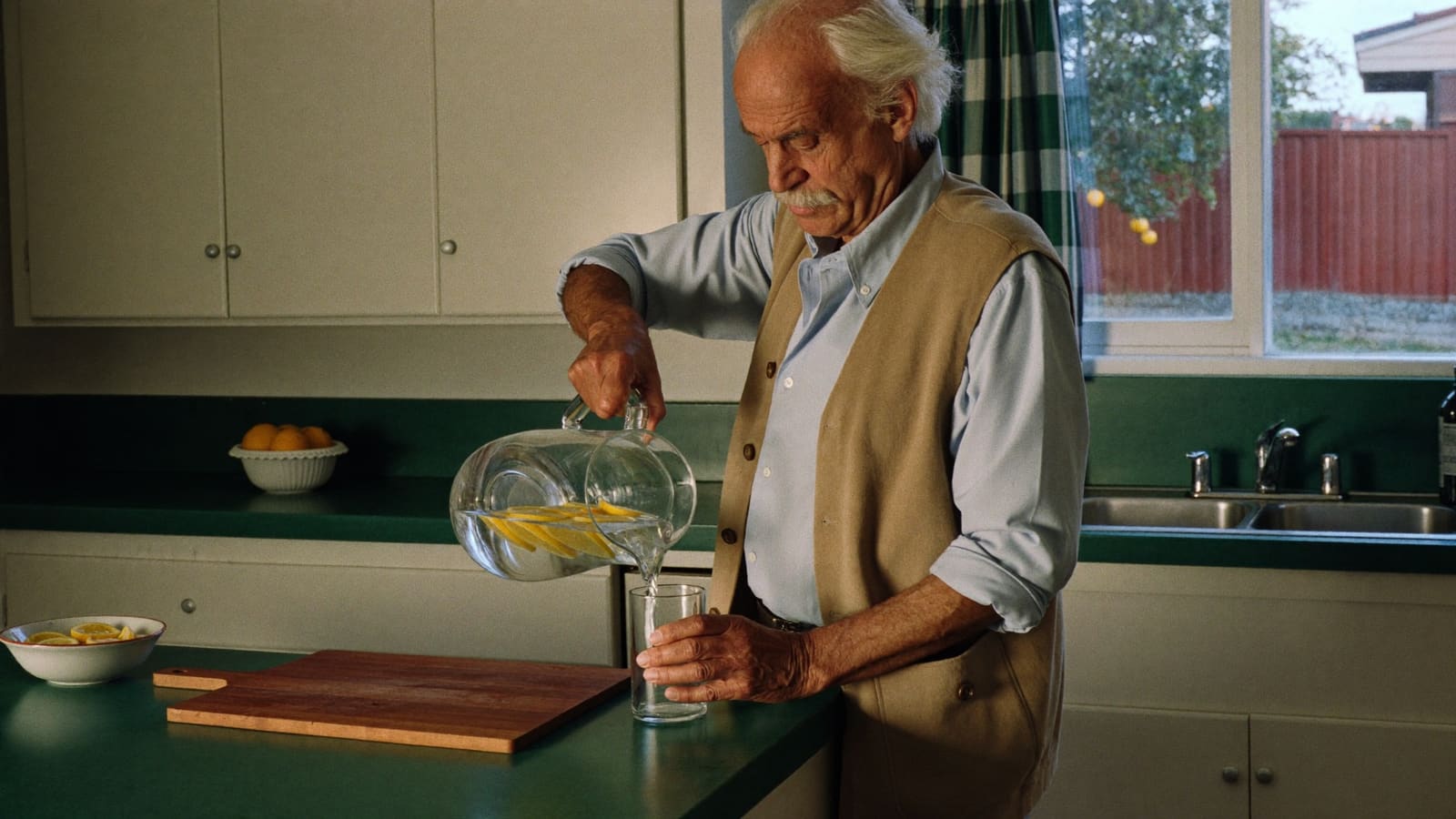
Illustrative. Does not depict Aldera clients or staff.
This is the problem people will not raise.
It gets managed quietly for years, at considerable cost and inconvenience, and it very often shapes a person’s whole life before anyone has assessed it. People stop going out. They stop drinking water, which makes it worse. They stop travelling, and then stop seeing anyone. It is also one of the more common reasons a family concludes that home is no longer manageable.
Almost none of that has to be the case, because much of it is improvable.
This is general information, not advice. Bladder and bowel symptoms need a proper assessment, and that starts with a GP.
Why it is worth raising
Two things are true at once. It is common, and it is frequently treatable.
The reason those sit together uncomfortably is that “common” gets heard as “normal”, and normal things do not get investigated. In practice a range of causes are identifiable and fixable: infections, constipation, medication side effects, prostate problems, pelvic floor weakness, restricted mobility that simply means the toilet is too far away, and cognitive change that means the signal is not recognised in time.
Several of those have nothing to do with the bladder at all. Constipation is the classic one, because it causes urinary symptoms and is straightforwardly treatable. So is the person whose only real problem is that the toilet is at the other end of the house and getting there takes ninety seconds they do not have.
How to raise it with a GP
Say it plainly, and be specific, because the detail is what makes it diagnosable.
Useful things to bring:
- How often, and whether it is day, night or both
- Whether there is urgency, leaking on coughing or laughing, or both
- How much you are drinking, and whether you have cut down deliberately
- Bowel habits, honestly, including how often and whether straining is involved
- All medicines, including water tablets and anything for blood pressure
- What you have already changed about your life to cope with it
That last item is the one that tells a GP how serious this is. Someone who has stopped going to church has a significant problem regardless of how they describe the symptoms.
A three-day record of what goes in and what comes out, with times, is genuinely valuable and no one can reconstruct it from memory.
Who helps
Continence nurse advisors are specialist nurses who assess and manage continence, and they are the most useful referral most people have never heard of.
Continence physiotherapists work on pelvic floor function, which is effective for a proportion of people and does not involve medication.
Specialist medical care, including urologists, gynaecologists and geriatricians, where the cause needs that level of investigation.
The National Continence Helpline is a free national service staffed by continence nurse advisors, and the Continence Foundation of Australia publishes its details and a large amount of practical information. We have deliberately not printed a phone number here, because a wrong number is worse than none. Use their site, which is always current.
Practical things that help at home
While the medical side is being sorted out, these are the changes that make the biggest immediate difference.
Shorten the trip. This is the single most effective non-medical intervention. Clear the route, light it, take up the rug, and if the bathroom is far from the bedroom consider a bedside commode, which people resist and then find transformative. A rail beside the toilet and a raised seat make the last two seconds faster, and those two seconds are often the whole problem. Our home safety checklist and home modifications guide both cover this ground.
Do not restrict fluids. It is the universal instinct and it backfires: concentrated urine irritates the bladder and dehydration causes constipation, confusion and falls. Drink normally and adjust the timing rather than the amount.
Deal with constipation properly. It is upstream of a great deal of this.
Get the clothing right. Elastic waists, simple fastenings, nothing that needs two hands and thirty seconds.
Use products that suit, and get them fitted properly. There is a large range, most people are using the wrong thing, and a continence nurse will match the product to the pattern. Wrong products leak, which is what destroys confidence.
Protect the mattress and keep spare bedding accessible. Practical, unglamorous, and it removes a large amount of night-time distress.
Where support fits, and where it does not
A support worker can help someone to the toilet, help with clothing, manage laundry and bedding, keep supplies stocked, and support a toileting routine set out in a care plan. Done well, none of it is remarked on, which is exactly the point.
Continence assessment, catheter management and clinical continence care are nursing work. They sit with a registered nurse and they belong explicitly in the care plan, not with a support worker. That boundary is explained in home nursing and support work, who does what.
The part that matters most is not technical. It is that this gets handled without comment, on a schedule, by someone the person already knows and does not have to explain themselves to. A rotating roster is miserable here in a way it is nowhere else, which is why we keep the same small Care Circle around a household.
Current program information is published by the Department of Health and Aged Care. If you want a continence assessment arranged and the plan handled discreetly day to day, that is part of what we coordinate. Ring us and a person will answer.
Part of our Our services guide.
Not sure where you fit?
Call us and a real person will talk it through, no obligation and no script.
Call 1300 998 928Common questions
Is incontinence just part of getting older?
No. It is more common with age, but it is not a normal or inevitable part of it, and a large share of cases can be improved or resolved with the right assessment. Treating it as inevitable is the reason so many people put up with it for years without ever being properly assessed.
Who should you see about it?
Start with the GP, who can rule out the causes that need treating and refer on. From there the specialists are continence nurse advisors and continence physiotherapists, and there are also specialist medical clinics. A referral is worth asking for specifically, because it is not always offered.
Is there help with the cost of continence products?
There is a national scheme that provides a payment toward continence products for eligible people with permanent and severe incontinence, and continence products can also come under aged care arrangements. Eligibility rules and amounts change, so check the current position with your GP, a continence nurse or health.gov.au rather than relying on figures from elsewhere.
More guides
-
Guides
Drinking enough water in later life
Why older people drink less without noticing, the signs of dehydration to watch for, and small habits that make drinking easier at home.
15 October 2026
-
Guides
Recognising elder abuse and where to get help
The forms elder abuse takes, the quiet signs families and workers notice, and who to contact in NSW if you are worried about an older person.
15 October 2026
-

Guides
Talking to a parent about giving up driving
Signs driving is getting harder, how to raise it without a fight, who can give an independent view, and how to keep a parent getting out once the keys go.
15 October 2026