Resources
The one-page emergency sheet
The Aldera team Published 3 September 2026
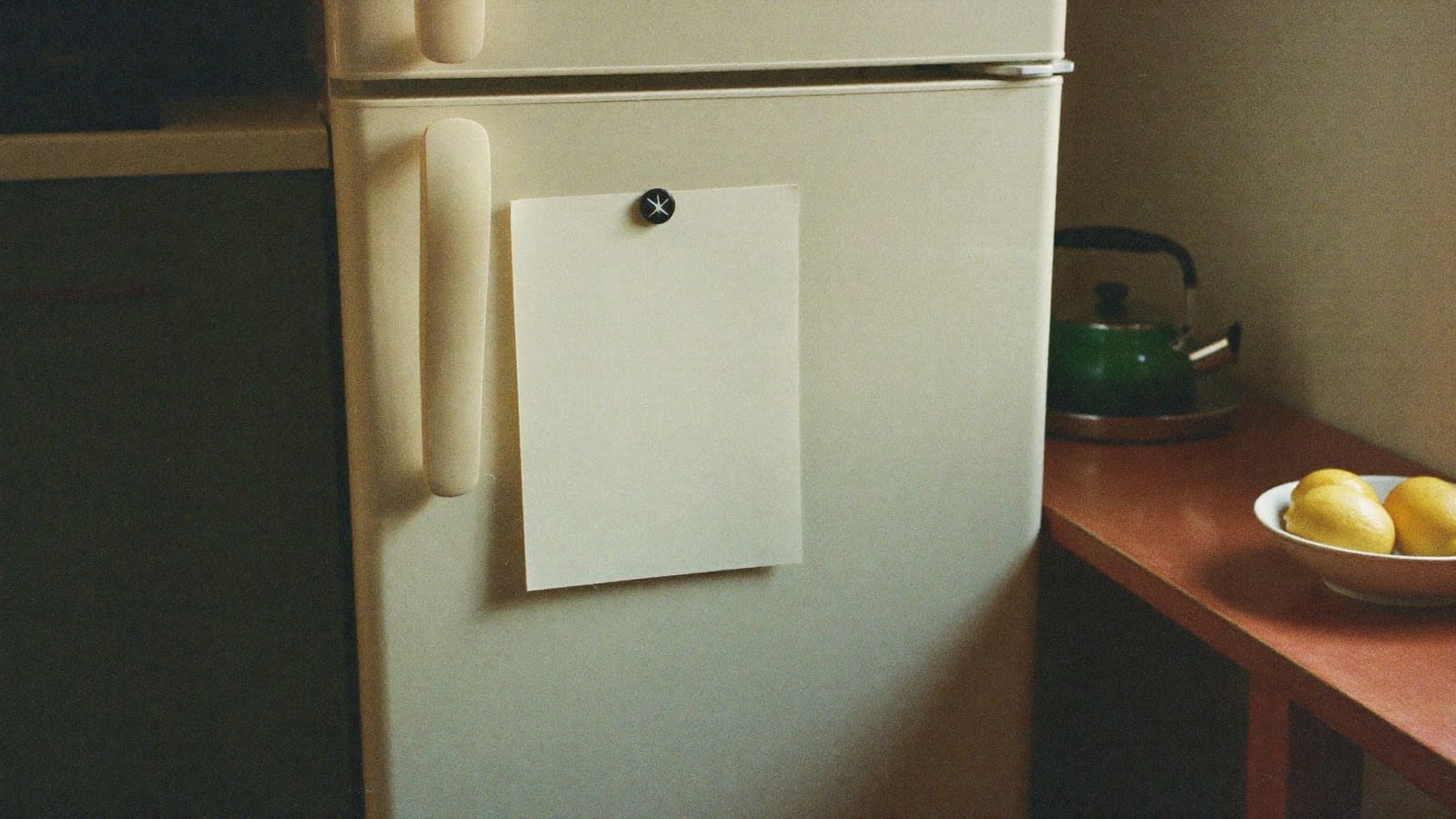
Illustrative. Does not depict Aldera clients or staff.
When something goes wrong at home, the useful information is usually in four places at once: in one person’s head, in a folder in the spare room, on a phone that is not in the house, and with a GP who is closed. The people who arrive have about five minutes and no way in.
One page on the fridge fixes most of that. It takes half an hour to make and it is the highest-value half hour in this entire section of the site.
This is general information, not medical advice. Nothing here replaces talking to a GP or pharmacist about the person’s own circumstances.
What goes on the page
Keep it to one side of one page. Two pages get read as one and the second one gets missed.
Who this is
- Full name, date of birth and the address, written out. In an emergency people give the wrong one.
- Medicare number, and the DVA number if there is one. Our guide on veteran home care and DVA support covers where that fits.
- The language they are most comfortable in, and whether an interpreter is needed. See how to get a free interpreter.
Who to call, in order
- First contact: name, relationship, mobile.
- Second contact, for when the first does not answer, which happens.
- The GP practice name and number.
- The home care provider’s number, including the after-hours one.
- Anyone with legal authority to make decisions, and where that paperwork is kept.
Put them in the order you want them rung, and say who is who. “Daughter, lives ten minutes away” tells someone more than a bare name.
Health, briefly
- Current medical conditions, listed plainly.
- Allergies and reactions, at the top of that section where they cannot be missed.
- Current medicines, with doses, or a clear note saying where the current list is kept. If a Home Medicines Review has been done, the list from it is a good starting point.
- Anything a stranger would need to know in the first minute: a pacemaker, diabetes, epilepsy, a swallowing difficulty, significant hearing or vision loss, dementia.
- Whether they can normally walk unaided, so a change is obvious.
How to get in, and who else needs to know
- Where the spare key is, or the lock box code if there is one, or which neighbour holds a key.
- The dog, and what to do with it.
- Whether anyone else in the house depends on this person, including a partner and including a pet that will need feeding tonight.
Wishes and paperwork
- Whether an advance care directive exists, and exactly where it is kept.
- Whether anyone holds enduring guardianship or power of attorney, and their contact details.
Do not summarise the content of a directive on the fridge. Say that it exists and where it is. A paraphrase of a legal document is worse than a pointer to the real one, and the real one is what will be followed. Documents worth sorting covers getting those in order in the first place.
The date Write “last checked” and the date at the bottom. This is the field that keeps the rest of it honest.
What to leave off
- Bank details, account numbers, card PINs, superannuation.
- Anything describing when the house is empty.
- A long medical history. Conditions that matter now, not everything that ever happened.
- Opinions about family members. It is a working document and other people will read it.
Where to put it
The fridge door, held on with a plain magnet. Ambulance officers look there.
If that feels too exposed, the inside of the kitchen cupboard nearest the phone works, with a note on the fridge saying where it is. What does not work is a folder in a bedroom, because nobody who needs it will find it.
Then do three more things:
- Photograph it and keep the photo on the phones of everyone on the contact list.
- Put a copy in the bag that would go to hospital, if one is packed. Questions before hospital discharge is worth reading alongside this.
- Tell people it exists. A sheet nobody knows about is decoration. Say it to the family, the neighbour with the key and anyone who comes to the house regularly.
Keep it true
Set two triggers and one date.
- After any hospital stay, check it.
- After any medication change, check it.
- On one fixed day a year, check it anyway.
An out-of-date sheet is worse than no sheet, because it will be believed. The date at the bottom is what tells a stranger how much to trust it.
How this sits with us
If Aldera supports the household, this information lives in your One Story as well, so every person in your Care Circle has read it before they walk in and a relief worker is never starting from nothing. Your Care Lead keeps it current as things change.
The page on the fridge still matters, because it works for the people we are not: the ambulance, the neighbour, the locum GP at 9pm. Both together is the arrangement that holds. More on how we work is on the Aldera way, and the national numbers worth knowing are on our contacts and hotlines page.
Part of our The Aldera way guide.
Not sure where you fit?
Call us and a real person will talk it through, no obligation and no script.
Call 1300 998 928Common questions
Why the fridge and not a drawer?
Because ambulance officers are trained to look there, and because in an emergency nobody is going to find the right folder. The fridge door is the one place in an Australian home that everybody checks and nobody has to be told about.
Is it safe to leave medical details out in the open?
It is a judgement call. Keep the sheet to what is needed in an emergency, leave off financial details, account numbers and anything about when the house is empty. If privacy is a concern, put it inside a kitchen cupboard door instead and stick a note on the fridge saying where it is.
How often does it need updating?
Check it after every hospital stay and every medication change, and once more at a fixed point each year so it does not quietly go stale. Put the date on it. An undated sheet gets trusted long after it stopped being true.
More resources
-
Resources
An emergency grab bag checklist
What to pack in a grab bag for an older person, for a fire, flood, power cut or sudden hospital trip, and how to keep it up to date.
15 October 2026
-
Resources
Protecting an older parent from scams
A practical checklist for families to help an older person spot scams, set up simple safeguards and know what to do if money has already been lost.
7 October 2026
-

Resources
Questions to ask about a new medicine
A short list to take to the GP or pharmacy whenever a new medicine is started, so you leave knowing what it is for, how to take it and what to watch for.
5 October 2026