Blog
Staying at home after losing a partner
The Aldera team Published 7 October 2026
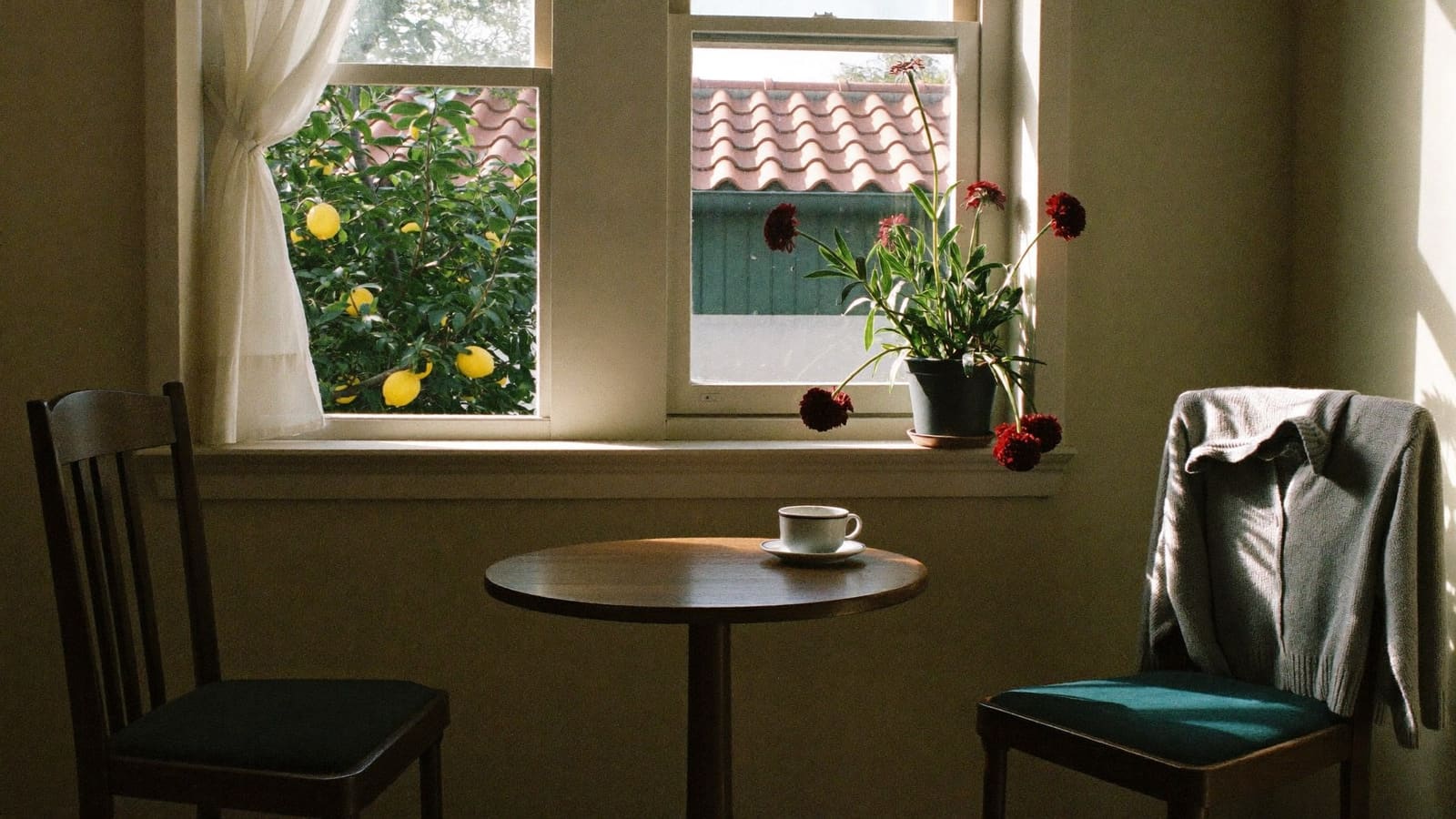
Illustrative. Does not depict Aldera clients or staff.
Fifty years of marriage divides the household jobs in ways nobody writes down. One person did the bills and the driving. The other knew where everything was, which neighbour to call, when the gas bottle needed changing. When one of them dies, the other is left grieving and, often, facing a house full of tasks they have never done.
This piece is for that time, and for the families watching it from close by.
Grief is not a schedule
There is no right way to grieve and no deadline for it. Some people want company every day. Some want the house quiet. Many swing between the two within an afternoon. Families can help most by asking rather than assuming, and by staying around after the first few weeks, when the casseroles stop and the quiet gets louder.
Some things are worth watching gently: not eating, not sleeping, not leaving the house, or stopping medicines. Those are reasons to talk to the GP, not signs of failure. Our piece on loneliness and companionship looks at the slower risk of becoming cut off.
This is general information, not medical advice. If grief turns into feeling hopeless or unsafe, contact the GP or a crisis line straight away.
The jobs that were theirs
It helps to make a short list of what the partner used to do, then sort it:
- This week: anything with a deadline, like bills, medicines or the car registration
- Soon: jobs that will become a problem, like the lawn, the gutters or the shopping
- Later: paperwork and decisions that can safely wait
Our documents worth sorting list helps with the paperwork side. For the rest, each item can be learned, handed to a family member or handed to help at home. There is no prize for doing it all alone.
When the carer is the one left
Sometimes the person who died was the one being cared for, and the surviving partner was their carer for years. That brings its own grief: the loss of the person and the loss of the role that filled every day. Carers in this position often have health needs of their own that were put aside. A GP check-up and, if needed, an aged care assessment through My Aged Care are worth doing once the first weeks have passed.
Help at home, without strangers every week
For someone newly on their own, a stream of unfamiliar faces at the door can make things worse. That is why Aldera is built around a small Care Circle: the same few people each week, coordinated by one Care Lead. What matters to the person, from the way they take their tea to the anniversary that is coming up, is written once in our One Story record so nobody has to explain their loss again to someone new. You can read more on the Aldera way.
Help does not have to be about tasks alone. A regular visit can be a walk to the shops, help with a meal that was always cooked for two, or simply company on the day of the week that has become the hardest.
There is no hurry. If staying at home is what the person wants, the right help can make that possible while they find their way.
Part of our The Aldera way guide.
Not sure where you fit?
Call us and a real person will talk it through, no obligation and no script.
Call 1300 998 928Common questions
Should a parent move out of the family home soon after their partner dies?
Big decisions are usually best left for a while if they can be. Grief makes everything feel urgent, and many people feel very differently a few months on. If staying at home is safe with some help, that help can buy time to decide properly.
Where can a grieving older person get support?
The GP is a good first stop, and can refer to a counsellor or psychologist. Many faith communities, community centres and local councils run bereavement groups. If grief turns into feeling hopeless or unsafe, contact the GP or a crisis line straight away.
My parent never did the cooking or the bills. How do we help?
Start with what has to happen this week, not everything at once. Some families take over one task for a while, some teach it slowly, and some bring in help with meals or household jobs. Ask your parent which of those they would prefer.
More blog
-
Blog
Grandchildren and a grandparent's care
Grandchildren often want to help when a grandparent starts needing care but do not know how. Practical ways for younger family to stay close and useful.
15 October 2026
-
Blog
When your husband or wife becomes your carer
Caring for a partner is not like caring for a parent. Staying a couple, accepting help without feeling you have failed, and looking after yourself.
5 October 2026
-
Blog
What a support worker notices
The bin that did not go out. The jumper worn two days running. Why the person who comes every week sees things a specialist appointment never will.
17 September 2026