Blog
Grandchildren and a grandparent's care
The Aldera team Published 15 October 2026
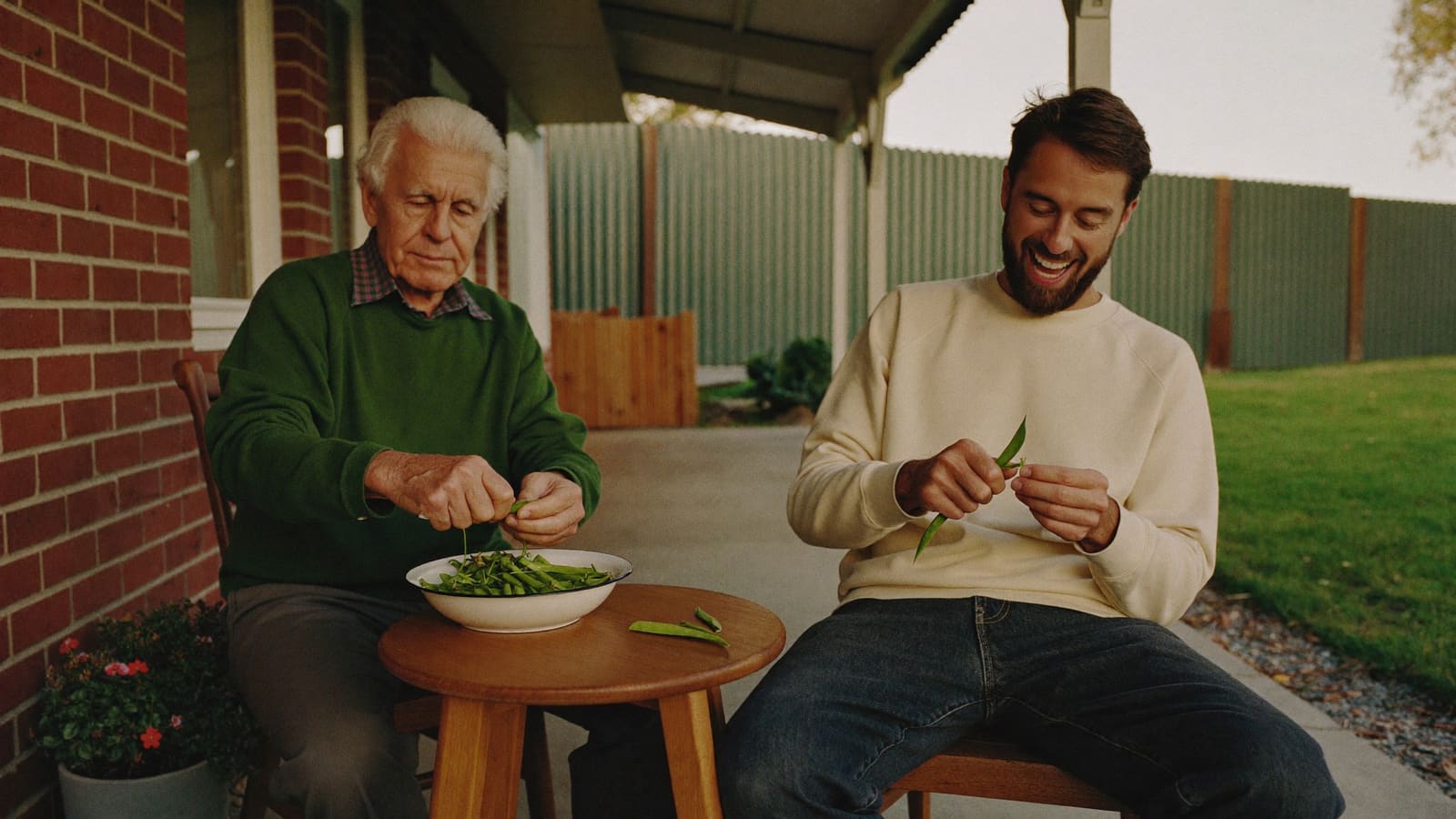
Illustrative. Does not depict Aldera clients or staff.
When a grandparent starts needing help at home, most of the planning lands on the middle generation. The adult children make the calls, sort the paperwork and argue about the roster. Grandchildren are often left at the edge of it, wanting to help and not sure how, or quietly worried and not told much.
That is a missed opportunity. Grandchildren can give things nobody else in the family can, and the relationship often matters more to a grandparent in this stage of life than almost anything on a care plan.
What grandchildren bring
Adult children carry the history and the worry. Grandchildren tend to arrive without either. A grandparent who has to accept help from their own children can still be the expert, the storyteller and the one who knows things with their grandchildren. That role is worth protecting.
They also tend to have skills the rest of the family is short on: patience with technology, flexible hours if they are students, and the energy to make a visit feel like an occasion rather than a check-up.
Ways to help that actually help
The best contributions are small and regular. A visit every second Sunday beats a big weekend once a year.
- Be the tech person. Set up video calls, enlarge the text on the phone, load favourite music, and show them how to see the family photos. Then come back and show them again.
- Record the stories. Sit down with a phone and ask about the house they grew up in, how they met, the first job. It is a gift to the whole family, and older people often love being asked.
- Share a thing you both like. Cooking a family recipe, the footy, gardening, cards, a television series watched together over weeks.
- Take one regular job. Bins on Tuesday night, the Saturday shop, mowing the lawn. Owning one task takes real weight off a parent.
- Keep the language alive. In many families the grandchildren’s generation is losing the home language. Practising it with a grandparent is good for both. We wrote about this in when a parent returns to their first language.
- Just call. A five-minute call on the way home from work counts. Loneliness is a real health risk in later life, and our piece on loneliness and companionship explains why.
Talking to younger children
Younger grandchildren notice when Nanna has a walker now, or when Jiddo forgets things. Explain it simply and honestly, in words that suit their age. Let them ask questions. Give them a job during visits, like carrying the tea or showing photos, so the visit is not just sitting still in a quiet room.
If a grandparent is living with dementia, it helps children to know that forgetting is part of the illness, not a sign that they are loved any less. Our guide on talking about dementia across cultures has more on these family conversations.
Keeping everyone in the loop
A common frustration for grandchildren is hearing about things late, or second hand. When the whole family is involved, it helps to agree who knows what, and how news is shared. Our piece on how families share the load covers rosters and group chats that work.
How this fits with care at home
At Aldera, the older person decides who is in their Care Circle and who their Care Lead talks to. That can include a grandchild who lives nearby, or one who handles the technology, if that is what the grandparent wants.
The One Story record holds what matters to the person beyond tasks, including who visits, what they love to talk about and which grandchild is getting married next spring. It means a support worker can ask about the wedding, and that kind of continuity is what turns a visit into a conversation.
A support worker can cover the personal care and the housework. What they cannot replace is a grandchild sitting on the back step shelling peas and laughing at a story they have heard a dozen times before.
Part of our The Aldera way guide.
Not sure where you fit?
Call us and a real person will talk it through, no obligation and no script.
Call 1300 998 928Common questions
How can grandchildren help when a grandparent needs care?
Often in ways the middle generation cannot: a regular visit or call, help with phones and video calls, recording family stories, sharing a hobby, or taking on one small regular job. The most useful help is regular and small rather than occasional and large.
Should we tell younger grandchildren about a grandparent's dementia?
Usually yes, in simple and honest words that suit their age. Children notice changes anyway, and an explanation helps them understand that a grandparent forgetting their name is the illness, not a lack of love.
Can grandchildren be part of the Care Circle?
With the older person's agreement, any family member can be someone the Care Lead keeps informed and talks to. Who is involved, and in what, is the older person's choice.
More blog
-

Blog
Staying at home after losing a partner
When a husband or wife dies, the house changes overnight. Some gentle, practical thoughts on grief, routine and getting the right help at home.
7 October 2026
-

Blog
When your husband or wife becomes your carer
Caring for a partner is not like caring for a parent. Staying a couple, accepting help without feeling you have failed, and looking after yourself.
5 October 2026
-
Blog
What a support worker notices
The bin that did not go out. The jumper worn two days running. Why the person who comes every week sees things a specialist appointment never will.
17 September 2026