Guides
If you go into hospital, what happens to your funding?
The Aldera team Published 8 September 2026

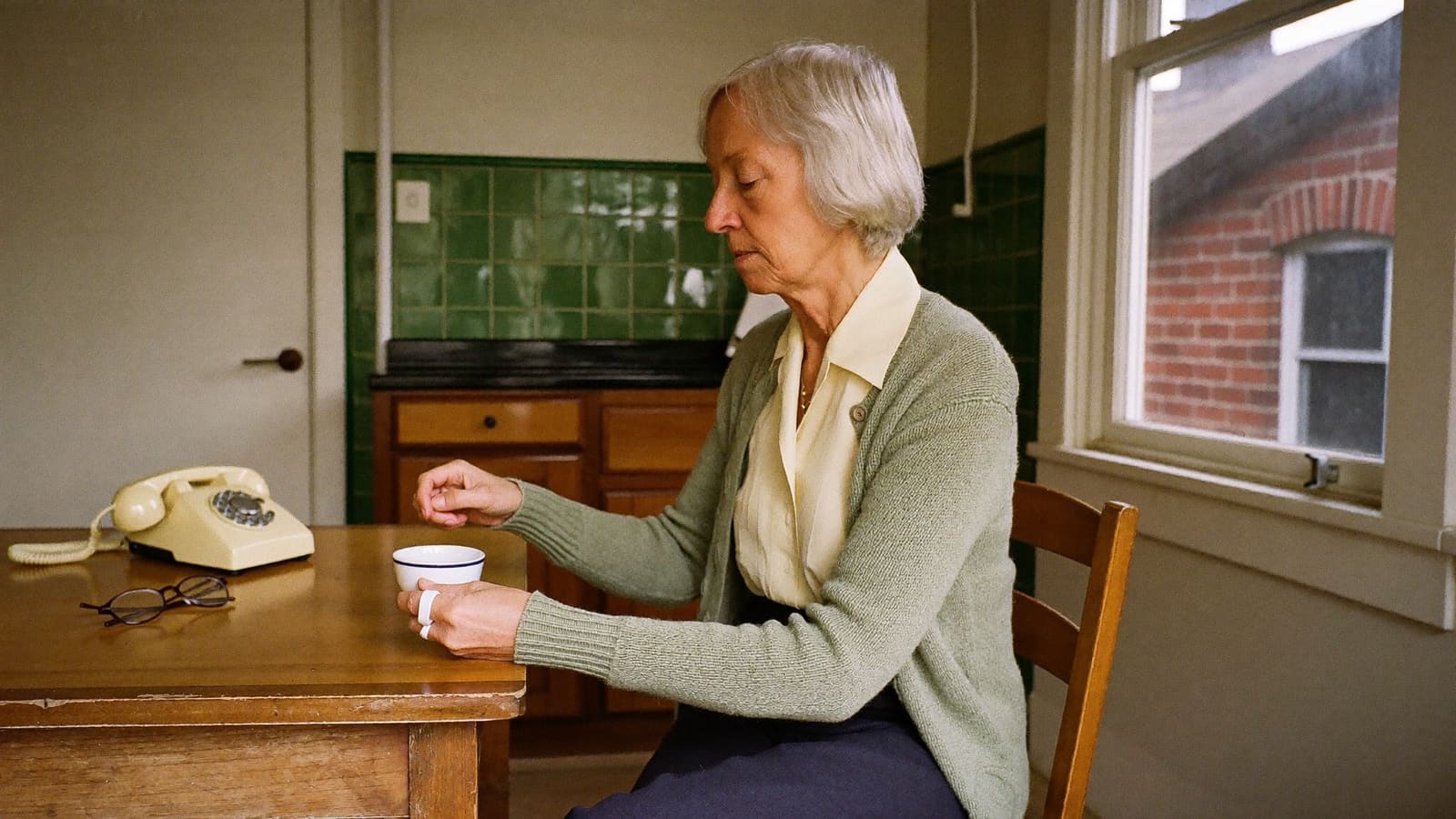
Illustrative. Does not depict Aldera clients or staff.
A hospital admission is rarely planned and almost never tidy. Somebody phones an ambulance on a Tuesday evening, and by Wednesday morning there are three separate systems carrying on as though nothing has changed. The support worker turns up to an empty house. The fortnightly cleaning is still booked. Somewhere a budget is still ticking over.
None of that is a disaster, and none of it costs you your place. But it does need two or three phone calls that nobody tells you to make.
This is general information, not financial advice. Your own numbers depend on your assessment and your agreement, so check them with your provider and with My Aged Care.
Your place does not disappear
The single most common fear is the wrong one. Going into hospital does not cancel your Support at Home place, does not put you back on the waiting list, and does not undo your assessment. You keep the place. What happens is narrower than that: while you are an inpatient, the hospital is providing your care, so home services pause. You are not meant to be funded twice for the same day.
If you have been waiting for a Support at Home place and the admission happens before you are assigned one, the wait carries on as it was. A hospital stay does not move you down the list, and in some cases it prompts a faster review, because the hospital can see plainly what home is going to need.
Make three calls
Call the provider, ideally the same day. This is the one that actually matters, and it is the one most often skipped because everyone assumes someone else has done it. Give them the date of admission and, if you know it, the likely length of stay. This stops workers being sent to an empty house, stops shifts being delivered and charged, and puts a marker on the file so the roster is not quietly cancelled and reassigned to someone else.
Ask the ward for the social worker or discharge planner. Not later, on day one or two. They organise the assessments and equipment that decide whether coming home is straightforward or chaotic. Our page on questions before hospital discharge is written to be taken into that conversation.
Call My Aged Care only if the stay will be long, or if what you need at home is going to change. For a short admission with the same needs afterwards, there is nothing to report. For a stroke, a fracture, a new diagnosis or a big drop in mobility, the plan you had was written for a person who no longer exists in quite the same form, and a plan review is the mechanism for fixing that.
What keeps being charged, and what should not
Be careful here, because it varies by provider and by agreement, and this is exactly where invented figures do harm. The honest version is a principle rather than a number.
Charges attached to a service you are not receiving should stop when that service stops. If nobody comes on Thursday, Thursday should not be billed. Charges that are not attached to a particular visit can behave differently, and your agreement is the document that says how.
So ask your provider, in writing:
- From which date do service charges stop?
- Does anything continue while I am an inpatient, and if so, what and why?
- What happens to any unspent funds in my budget?
- Is there anything I need to do to restart services, or does the discharge date trigger it?
Then check the answer against your quarterly statement when it arrives. A statement is the only place a small ongoing charge becomes visible, and quietly billed weeks are the commonest thing families find when they finally read one. If you have not read a home care agreement closely, reading a home care agreement covers the clauses that decide all of this.
Coming home is the part to plan early
The discharge itself is usually arranged in a hurry, often on a Friday, and the gap between leaving the ward and support restarting at home is where readmissions happen. Ask the ward, before the discharge date is set, what has been arranged for the first week: equipment delivered, a district nursing referral if wounds or injections are involved, and whether the support you had is enough for the person who is now coming home.
Frequently it is not. Someone who managed with two visits a week before a fractured wrist may need daily help with showering and meals for a month. That is a temporary change, and it is worth asking for as one, so it does not have to be argued down again later. Our guide on coming home from hospital covers the first fortnight in detail, and post-hospital support explains what that support looks like day to day.
How Aldera handles it
Two practical things, because a hospital admission is precisely when a care arrangement shows what it is made of.
Your Care Lead is one phone number, not a call centre queue. One call about an admission reaches the person who already knows the household, and they handle the roster, the pause and the restart rather than handing you a form.
The One Story record means the plan does not have to be rebuilt from scratch when you come home. What was working before the admission is written down, so the conversation is about what has changed rather than about who you are. And because the Care Circle is a small named group of workers rather than whoever is free, the person who walks back in on day one is usually someone you already know, at the point when a stranger is hardest to have in the house.
If a hospital stay has changed what home needs, get in touch and we will work through it with you.
Part of our How funding works guide.
Not sure where you fit?
Call us and a real person will talk it through, no obligation and no script.
Call 1300 998 928Common questions
Does going into hospital cancel your Support at Home place?
No. A hospital admission does not end your place or send you back to the waiting list. Your services pause while you are an inpatient, because the hospital is providing your care, and they restart when you come home. The thing that causes trouble is nobody telling the provider, so the visits stay booked and the roster keeps turning up to an empty house.
Who should you tell when an older person is admitted?
Tell the provider first, on the day if you can, because that is the call that stops visits being delivered to an empty house. My Aged Care does not need a call for a short stay. For a long admission, or if the discharge plan is likely to change what support is needed, ask the hospital social worker or discharge planner to arrange a review before you go home.
Do you keep paying your contribution while you are in hospital?
It depends what the charge is for. Fees tied to services you are not receiving should stop when the services stop. Charges that are not tied to a visit can behave differently under your agreement. Ask your provider to put in writing what continues, what stops and from which date, and check it against your quarterly statement when it arrives.
More guides
-

Guides
Drinking enough water in later life
Why older people drink less without noticing, the signs of dehydration to watch for, and small habits that make drinking easier at home.
15 October 2026
-
Guides
Recognising elder abuse and where to get help
The forms elder abuse takes, the quiet signs families and workers notice, and who to contact in NSW if you are worried about an older person.
15 October 2026
-

Guides
Talking to a parent about giving up driving
Signs driving is getting harder, how to raise it without a fight, who can give an independent view, and how to keep a parent getting out once the keys go.
15 October 2026