Guides
Help at home after a stroke
The Aldera team Published 4 September 2026
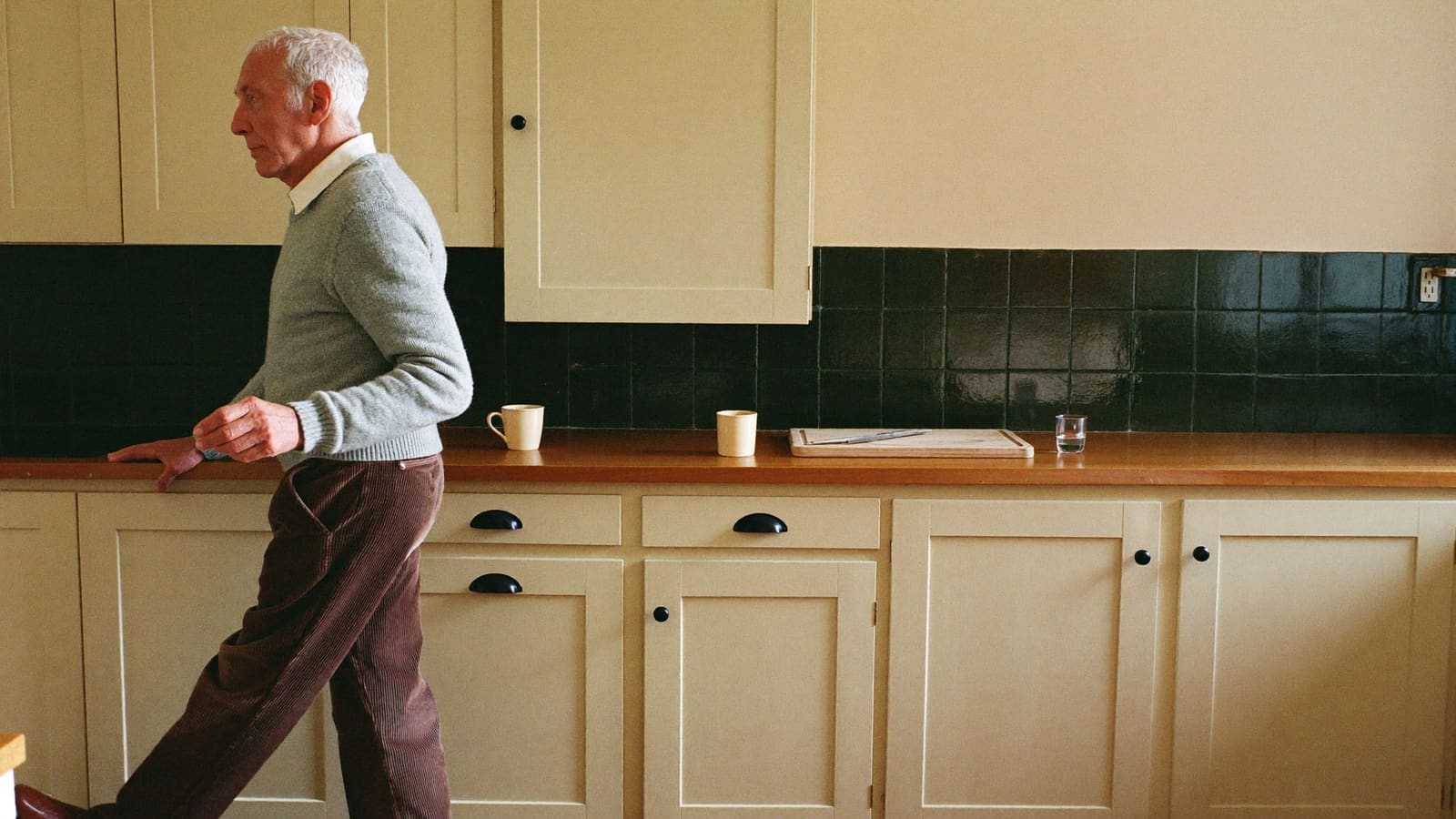
Illustrative. Does not depict Aldera clients or staff.
A stroke changes things quickly and then improves slowly, which is an awkward combination for arranging help. The needs on the day someone comes home are usually not the needs three months later, and support set up once at discharge and never revisited fits badly at both ends.
This is general information, not medical advice. Anything about treatment or recovery belongs with the treating team.
Recognising another one
Before anything else, everyone in the house should know the signs and that they mean an ambulance, not a wait-and-see.
Face drooping on one side. Arms, where one cannot be lifted or held up. Speech that is slurred or muddled, or trouble understanding. Time, meaning ring Triple Zero (000) straight away, even if the signs pass. Health authorities publish this widely and you can read more at health.gov.au.
Put it on the fridge. People who have had one stroke are at higher risk of another, and the family’s hesitation is often what costs the time.
The first few weeks at home
Discharge tends to be optimistic. The hospital is judging whether someone is safe to leave, which is a lower bar than managing a house.
The things that go wrong in week one are practical. Nobody has thought about the shower. The bed is at the wrong end of the house from the toilet. There is food in the fridge but nobody can open the packets one-handed. Follow-up appointments have been made without any way of getting to them.
Our guide on coming home from hospital covers the first two weeks in detail, and it applies here almost line for line. The one addition after a stroke is that the picture keeps moving, so whatever is set up should be reviewed within a month rather than left to run.
What help usually looks like
Personal care. Showering and dressing with a weak arm or leg is where most people want help first, and it is the help they most want done without fuss. It is often needed heavily for a while and then far less.
Meals and the kitchen. Cooking is a two-handed job. Help might be preparing meals, or it might be as small as decanting things into containers that open easily. Swallowing can also be affected, which is a clinical question and not one to solve with guesswork. Our guide on speech pathology and swallowing explains who assesses that and what changes they recommend.
Allied health at home. Physiotherapy for strength and walking, occupational therapy for the house and for getting dressed, speech pathology for talking, understanding and eating. Home visits matter here because the goal is doing things in the actual kitchen and the actual bathroom, not in a clinic.
Transport. Rehabilitation means repeat appointments, often for months, usually by someone who cannot drive for a while.
Domestic help and the paperwork. The dull supports that quietly free up the energy for rehabilitation.
Our post-hospital support page sets out how Aldera runs this in the weeks after a discharge.
The parts nobody warns you about
Fatigue. Not ordinary tiredness. It arrives without warning and a good sleep does not fix it. The workable approach is to spend the best hours of the day on the things that matter, and to accept that a big morning means a flat afternoon.
Communication. When speech or understanding is affected, the person is not confused and is not less intelligent, and being spoken about in the third person while they are in the room is deeply insulting. Slow down, one idea at a time, and give them the time to answer instead of finishing their sentence.
Mood. Low mood and tearfulness after a stroke are common and are part of what happened, not a character failing. It is worth raising with the GP rather than waiting for it to pass.
The family carer. Someone in the house has usually just taken on a second job with no notice. That is a real need in its own right, and respite exists for exactly this.
Keep it under review
The reason continuity matters after a stroke is that improvement is invisible to anyone who only turns up occasionally. A worker who has been coming for two months knows that last week he was managing the buttons himself. A different worker every visit will simply do them for him, and the ability quietly disappears.
At Aldera your Care Circle is a small named team working from One Story, so what someone can do this week, and what they could not do last week, is written down and known by everyone who comes. Support that does not step back as recovery moves is support that gets in the way of it.
Part of our Our services guide.
Not sure where you fit?
Call us and a real person will talk it through, no obligation and no script.
Call 1300 998 928Common questions
What support can you get at home after a stroke?
Usually a combination: help with showering and dressing while an arm or a leg is weak, meals, domestic help, transport to rehabilitation appointments, and allied health at home including physiotherapy, occupational therapy and speech pathology. What you can access depends on your assessment, so start the My Aged Care conversation before discharge rather than after.
How long does recovery after a stroke take?
There is no single answer and anyone who gives you one is guessing. Improvement often continues for many months, and it is rarely a straight line. What matters at home is that the support is reviewed as things change, rather than set once at discharge and left.
Why is someone so tired after a stroke?
Fatigue after a stroke is very common and it is not ordinary tiredness. It arrives suddenly and does not lift with a normal night's sleep. Planning the day around it, with the demanding things in the best hours, works better than pushing through. Raise it with the treating team, because it has causes worth checking.
More guides
-
Guides
Drinking enough water in later life
Why older people drink less without noticing, the signs of dehydration to watch for, and small habits that make drinking easier at home.
15 October 2026
-
Guides
Recognising elder abuse and where to get help
The forms elder abuse takes, the quiet signs families and workers notice, and who to contact in NSW if you are worried about an older person.
15 October 2026
-
Guides
Talking to a parent about giving up driving
Signs driving is getting harder, how to raise it without a fight, who can give an independent view, and how to keep a parent getting out once the keys go.
15 October 2026