Guides
What the Support at Home means assessment looks at
The Aldera team Published 31 August 2026

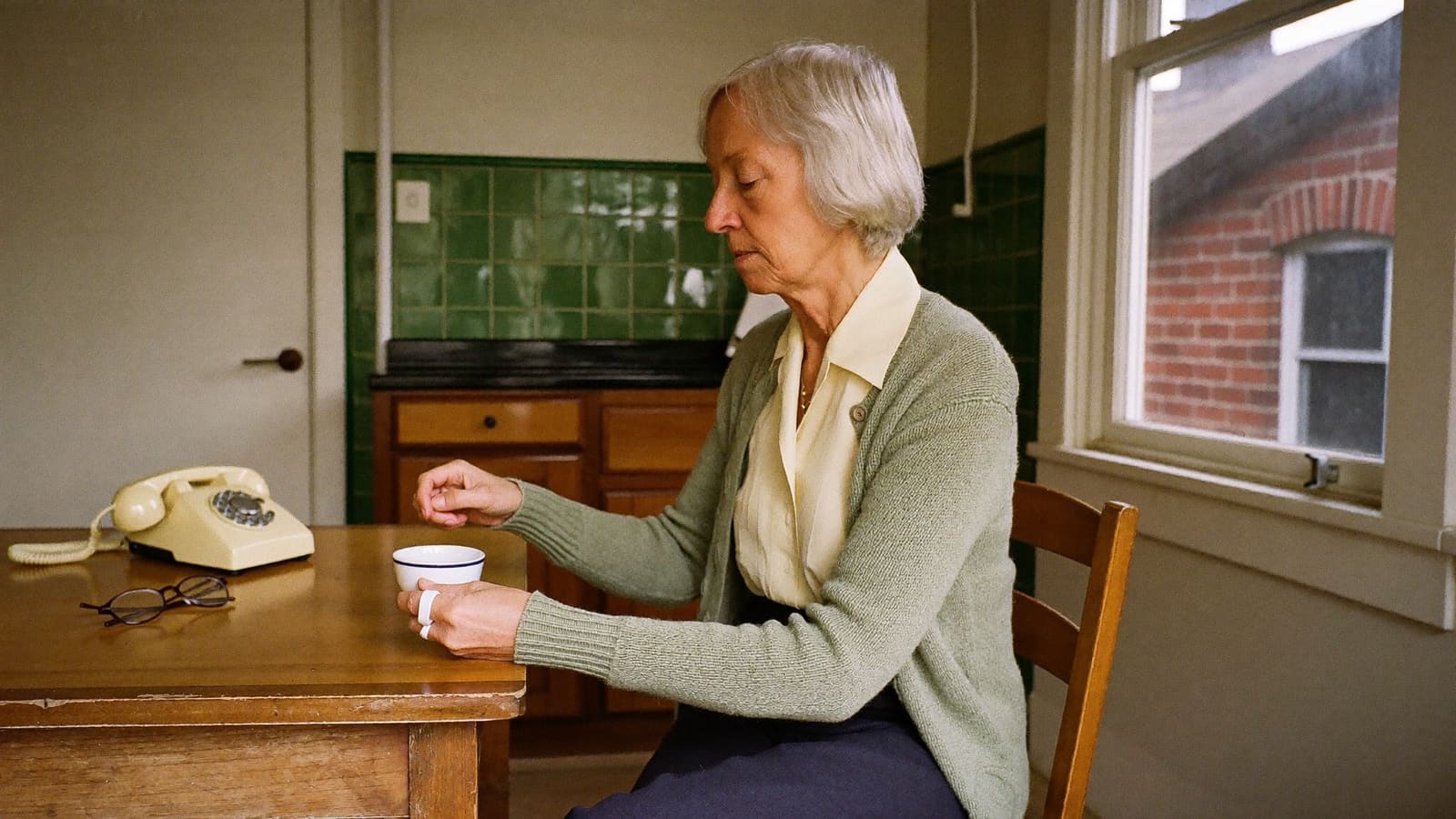
Illustrative. Does not depict Aldera clients or staff.
Two assessments sit between you and funded care at home, and families routinely mistake one for the other.
The aged care assessment asks what help you need. The means assessment asks what you can contribute towards it. This guide is about the second one.
This is general information, not financial advice. For the figures that apply to you, speak to Services Australia or My Aged Care.
Who actually runs it
The means assessment is a financial assessment, so it does not sit with the aged care assessment team. It is handled by Services Australia, or by the Department of Veterans’ Affairs if you are a DVA client.
That matters for a practical reason. If you already receive an income-tested payment from Centrelink or DVA, such as the Age Pension, much of what the assessment needs is already on file. A lot of people in that position do not need to start from scratch, and some do not need to submit anything further at all. The first question to ask is simply: given what you already hold about me, is there anything else I need to give you?
What it looks at
Broadly, two things: your income, and your assets.
Income covers the obvious things and some less obvious ones, including pensions, superannuation income streams, investment earnings and rent you receive. Assets cover savings, investments, and property other than the roof over your head.
Two things worth asking about specifically, because they are where the confusion sits:
- Your home. The way the family home is treated is not the same for care delivered at home as it is for residential aged care. Ask the question directly rather than assuming that what happened to a friend entering a nursing home applies to you.
- A partner. Where there is a couple, the assessment generally looks at the couple’s combined position, not one person’s. If you are separated by illness, say so, because that is a recognised circumstance and it can change the answer.
What it decides
Support at Home groups the help you receive into service categories, and the contribution arrangement is not the same across all of them. The Department of Health and Aged Care sets out the current arrangement, category by category, at health.gov.au. Your means assessment is what decides where you sit within it.
Please do not take a rate from a forum, a brochure, or a provider’s sales conversation, including ours. Contribution arrangements have changed, they are indexed, and they differ by category and by circumstance. A number that was right for a neighbour last year may be wrong for you today.
There are also lifetime and annual caps in the system, which exist so that contributions do not run away over a long period of care. Ask Services Australia how the caps apply to you and what counts towards them.
Getting through it faster
The assessment moves quicker when you have your material in one place. That is:
- Your My Aged Care client number
- Your Centrelink or DVA customer reference number
- Recent statements for bank accounts, term deposits and investments
- Details of any income stream or superannuation product
- Details of property you own other than your home
- Your partner’s equivalents, if you have one
Our assessment checklist covers the care side of the paperwork, and the Support at Home glossary translates the terms that turn up in the letters.
Three questions worth asking
- Based on my assessment, what will I contribute, and to which categories of service?
- Does anything I have told you change if my circumstances change, and how do I report that?
- Is there financial hardship assistance, and would I be considered for it?
That last one exists and is under-used. If contributions would genuinely cause hardship, there is a process for it. Ask.
What this does not decide
The means assessment does not decide what care you get, how many hours you receive, or who provides it. It also does not lock you to a provider. You can complete it, take your time, and still choose freely afterwards.
When you do get to choosing, the questions that matter are about consistency and accountability rather than price lists. Ask any provider how many different carers a client sees in a month and who is accountable when something goes wrong. At Aldera the answer is a Care Circle of two to four regular carers and one named Care Lead, and we would rather you put that question to everyone you speak to.
For your own numbers, start at myagedcare.gov.au or with Services Australia. For a plain conversation about what your hours could realistically cover, call us.
Part of our How funding works guide.
Not sure where you fit?
Call us and a real person will talk it through, no obligation and no script.
Call 1300 998 928Common questions
Is the means assessment the same as the aged care assessment?
No, and they are easy to confuse. The aged care assessment looks at what help you need. The means assessment looks at your income and assets to work out what you contribute towards it. Different people run them and they can happen at different times.
Do I have to do a means assessment?
You can decline it. If you do, you may be asked to pay the maximum contribution rather than an assessed one, because there is nothing on file to reduce it. For most people it is worth completing.
What if my financial situation changes after the assessment?
Tell Services Australia. Contributions are based on your assessed circumstances, and a change in income or assets can change what you pay. It does not update itself.
More guides
-

Guides
Drinking enough water in later life
Why older people drink less without noticing, the signs of dehydration to watch for, and small habits that make drinking easier at home.
15 October 2026
-
Guides
Recognising elder abuse and where to get help
The forms elder abuse takes, the quiet signs families and workers notice, and who to contact in NSW if you are worried about an older person.
15 October 2026
-

Guides
Talking to a parent about giving up driving
Signs driving is getting harder, how to raise it without a fight, who can give an independent view, and how to keep a parent getting out once the keys go.
15 October 2026