Blog
Asking for a female or male support worker
The Aldera team Published 11 September 2026
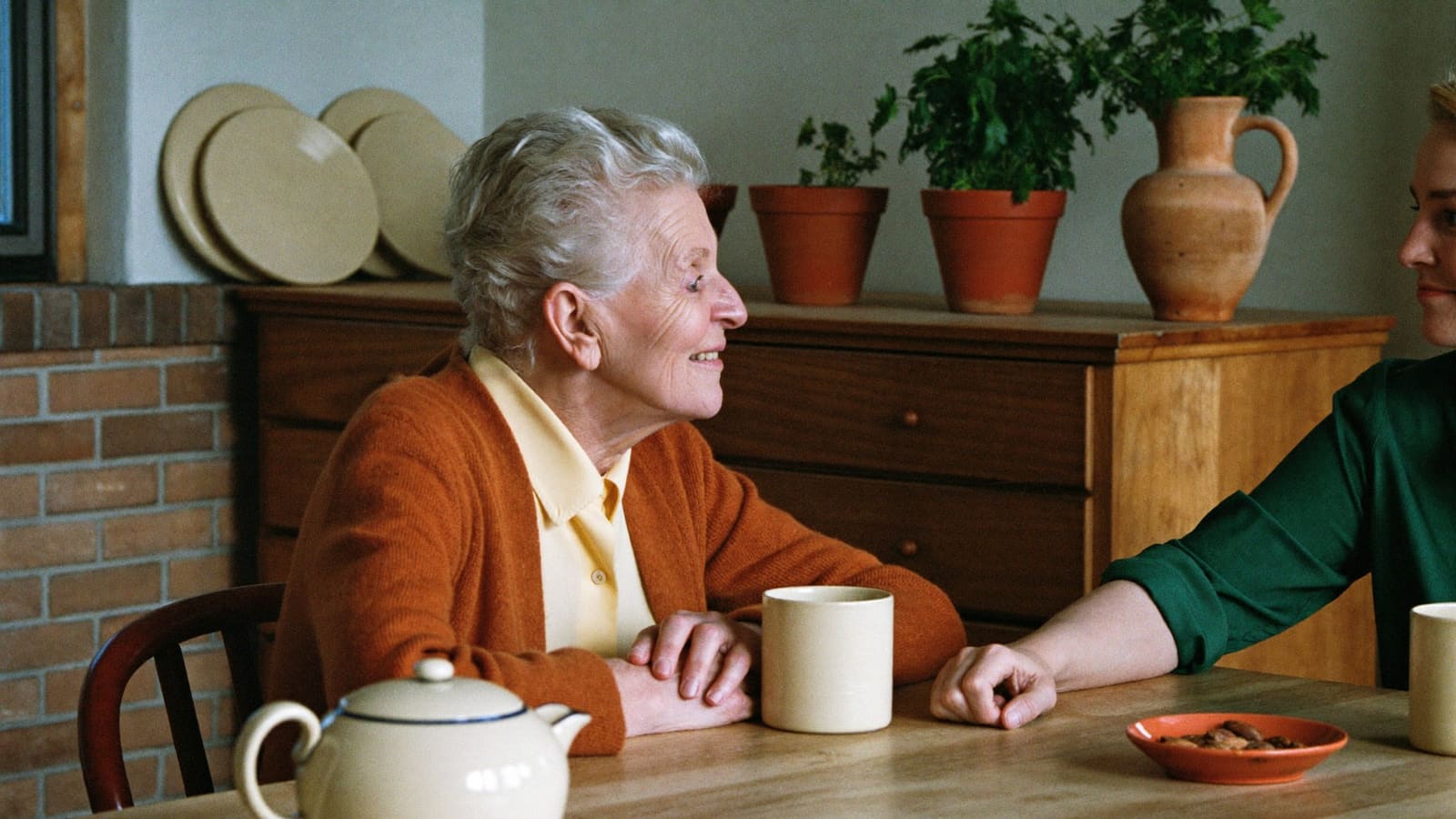
Illustrative. Does not depict Aldera clients or staff.
There is a question that a lot of people answer wrongly on purpose, and it comes early in the first visit. Would you prefer a man or a woman for personal care?
Plenty of people say “either is fine” when it is not fine at all. Then they spend six months bracing themselves every Tuesday morning, and by the time it comes out it has turned into a complaint rather than a preference.
So, plainly: wanting a woman to help you shower, or wanting a man, is not a special request. It is a basic detail of the arrangement, like the time of the visit and which door to use. This is general information about how care arrangements work rather than advice about your own situation.
Why nobody says it
The hesitation is nearly always about not wanting to be difficult.
People about to start care have usually just come through an assessment, a waiting period and a pile of paperwork. By the time a real person is sitting at the kitchen table, the instinct is to be easy to help. Asking for something specific feels like it might push you down a list, or make you the fussy one, or seem ungrateful for help you waited a long time to get.
There is a second reason, and it is quieter. For a lot of people the real answer involves something they would rather not explain: their faith, their modesty, a marriage where nobody but a spouse has seen them undressed in fifty years, or an old experience they do not intend to discuss with a stranger holding a clipboard.
You do not have to explain any of it. “I would prefer a woman” is a complete sentence and a complete reason.
Where it actually matters
It matters most in exactly the places you would expect, and hardly at all elsewhere.
Personal care is the sharp end: showering, dressing, toileting, continence support, anything involving being undressed or being touched. Our personal care page describes what that help involves, and reading it makes clear why the question is not a small one.
For vacuuming, shopping or a lift to the doctor, most people genuinely do not mind. That distinction is worth saying out loud when you are asked, because it gives the roster room to move: a firm preference where it counts, and flexibility where it does not, is far easier to fill than a blanket rule.
It is not only about gender
The same reflex stops people asking for other things that are equally ordinary.
Wanting a worker you can speak your own language with is the big one. It is not a comfort or a nicety, it is the difference between being understood and being managed, and our guide on asking for a worker who speaks your language covers how to ask and what is realistic. Food, prayer times, shoes off at the door, which day the family visits, and what a woman of your mother’s generation will and will not accept from a stranger all belong in the record too. Our piece on culturally matched care in practice is about what that looks like on an actual Tuesday rather than in a brochure.
Sometimes these stack. A request for a woman who speaks Arabic, on a weekday morning, is a harder roster problem than either request alone. That is worth knowing, because it changes what a fair answer sounds like.
What a fair answer sounds like
Here is the part providers often get wrong, in both directions.
A bad answer is a promise. Anyone who says yes to every preference without checking the roster is telling you what you want to hear, and you will find out in about three weeks.
A bad answer is also a shrug. Recording a preference and then rostering whoever is free is worse than never asking, because you were told it mattered.
A fair answer names the constraint and gives you the choice. Something closer to: yes to a woman, and on Tuesdays that means half past ten rather than nine, or a Wednesday if the morning matters more than the day. That is an honest trade and you can decide it yourself. What you should never be handed is a cancelled visit with no explanation, or a stranger at the door with an apology.
If you have asked clearly and nothing has changed, our guide on raising a concern sets out the next step, and free advocacy support is available if you would rather not do it alone.
Say it at the start, and say it again when things change
The best moment is while the plan is being written, because a preference recorded then shapes who is recruited to your Care Circle rather than having to be fitted around a roster that already exists. At Aldera it goes into One Story, the single record everyone working with you reads, so you are not repeating it to each new person.
The second best moment is now. Preferences are allowed to change, and they often do, usually when the help gets more personal than it was at the start. Showering is a different conversation from shopping, and plenty of people who were relaxed about the second turn out not to be about the first. Ring your Care Lead and say so. Nobody needs a form.
Where to get help asking
If you want to talk it through with somebody outside the arrangement first, the older person’s advocacy service is free and independent, and Carer Gateway on 1800 422 737 is there for family carers. For the standards a provider is expected to meet, including your right to be involved in decisions about your own care, the Aged Care Quality and Safety Commission publishes them at agedcarequality.gov.au. General information about services and eligibility is at myagedcare.gov.au or on 1800 200 422.
Would rather just say what you need to a person who writes it down? Get in touch. A real person answers.
Part of our Languages and cultural care guide.
Not sure where you fit?
Call us and a real person will talk it through, no obligation and no script.
Call 1300 998 928Common questions
Can I ask for a female support worker?
Yes, and you do not need a reason. Ask when the plan is being written rather than after someone has already started, because a preference recorded up front shapes the roster, while one raised later has to work around a roster that already exists. It applies to men asking for a man just as much.
Will asking for a woman limit the help I can get?
Sometimes it affects timing rather than whether you get help at all, because the roster has to find a match for your days. A provider should tell you plainly if a preference makes a particular time harder to fill, and offer you the choice, rather than either ignoring the preference or quietly dropping the visit.
Do I have to explain why I want a worker of a particular gender?
No. Religion, modesty, a history you would rather not discuss, or simple comfort in your own bathroom are all sufficient, and none of them require a story. A good provider writes it down and moves on to the next question.
More blog
-

Blog
Grandchildren and a grandparent's care
Grandchildren often want to help when a grandparent starts needing care but do not know how. Practical ways for younger family to stay close and useful.
15 October 2026
-

Blog
Staying at home after losing a partner
When a husband or wife dies, the house changes overnight. Some gentle, practical thoughts on grief, routine and getting the right help at home.
7 October 2026
-

Blog
When your husband or wife becomes your carer
Caring for a partner is not like caring for a parent. Staying a couple, accepting help without feeling you have failed, and looking after yourself.
5 October 2026