Blog
Music and art therapy in dementia care
The Aldera team Published 2 September 2026
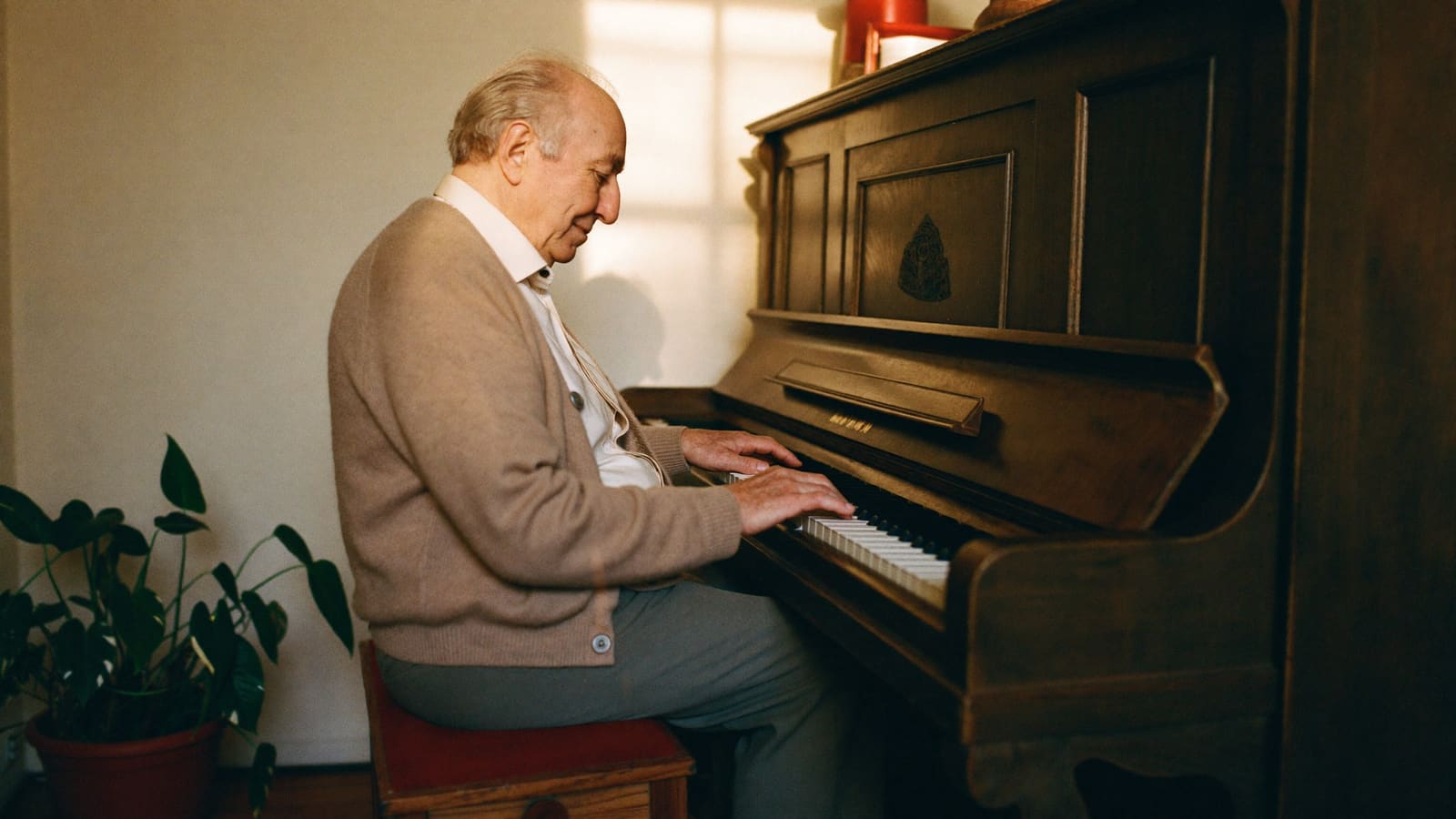
Illustrative. Does not depict Aldera clients or staff.
There is a moment families describe again and again. A parent who has not managed a full sentence in months hears something from 1958 and sings the whole verse.
It is startling the first time, and it is not a fluke.
This is general information, not advice. Dementia affects every person differently, and anything specific to someone’s diagnosis or treatment belongs with their GP or specialist.
Why it works
Music learned young sits differently in the brain from recent memory and from language. It survives when a great deal else has gone, which is why someone who cannot follow a conversation can still find their way through a song they knew at twenty.
The important part is whose music it is. A compilation chosen for older people in general does very little. The exact songs from someone’s own late teens and twenties, in their own language, do a great deal. That is a research finding and it is also the thing most often got wrong, because it is easier to put on something pleasant than to find out what they actually loved.
Art works on a related principle. It gives a person something to do with their hands and something to be looked at for, without requiring them to produce language on demand. For someone who has spent two years failing at conversations, an activity with no right answer is a genuine relief.
What the trained versions add
Registered music therapists and art therapists are clinicians, not entertainers. They use these methods toward specific goals: reducing agitation, supporting communication, working with grief, managing distress at particular times of day.
Where they earn their keep is with the hard cases. Someone whose late afternoons are consistently difficult. Someone who resists personal care and becomes distressed every time. Someone who has stopped engaging with anything at all. A therapist will build something specific and then teach the family and the support workers to run it, which is what makes it stick between visits.
Availability and funding for these therapies under aged care varies, so ask what applies to your situation rather than assuming. Our overview of allied health at home covers how the disciplines fit together.
What you can do this week for nothing
Most of the benefit here is available without a referral.
Build the actual playlist. Not “music from their era”. Their songs. Ask them if they can still tell you, ask siblings, look at what records are in the house, ask about weddings and dances and what was playing when they met. Twenty specific songs beat two hundred generic ones.
Use it at the hard times. If late afternoon is when things unravel, that is when the music goes on, before the agitation starts rather than after. Prevention works much better than rescue here, and it fits with what we have written about keeping routines that work when someone has dementia.
Sing along, badly. Doing it with them is the difference between an activity and a radio playing at someone. Nobody minds that you cannot sing.
Match the music to the task. Something familiar during a shower changes the whole atmosphere of the most-resisted part of the day.
Let the art be pointless. No template, no theme, no finished product to be praised. Paint, paper, clay, hands moving. If someone wants to paint the same shape forty times, that is fine.
Watch what actually helps. Some music brings a person up and some brings them down, and the effect can be very specific. Songs tied to a lost spouse can cut either way and it is worth knowing which. Note what works, and write it down where everyone can see it.
That last point is the one that turns this from a nice afternoon into something reliable. At Aldera it goes into the One Story, because a discovery that lives only in one person’s head is lost the moment they are on leave.
The thing to be careful about
This is not a treatment for dementia and nobody should sell it as one. It does not slow the condition and it does not restore memory.
What it does is give someone good hours, and reduce the number of bad ones. In a condition where the medical options are limited, hours matter enormously, and they matter to the family watching as much as to the person.
It is also worth saying that the reason this works is the same reason carer consistency works. Both depend on somebody knowing this particular person: their songs, their era, their language, what settles them and what does not. A stranger with a good playlist has the tool and not the knowledge.
For dementia services and information start at myagedcare.gov.au. If you want help working out what a difficult late afternoon actually needs, ring us and a person will answer.
Part of our The Aldera way guide.
Not sure where you fit?
Call us and a real person will talk it through, no obligation and no script.
Call 1300 998 928Common questions
Why does music reach people with dementia when conversation does not?
Music that someone learned young is held differently from recent memory and from language, so it often remains available long after names and conversation have become difficult. That is why a person who cannot follow a sentence can still sing along to something from their twenties, and why the effect is strongest with music from their own youth rather than anything chosen for them.
Do you need a trained therapist, or can family do this?
Both, for different things. Registered music and art therapists are trained clinicians who use these methods for specific goals such as reducing agitation or supporting communication, and they are worth involving where distress is significant. Playing someone their own music, or sitting with paints, needs no training at all and costs nothing.
What if they were never musical or never painted?
It does not matter much, because neither therapy is about skill or output. The point is engagement and mood, not a performance or a finished picture. What does matter is that the material is theirs rather than generic, which is why their own era, their own language and their own songs work far better than a compilation chosen for older people in general.
More blog
-
Blog
Grandchildren and a grandparent's care
Grandchildren often want to help when a grandparent starts needing care but do not know how. Practical ways for younger family to stay close and useful.
15 October 2026
-
Blog
Staying at home after losing a partner
When a husband or wife dies, the house changes overnight. Some gentle, practical thoughts on grief, routine and getting the right help at home.
7 October 2026
-
Blog
When your husband or wife becomes your carer
Caring for a partner is not like caring for a parent. Staying a couple, accepting help without feeling you have failed, and looking after yourself.
5 October 2026