Guides
Keeping routines that work when someone has dementia
The Aldera team Published 2 September 2026

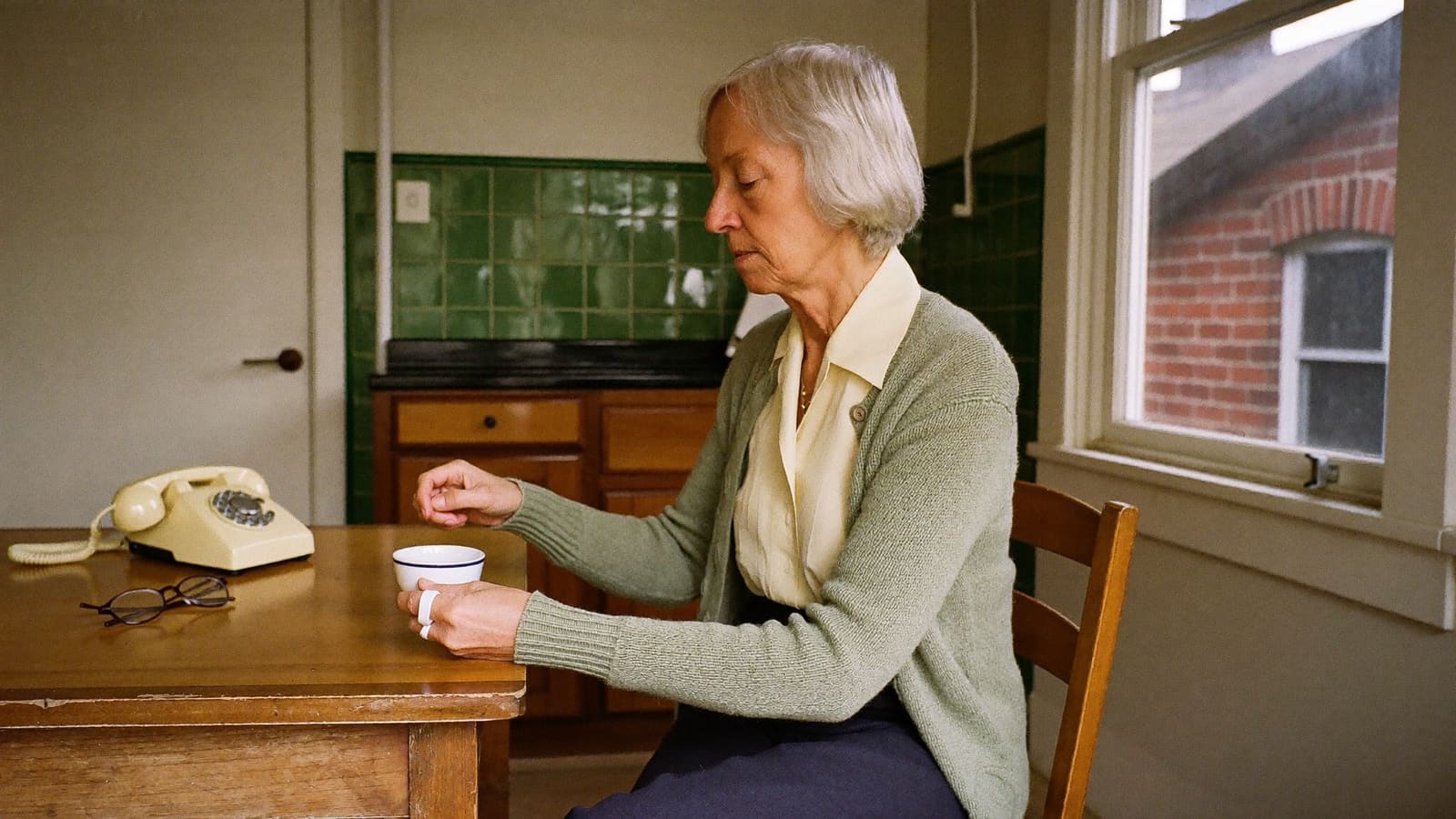
Illustrative. Does not depict Aldera clients or staff.
A routine is not a timetable stuck on the fridge. It is a way of arranging the day so that the person living in it needs to remember as little as possible.
That is the whole mechanism. When the order never changes, each step cues the next one. Dressing gown, kettle, radio, shower, breakfast, same chair, same cup. The sequence carries the person along, and they do not have to work out what comes next, because nothing ever comes next except the thing that always does.
This is general information, not advice. Dementia affects every person differently, and anything specific to one person’s diagnosis, medications or symptoms belongs with their GP or specialist.
Why the same order matters more than the same clock
Families sometimes hear “routine” and build a schedule with times in it, then feel they have failed by nine in the morning.
Order is what does the work, not the clock. If the shower always happens after breakfast and before the radio news, that holds even when breakfast runs forty minutes late. Anchor to the sequence and to a few fixed points in the day that genuinely do not move, then let everything between them float.
The fixed points that tend to matter most are getting up, meals, going out if going out happens, and going to bed. Keep those steady and the rest is more forgiving than it looks.
Build it around what already exists
The strongest routine is almost always the one the person already had, before anyone was worried about them.
So start by asking what fifty years of habit looks like. Which side of the bed. Tea or coffee, and in which cup. Radio or television, and which station. Shower in the morning or a wash at night. The paper, the crossword, the walk to the corner, the phone call to a sister on Sundays.
A routine assembled out of those things needs almost no learning, because it is not new. A routine invented by a family in a meeting, however sensible, is one more thing to adapt to.
Some things worth keeping steady beyond the timing:
- The same cup, plate and chair. Familiar objects carry a surprising amount of the cue
- The same place for glasses, keys, wallet and the walking stick
- The same route on the same walk
- Lighting that comes on before the light drops, rather than after
- One thing in the day that is looked forward to, not just managed
What tends to unravel it
Most bad days have a cause, and it is usually one of a short list.
Too many decisions. “What do you feel like for lunch” is a harder question than it sounds. Offer two things, or simply put the plate down.
Too many people at once. A full house on a Sunday is overwhelming rather than cheering. Visitors one or two at a time, spread across the week, work far better.
Rushing. Hurrying someone reliably makes the task take longer. Whatever it is, start it earlier rather than doing it faster.
Late afternoon. Restlessness and agitation often build as the light goes. Move the demanding parts of the day, the appointments, the showering, the outings, into the morning, and keep the late afternoon deliberately dull.
A new face. This is the big one, and it is the reason carer consistency stops being a nicety and becomes clinical. Someone who cannot place the person standing in their hallway has to work out afresh whether they are safe, every single visit. We have written about what carer consistency actually means and why a rotating roster undoes so much of the good work.
Where support fits
A support worker who comes at the same hour and does things in the same order becomes part of the routine rather than an interruption to it. That takes weeks, not one visit, and it only happens if it is the same small group of people.
Our dementia support page covers what that looks like in practice. The two things worth saying here are about how it is set up.
The first is the One Story record. The habits above only help if everyone who walks through the door knows them, so they get written down once and they travel: the cup, the chair, the station, the name he calls his wife, the subject that reliably settles him and the one that does not.
The second is that a routine has to be allowed to change. Dementia progresses, and a sequence that worked beautifully in March can be the wrong shape by October. That is not a failure of the routine, it is information. Reviewing it every few months, and after any hospital stay, matters more than defending it.
When to let a routine go
Some routines outlive their usefulness, and holding on to them causes the distress they were meant to prevent.
If a part of the day has become a daily fight, that is the signal. The Tuesday shower that now takes an hour and ends in tears is not a routine any more. Change the time, change the order, change who does it, or swap a shower for a wash at the basin. The goal was never the shower. It was a person getting through the day without being frightened.
For the harder conversations that come with all of this, how to talk to a parent who refuses help at home is worth reading alongside this.
Dementia-specific information and support services are listed at myagedcare.gov.au, and the Department of Health and Aged Care publishes current program detail. If you would rather talk it through, ring us and a person will answer.
Part of our Our services guide.
Not sure where you fit?
Call us and a real person will talk it through, no obligation and no script.
Call 1300 998 928Common questions
Why are routines important for a person with dementia?
Because a familiar sequence does the remembering for them. When the order of the day is always the same, each step gives a cue for the next one, and the person can get through the morning on habit rather than on recall. That reduces the number of decisions they have to make, and decisions are where distress usually starts. It is not about discipline or a strict timetable, it is about removing the need to work out what happens next.
What time of day is hardest?
Late afternoon and early evening for many people, often called sundowning. Tiredness, fading light and a busier household all land at once, and restlessness, agitation or wanting to leave are common. Most families find it eases if the late afternoon is kept deliberately quiet and predictable, with the busier parts of the day moved earlier.
Should you correct someone who has got the day or the year wrong?
Usually not. Correcting rarely restores the memory and often produces distress or an argument, because the person is left knowing they are wrong without knowing why. It is generally kinder to respond to the feeling behind what they said and move gently on. If you are unsure how to handle a specific situation, ask the treating GP or a dementia specialist rather than guessing.
More guides
-

Guides
Drinking enough water in later life
Why older people drink less without noticing, the signs of dehydration to watch for, and small habits that make drinking easier at home.
15 October 2026
-
Guides
Recognising elder abuse and where to get help
The forms elder abuse takes, the quiet signs families and workers notice, and who to contact in NSW if you are worried about an older person.
15 October 2026
-
Guides
Talking to a parent about giving up driving
Signs driving is getting harder, how to raise it without a fight, who can give an independent view, and how to keep a parent getting out once the keys go.
15 October 2026