Guides
Domestic assistance: what is and is not included
The Aldera team Published 28 August 2026
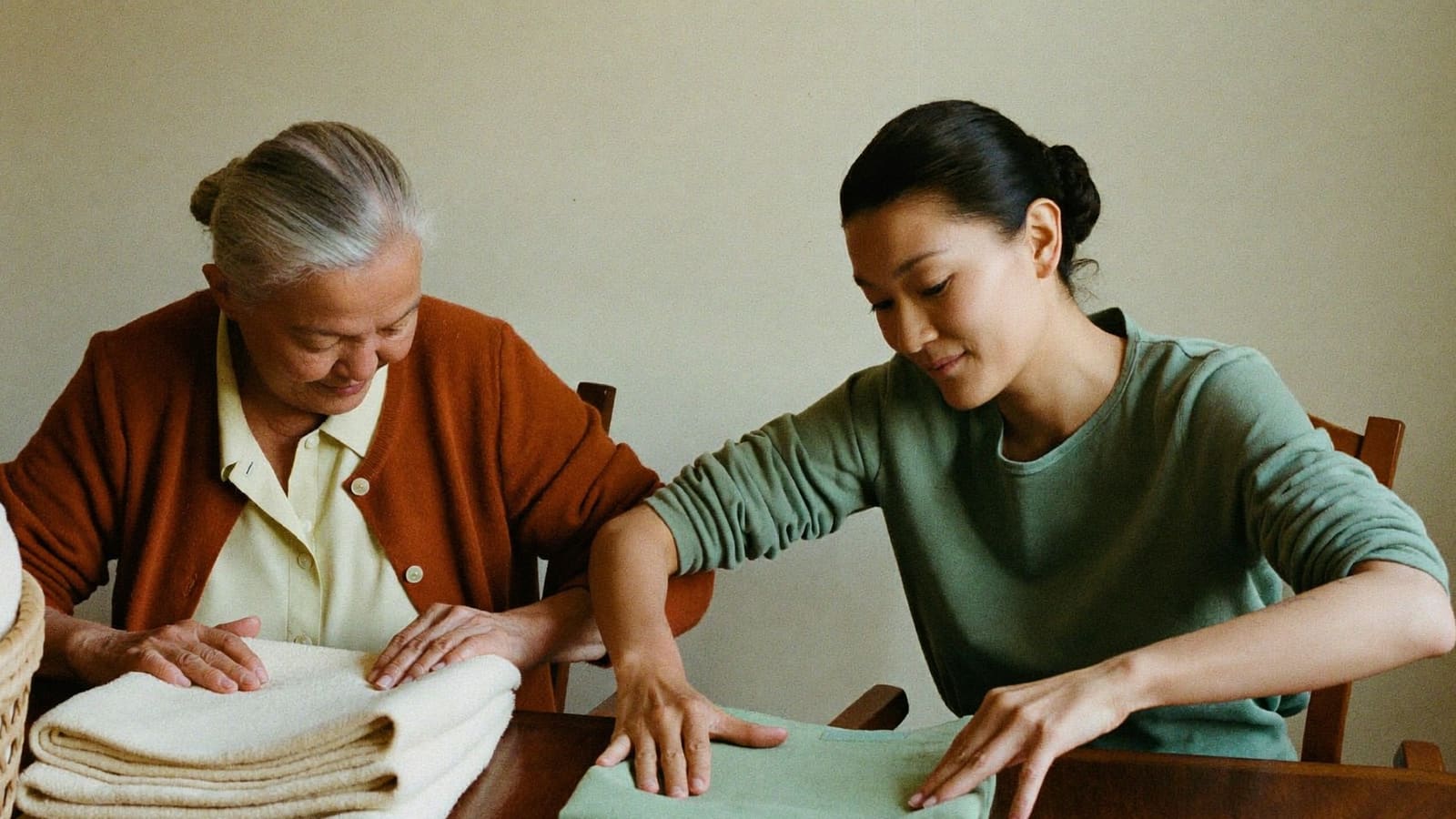
Illustrative. Does not depict Aldera clients or staff.
Domestic assistance is the most requested help in home care and the one people are least sure about. Almost everyone has a version of the same question. Can she do the windows?
Here is the plain answer, and the reasoning behind it. This is general information, not advice about your own plan.
What is usually included
Domestic assistance covers the ordinary household tasks that keep a home running safely.
- Vacuuming, mopping and sweeping the floors you use
- Dusting and general tidying
- Cleaning the bathroom and toilet
- Cleaning the kitchen, including the benches, sink, stovetop and inside the microwave
- Changing the bed linen and making the bed
- Washing, hanging out, bringing in and folding laundry
- Ironing
- Washing up and stacking or emptying the dishwasher
- Taking the bins out on bin night
- Basic meal preparation, and putting the shopping away
That list is the workhorse of home care. It is also the thing that most often keeps someone living at home rather than moving, which is why it sits in almost every plan. Our services page sets out how it fits with the rest.
What sits outside the role
The boundary is not arbitrary. It comes down to three things: safety, scope and who the support is actually for.
Anything that needs a ladder. No standing on chairs, no climbing to clean gutters, no changing a smoke alarm battery on the ceiling. This is a work health and safety rule, not a worker’s preference. It applies even when the worker offers, and especially when they offer.
Heavy or specialised cleaning. Moving furniture, scrubbing mould off a ceiling, a full spring clean, carpet shampooing, pressure washing, oven degreasing. Some of these can be arranged as a separate service if they are in your plan. They are not part of a routine hour.
Outside work. Mowing, pruning, weeding, gutters and general yard work are home maintenance, which is a different service type again and is usually funded and booked separately.
Windows above ground level, and most window cleaning. Interior glass on a sliding door, often fine. Anything needing reach or height, no.
Care for other adults in the house. Domestic assistance supports the person with the assessed need. It does not extend to cleaning up after an adult child living at home, or a partner who has no assessed need of their own.
Anything a worker is not trained or insured for. Handling medications beyond prompting, minor repairs, electrical work, moving a heavy appliance.
If you are choosing between providers, ask each of them where they draw these lines. The answers vary more than you would expect. Our questions to ask a provider has the wording.
The hour goes further when it is planned
Most domestic assistance is booked in one or two hour blocks. An hour disappears fast if nobody has decided what it is for.
Pick the priorities and write them down. Bathroom and floors every visit, oven and skirting boards once a month, windowsills when there is time. In that order.
Say what you still want to do yourself. Plenty of people want to keep making their own bed or washing their own smalls. That is not stubbornness, it is the point. Support that quietly takes over every task shrinks the life it is meant to protect.
Keep the supplies stocked and in one place. A worker who spends fifteen minutes hunting for the mop has lost a quarter of your hour.
Do not use the time as a bonus cleaning service before visitors. It sounds sensible and it never works, because the routine slips and the essentials get skipped.
Why the same person makes a real difference
There is a version of domestic assistance where a different worker arrives each week, asks where the cleaning things live, does a competent job and leaves. Nothing is wrong with it, and nothing much is right with it either.
The version that works is where the same small group of people is in your house often enough to notice. That the milk has not been touched. That the bathroom mat has moved because you are steadying yourself on the vanity. That the pile of post has grown. Those observations are the early warning system in home care, and they only exist when someone has a baseline to compare against.
That is what Aldera’s Care Circle is for. A small group who know the house, working from One Story, the single record that holds how you like things done. If you are still deciding whether it is time to bring help in, our guide on the signs to look for is a good place to start.
Getting it funded
Domestic assistance is an everyday living support under Support at Home, so it can be paid for from your budget where it is part of your assessed needs. Everyday supports may carry a personal contribution set by your means assessment. Clinical care does not.
We are not going to print a rate, because contributions are means-tested and the rules change. Your numbers come from My Aged Care, at myagedcare.gov.au or on 1800 200 422. If you have not been assessed yet, start with our assessment guide and raise housework specifically on the day. People routinely understate it, and the plan reflects what you said.
If you would rather talk it through, get in touch.
Part of our Our services guide.
Not sure where you fit?
Call us and a real person will talk it through, no obligation and no script.
Call 1300 998 928Common questions
What does domestic assistance include?
The everyday household tasks that keep a home running. Vacuuming, mopping, dusting, cleaning the bathroom and kitchen, changing linen, washing, hanging out and folding laundry, ironing, dishes, tidying, taking the bins out and basic meal preparation. It is help to keep your own home the way you keep it.
Will a support worker clean the whole house?
Not usually. Domestic assistance under aged care covers the areas you use, to keep them safe and liveable. It is not a full house spring clean, and it does not extend to rooms or parts of the property that are not part of your daily living.
Can a support worker clean up after my family or my pets?
The support is for you, not for other adults in the household. Basic pet care such as filling a water bowl is often fine. Cleaning up after adult family members, or after a large number of animals, sits outside the service.
More guides
-
Guides
Drinking enough water in later life
Why older people drink less without noticing, the signs of dehydration to watch for, and small habits that make drinking easier at home.
15 October 2026
-
Guides
Recognising elder abuse and where to get help
The forms elder abuse takes, the quiet signs families and workers notice, and who to contact in NSW if you are worried about an older person.
15 October 2026
-
Guides
Talking to a parent about giving up driving
Signs driving is getting harder, how to raise it without a fight, who can give an independent view, and how to keep a parent getting out once the keys go.
15 October 2026