Guides
Exercise physiology and preventing falls
The Aldera team Published 2 September 2026
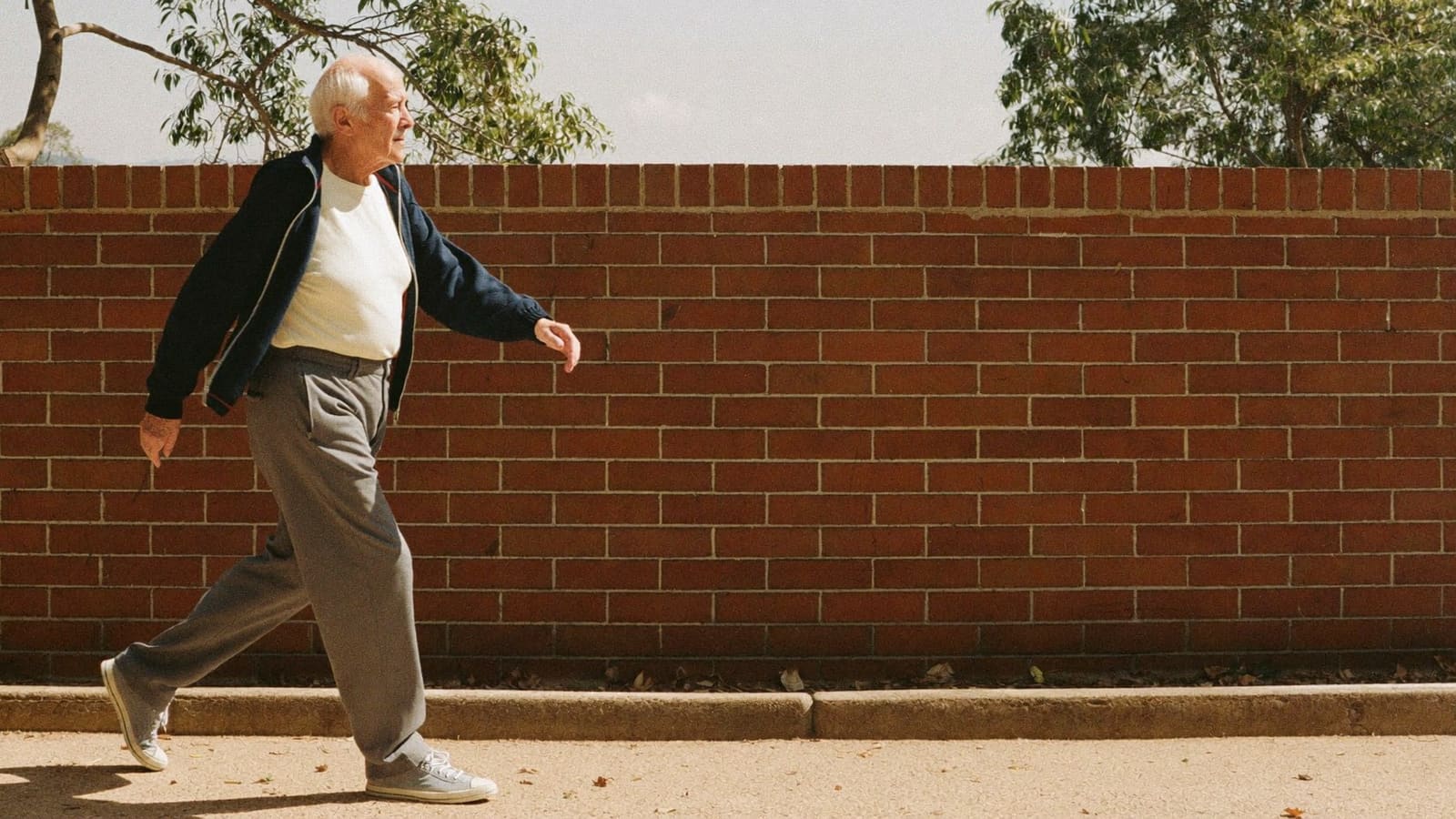
Illustrative. Does not depict Aldera clients or staff.
If there were a drug that reduced falls as much as strength and balance training does, everyone would be on it and it would be expensive.
Instead it is free, dull and mostly not done. The gap between what the evidence supports and what actually happens in people’s houses is the single largest missed opportunity in aged care.
This is general information, not advice. An exercise programme for an older person with health conditions should be designed by a clinician.
Why falls are worth this much attention
A fall is rarely just a fall. It is a fracture, or a hospital admission, or three weeks of reduced movement that costs muscle that then does not come back. More often, it is the loss of confidence that follows.
That last part does most of the damage. Someone who has fallen, or nearly fallen, becomes careful. Careful means sitting down more. Sitting down more means getting weaker. Getting weaker means falling again. That spiral is why a single fall so often turns into residential care within a year, and interrupting it is far easier early than late.
What the training actually is
Two components, and both are needed.
Balance work that is genuinely challenging. This is the part people get wrong. Standing on two feet holding a bench is not balance training, it is standing. Balance improves when it is made harder in a controlled way: narrowing the stance, standing on one leg, stepping in different directions, turning the head while standing, reducing how much you hold on. It should feel slightly uncomfortable and be done somewhere safe, which is exactly why a clinician sets the level.
Lower body strength. Standing up from a chair without using hands is the single most useful exercise in aged care, because it is the movement that determines whether someone can get off a toilet, out of a car and up off the floor. Add heel raises, step ups and, where appropriate, resistance work.
Then the dose. Several sessions a week, sustained over months, progressing as it gets easier. Programmes fail on dose far more often than on content.
What an exercise physiologist adds
Accredited exercise physiologists specialise in exercise for chronic conditions, which is most older people. Heart disease, diabetes, osteoporosis, arthritis, respiratory disease, and recovery from cancer treatment.
The value is that they will build something that is both safe and hard enough. That combination is the difficult part. Programmes given to older people are usually too easy, because whoever set them was worried about causing harm, and a programme that is too easy produces no change and so gets abandoned as pointless.
They also know the condition-specific rules, which matter. Osteoporosis changes which movements are appropriate. Uncontrolled blood pressure changes what to avoid. A recent joint replacement has restrictions. This is why “just do some exercises” from the internet is not the same thing.
For pain, injury or a specific movement problem, a physiotherapist is usually the right call instead, and physiotherapy at home for older people covers that. In practice many households see both.
Making it actually happen
This is the whole game, and it is not really a clinical problem.
Attach it to something that already happens. After breakfast, before the news. A programme with no cue in the day does not get done.
Leave the setup in place. If the chair has to be moved and the band found each time, that is three reasons not to start.
Make it short. Ten minutes done four times a week beats forty minutes done once and resented.
Have someone there. Company roughly doubles the odds of anything getting done, and for a nervous person supervision is what makes challenging balance work possible at all.
Write it into the household record, not onto a sheet that goes in a drawer. At Aldera that is the One Story, so anyone who comes knows the programme and where it is up to.
Expect the middle to be invisible. Improvement in strength is not noticeable from the inside for several weeks, so week three is when people quit. Knowing that in advance helps.
Where support work fits
A support worker cannot design or change a programme. What they can do is decide whether it happens at all: being there at the time, prompting it, doing it alongside the person, keeping the setup ready, and reporting honestly whether it is being done and how it is going.
That honest reporting is worth stating plainly, because clinicians rarely get it. An exercise physiologist who sees someone monthly is told the programme is going fine. Somebody in the house three times a week knows whether it has been touched, and that is the information that lets a programme be adjusted rather than quietly failing.
Read this alongside emergency alarms and personal alerts, which makes the same point from the other direction: an alarm shortens the time on the floor, and training reduces the chance of being there.
For current information start at myagedcare.gov.au. If you want the programme arranged as well as supervised between clinical visits, that is part of what we coordinate. Ring us and a person will answer.
Part of our Our services guide.
Not sure where you fit?
Call us and a real person will talk it through, no obligation and no script.
Call 1300 998 928Common questions
What is the difference between an exercise physiologist and a physiotherapist?
Broadly, a physiotherapist assesses and treats injury, pain and movement problems, and an accredited exercise physiologist designs and delivers structured exercise programmes for chronic conditions and for building strength and fitness. There is real overlap, they often work together, and which one you need depends on whether the main issue is a problem to treat or a programme to follow.
How much exercise does it take to prevent falls?
More than most programmes deliver, which is the central difficulty. The evidence points to balance and strength work done several times a week and continued over months rather than weeks, with the balance component progressively challenged. A gentle programme done twice and abandoned achieves nothing measurable.
Is walking enough on its own?
Walking is good for the heart, the mood and general fitness, and it is well worth doing. On its own it is not enough to prevent falls, because it does not specifically challenge balance or build lower body strength. The evidence supports adding balance and resistance work rather than relying on walking alone.
More guides
-
Guides
Drinking enough water in later life
Why older people drink less without noticing, the signs of dehydration to watch for, and small habits that make drinking easier at home.
15 October 2026
-
Guides
Recognising elder abuse and where to get help
The forms elder abuse takes, the quiet signs families and workers notice, and who to contact in NSW if you are worried about an older person.
15 October 2026
-
Guides
Talking to a parent about giving up driving
Signs driving is getting harder, how to raise it without a fight, who can give an independent view, and how to keep a parent getting out once the keys go.
15 October 2026