Guides
Looking after teeth and dentures in later life
The Aldera team Published 5 October 2026
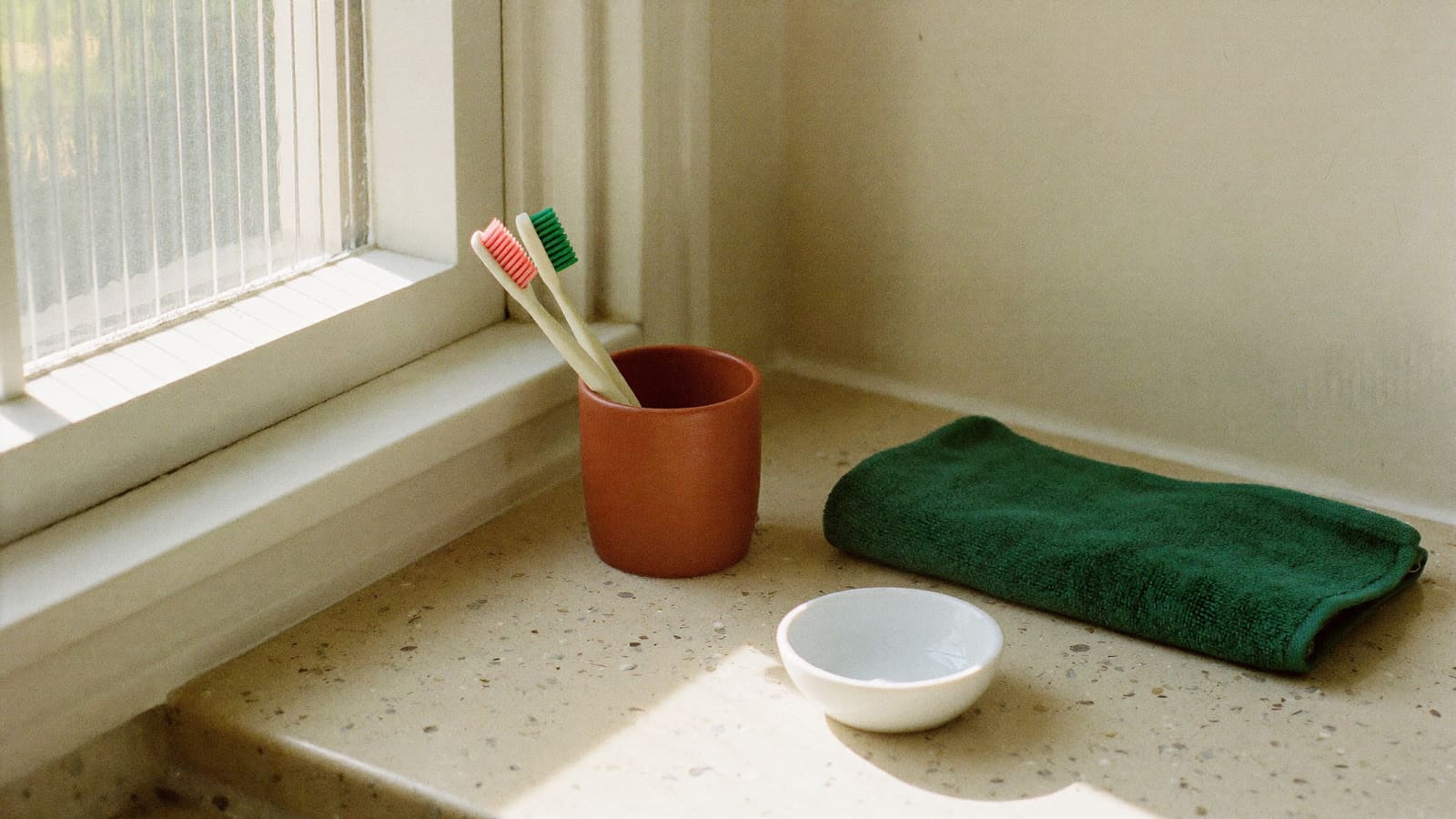
Illustrative. Does not depict Aldera clients or staff.
This is general information, not medical or dental advice. Talk to a dentist or GP about your own situation.
The mouth is easy to forget about until it hurts. And when it does, the effects spread well beyond the teeth. A loose denture or a sore gum is one of the most common quiet reasons an older person stops eating properly, stops wearing their teeth when visitors come, or starts avoiding lunch out with friends.
Good daily mouth care is mostly simple. It does take a routine, and sometimes a second pair of hands.
The daily basics
For natural teeth:
- Brush twice a day with a soft toothbrush and fluoride toothpaste, including along the gum line.
- Clean between the teeth once a day if possible, with floss or small interdental brushes. A dentist or hygienist can show which size suits.
- Spit, do not rinse, after brushing at night, so the fluoride stays on the teeth.
For dentures:
- Take them out and clean them every day with a soft brush, over a basin of water or a folded towel so they do not break if dropped.
- Clean the mouth too. Gums, tongue and any remaining teeth still need brushing.
- Store them as the dentist recommends, usually out of the mouth overnight.
- Mark them if the person ever spends time in hospital or respite. Dentures go missing in hospital far more often than you would think.
When brushing gets harder
Arthritis, a stroke, a tremor or low vision can all make a toothbrush surprisingly difficult. Some fixes:
- A thicker handle. Foam grips or a brush with a chunky handle are easier to hold.
- An electric toothbrush, which does more of the work.
- Sitting down at the basin rather than standing.
- Good light in the bathroom, and a magnifying mirror if it helps.
An occupational therapist can suggest equipment and ways of doing the task that keep the person doing it themselves for as long as possible.
When someone needs help, it should be offered the way they would want it. Mouth care is personal. It belongs in the care plan with the same detail as showering: whether they like to do it themselves with someone nearby, which toothpaste, whether the dentures are cleaned at the basin or the kitchen sink. With us, that preference sits in the One Story record, so every member of the Care Circle does it the same way and nobody has to ask again. Our personal care page explains how that help works.
Dry mouth
Many common medicines can cause a dry mouth, and a dry mouth is uncomfortable and raises the risk of tooth decay. Things that help:
- Sipping water often through the day
- Sugar-free gum or lozenges, if safe for the person
- Asking a pharmacist or GP whether a medicine might be the cause, and whether a mouth gel or spray would help
Never stop a medicine because of a side effect without talking to the doctor first.
Signs worth acting on
- Pain, swelling or bleeding gums
- Dentures that click, slip or rub
- A sore or ulcer that has not healed in two weeks
- Bad breath that does not go away with brushing
- Leaving harder foods on the plate, or eating less
- Taking dentures out to eat
That last pair matters more than they look. If someone is quietly working around a sore mouth, the result is often weight loss months later. When an older person stops eating properly looks at the wider picture. If chewing is fine but swallowing is the problem, a speech pathologist is the right person.
Seeing a dentist
Regular check-ups still matter in later life, including for people with full dentures, because dentures wear and gums change shape. If getting to a dental surgery is hard, ask about home-visiting or mobile dental services in your area, and ask whether transport can be arranged.
For eligible concession card holders, NSW Health runs public dental services. For general information on dental health, see health.gov.au and healthdirect.
Part of our Our services guide.
Not sure where you fit?
Call us and a real person will talk it through, no obligation and no script.
Call 1300 998 928Common questions
Can a support worker help with brushing teeth or cleaning dentures?
Yes. Help with mouth care is a normal part of personal care, alongside showering and dressing. It should be written into the care plan so it happens every time rather than when someone remembers, and done the way the person prefers. Specialist dental treatment is a separate thing and is done by a dentist.
Should dentures stay in overnight?
The usual advice is to take them out at night, clean them and store them as the dentist recommends, which gives the gums a rest. Some people have been told otherwise for their own reasons, so check with their dentist and follow that advice.
Is there free or low-cost dental care for older people in NSW?
NSW Health runs public dental services for eligible people, generally adults who hold certain concession cards. Eligibility and waiting times vary by area, so ring your local public oral health service or start at the NSW Health oral health page to check what applies.
More guides
-
Guides
Drinking enough water in later life
Why older people drink less without noticing, the signs of dehydration to watch for, and small habits that make drinking easier at home.
15 October 2026
-
Guides
Recognising elder abuse and where to get help
The forms elder abuse takes, the quiet signs families and workers notice, and who to contact in NSW if you are worried about an older person.
15 October 2026
-

Guides
Talking to a parent about giving up driving
Signs driving is getting harder, how to raise it without a fight, who can give an independent view, and how to keep a parent getting out once the keys go.
15 October 2026