Guides
Respite care explained, for family carers
The Aldera team Published 28 August 2026

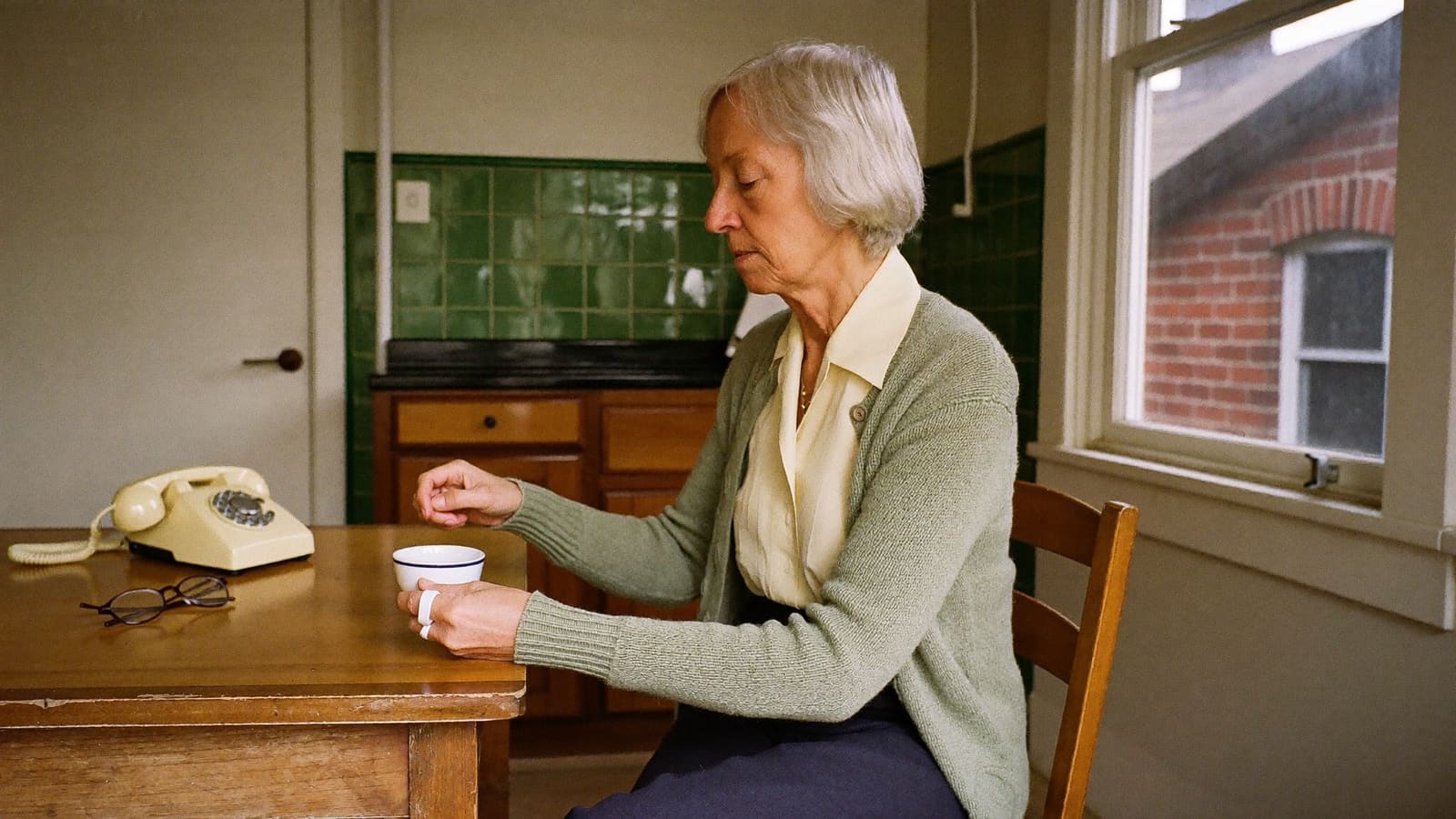
Illustrative. Does not depict Aldera clients or staff.
Most family carers do not call themselves carers. They call themselves a daughter, or a husband, or the one who lives closest.
Respite is the support built for them. This guide covers what it actually is, the forms it takes, and how to arrange a break that is genuinely restful rather than a different kind of stressful. It is general information, not advice about your own situation.
What respite really means
Respite care is planned support that takes over the caring role for a set period. The person being cared for keeps getting help the whole time. Nothing is withdrawn. What changes is who is doing it.
It comes in four broad shapes.
In-home respite. A support worker comes to the house for a few hours so you can go out, sleep, work or see your own doctor. This is the most common form and the easiest to start with.
Overnight respite. A worker stays in the home overnight. Useful when the exhausting part is not the days, it is the getting up three times a night.
Community respite. The person you care for goes to a day program or social group. They get company and a change of scene, you get the afternoon.
Residential respite. A short stay in an aged care home, usually booked in blocks of days or weeks. This is the one to use for a holiday, surgery of your own, or a genuine reset.
Aldera delivers the in-home and overnight side, and the social support that makes community respite work. You can see the full picture on our services page.
The mistake almost everyone makes
Carers wait until they cannot keep going, then ask for respite. By then it is not a break, it is a rescue, and it usually happens badly. The person being cared for meets a stranger during a stressful week, decides they hate it, and the family concludes respite does not work for them.
Booked early, it goes the other way. Start with one short in-home visit a week while you are still coping. The worker becomes a familiar face doing an ordinary thing. Three months later, when you need a fortnight, the arrangement already exists and nobody has to be talked into it.
The other quiet mistake is spending the break on the caring. Cleaning the house, catching up on the paperwork, ringing the pharmacy. That is not rest. It is the same job in a different room.
Why consistency matters for respite most of all
Handing over the care of your parent to someone you have met once is not restful, whatever the roster says. You will spend the afternoon with your phone in your hand.
That is the reason Aldera runs a small Care Circle rather than sending whoever is free. The people who cover your respite are the same handful of people who are already in the house. They work from One Story, the single record that holds how your mum likes her tea, that she will not take her tablets without food, and that she calls the bathroom the little room.
Ask any provider you are considering how respite is staffed and whether it is the same people. Our questions to ask a provider covers how to press on that without sounding difficult.
How respite gets funded
There are two separate doors, and it is worth knowing both.
Through aged care. If respite is part of the assessed needs in the care plan, it can be paid for from the aged care budget like any other support. That means it starts with a My Aged Care assessment. Our assessment guide walks through it, and the assessment checklist is worth taking with you, because respite is one of the things people forget to raise on the day. Say clearly what you do in a week and what you cannot keep doing. The assessment records need, and unmet carer need is a need.
Through carer support. Carer Gateway is the national service for carers themselves, separate from the care recipient’s package. It offers planned and emergency respite, counselling and coaching. Call 1800 422 737 or visit carergateway.gov.au.
We are not going to print a dollar figure. Contributions are means-tested and the rules change. Your actual numbers come from myagedcare.gov.au or a call to 1800 200 422.
Making the break actually work
- Book the first one before you need it. Short, ordinary, low stakes.
- Be specific about the handover. Medication times, the routine, what to do if she refuses lunch. Written down once, not explained again every visit.
- Leave the house. Respite taken in the next room is not respite.
- Decide beforehand what the time is for. Otherwise it fills with errands.
- Say how it went. Both directions. That is how the second one is better than the first.
If you want to talk it through with someone rather than fill in a form, get in touch.
Part of our Our services guide.
Not sure where you fit?
Call us and a real person will talk it through, no obligation and no script.
Call 1300 998 928Common questions
What is respite care?
Respite care is planned support that takes over the caring role for a period so the usual carer can rest, work, travel or deal with something else. It can be delivered at home for a few hours, overnight, or in a residential facility for a short stay. The person being cared for keeps receiving support the whole time.
Do I have to be in crisis to get respite?
No, and waiting for a crisis is the most common mistake. Respite works best when it is booked in advance and used regularly, so the arrangement is already familiar by the time you badly need it. Emergency respite does exist, through the Carer Gateway on 1800 422 737.
Who pays for respite care?
Respite can be funded through an aged care package where it is part of the assessed plan, and separately through carer support programs. Amounts and contributions are set nationally and are means-tested, so check your position at myagedcare.gov.au rather than relying on a figure from a website.
More guides
-

Guides
Drinking enough water in later life
Why older people drink less without noticing, the signs of dehydration to watch for, and small habits that make drinking easier at home.
15 October 2026
-
Guides
Recognising elder abuse and where to get help
The forms elder abuse takes, the quiet signs families and workers notice, and who to contact in NSW if you are worried about an older person.
15 October 2026
-

Guides
Talking to a parent about giving up driving
Signs driving is getting harder, how to raise it without a fight, who can give an independent view, and how to keep a parent getting out once the keys go.
15 October 2026