Guides
When your regular support worker leaves
The Aldera team Published 11 September 2026

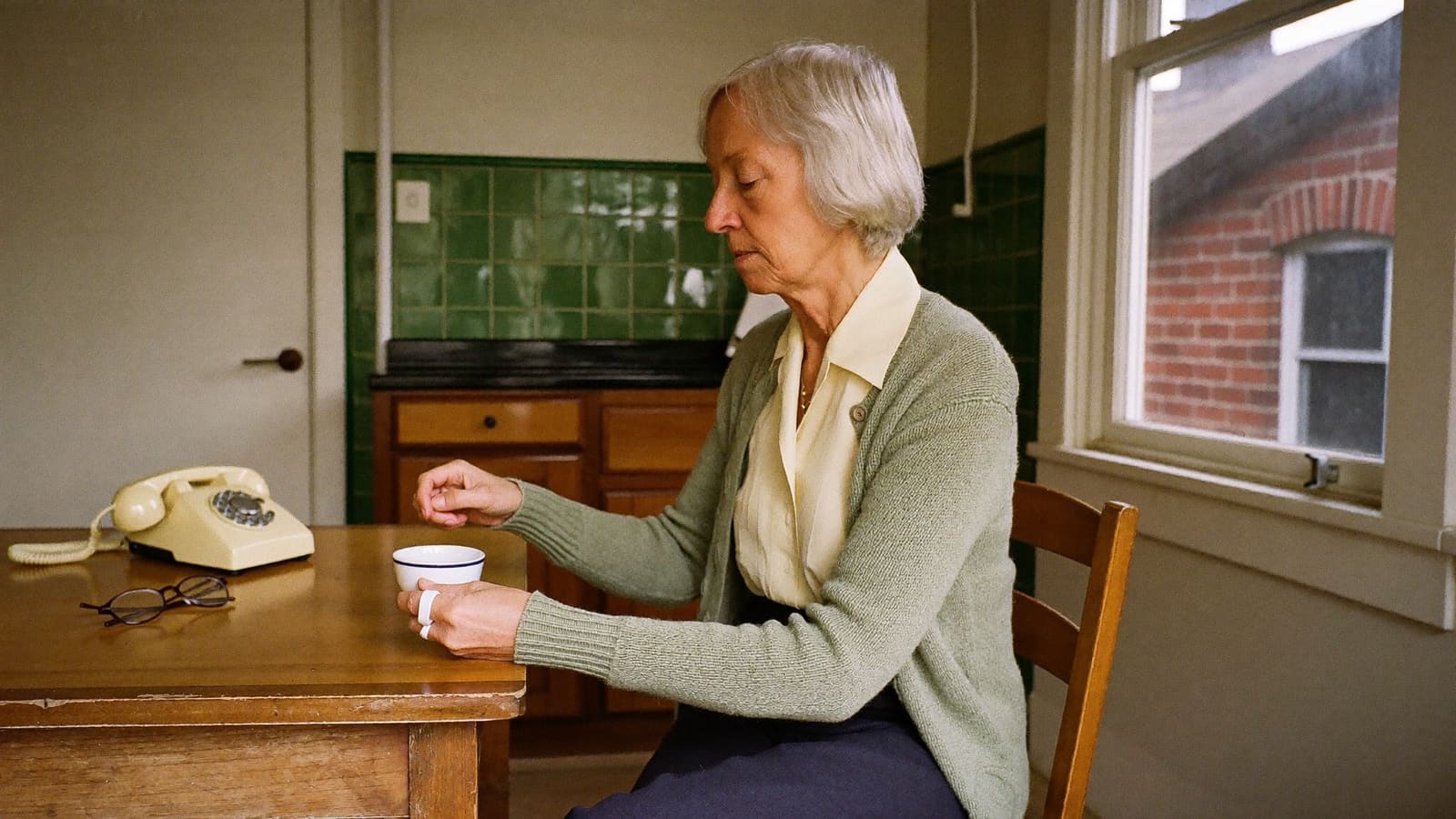
Illustrative. Does not depict Aldera clients or staff.
Support workers leave. They move house, they change hours, they go back to study, they have babies, they get shifts closer to home. It is a normal feature of the work, and it happens to good arrangements as often as to bad ones.
What separates a wobble from a disaster is entirely in how the handover is done. Here is what a proper one looks like, and what to ask for if you are not getting it.
Why it lands so hard
If you have not lived it, the reaction can look out of proportion. It is not.
Someone who has come to your house for two years knows that you take your tablets after breakfast and not before, that the back door sticks, that the good towels are for visitors, that you do not want to be rushed in the shower, and that Thursday is the day your son rings. None of that is in a schedule. It accumulates.
Losing that person means a stranger in your bathroom and a fortnight of explaining yourself, at an age and in a situation where neither is welcome. Our blog piece on the hidden cost of carer churn goes into why this quietly costs more than it looks like it does.
What you should be told, and when
Four things, and you should get them from the provider rather than from the worker on their way out the door.
- That it is happening, before the last visit. Not on the day, and certainly not by way of an unfamiliar person knocking.
- Who is coming next, by name. If it is not settled yet, then who is covering in the meantime and until when.
- When the change starts, and whether your days and times are staying the same. They should.
- Whether the two of them can come together once. An overlap visit is the single most useful thing in the whole process and the most often skipped.
If your provider cannot tell you the name of the person coming to your house next week, that is worth pushing on. Our guide on raising a concern sets out how, and what to expect back.
The overlap visit
Where it can be managed, ask for one visit with both workers present, the outgoing one and the new one. Half an hour of that saves a month of small frustrations.
What it does that a written plan cannot: the new person watches how the tasks are actually done in your house, in what order, with your equipment, in your rooms. Where the linen is. Which cupboard the good frypan lives in. How you get in and out of the shower and what you want the worker’s hands doing while you do it. Which gate, which key, which dog.
It also does something for you that is harder to name. Being introduced by someone you trust is not the same experience as being left with a stranger, and it shortens the settling-in considerably.
If an overlap is genuinely impossible, ask for the next best thing: a short introduction visit with your Care Lead there, before the new person starts doing anything.
What to say in the first fortnight
Say the small things out loud again, even the ones that should already be written down.
- The order of things. Tea before tablets. Bathroom before floors. Windows open first.
- What you do yourself. Say it plainly, so the new person does not helpfully take it over. This is the one people most often lose in a changeover, and the hardest to get back.
- The house. The door that sticks, the step that is steeper than it looks, the tap that runs hot fast.
- What you would rather they did not do. A complete sentence, no justification required.
- Corrections, early and small. In week one, “a bit later would suit me better” is nothing. In month six it has become a conversation about leaving.
Where this should not be living
Here is the underlying problem. In most arrangements, everything above lives in one worker’s head. When that worker goes, so does the knowledge, and the family starts again.
At Aldera it goes into One Story, the single record everyone in your Care Circle works from, which is why a Care Circle is a small group of people who already know the household rather than a single worker and a roster. A new face should arrive already knowing how your mornings run. Our piece on what carer consistency actually means is honest about what can and cannot be promised there, because nobody can promise that a worker will never leave.
Your Care Lead does not change when a worker does. That is the point of having one.
If the new person is not right
Sometimes it is just not a fit, and that is allowed.
Say it early, to your Care Lead, and be specific. “She is lovely but she arrives at eight and I am not up until nine” is actionable. “It is not working” is not. Preferences about who comes into your home are ordinary and include things people feel awkward raising, like wanting a woman rather than a man for personal care, or someone you can speak your own language with. Both are reasonable requests, not special ones.
If nothing changes after you have asked clearly, and the churn keeps going, that is a provider problem rather than a worker problem, and our guide on switching providers explains how that works without a gap in your care.
Where the official standards sit
What providers are expected to do, and your right to be involved in decisions about your own care, sits in the Aged Care Quality Standards. They are published by the Aged Care Quality and Safety Commission at agedcarequality.gov.au, and free advocacy support is available if you would rather not raise something on your own. Our resource on free advocacy help lists where to find it.
Tired of starting again with a new face every few months? Get in touch. A real person answers.
Part of our The Aldera way guide.
Not sure where you fit?
Call us and a real person will talk it through, no obligation and no script.
Call 1300 998 928Common questions
What should a provider do when my regular support worker leaves?
Tell you before the last visit rather than after, name who is coming next, arrange an overlap visit where the two of them come together if it can be managed, and make sure the new person arrives already knowing how your household runs. If the first you hear of it is a stranger at the door, the handover has failed.
Do I have to explain everything again to the new worker?
You should not have to. The detail of how you like things done belongs in your care record, not in one worker's memory, which is the whole reason Aldera keeps One Story. In practice you will still fill in a few gaps in the first fortnight, and it is worth saying the small things out loud again anyway.
Can I ask for a different worker if the new one is not right?
Yes. Say so early and say what specifically is not working, because "we did not click" is harder to act on than "she arrives at eight and I am not up until nine". A good provider treats that as ordinary information rather than a complaint.
More guides
-

Guides
Drinking enough water in later life
Why older people drink less without noticing, the signs of dehydration to watch for, and small habits that make drinking easier at home.
15 October 2026
-
Guides
Recognising elder abuse and where to get help
The forms elder abuse takes, the quiet signs families and workers notice, and who to contact in NSW if you are worried about an older person.
15 October 2026
-

Guides
Talking to a parent about giving up driving
Signs driving is getting harder, how to raise it without a fight, who can give an independent view, and how to keep a parent getting out once the keys go.
15 October 2026