Resources
Pets and staying at home: a checklist
The Aldera team Published 8 September 2026
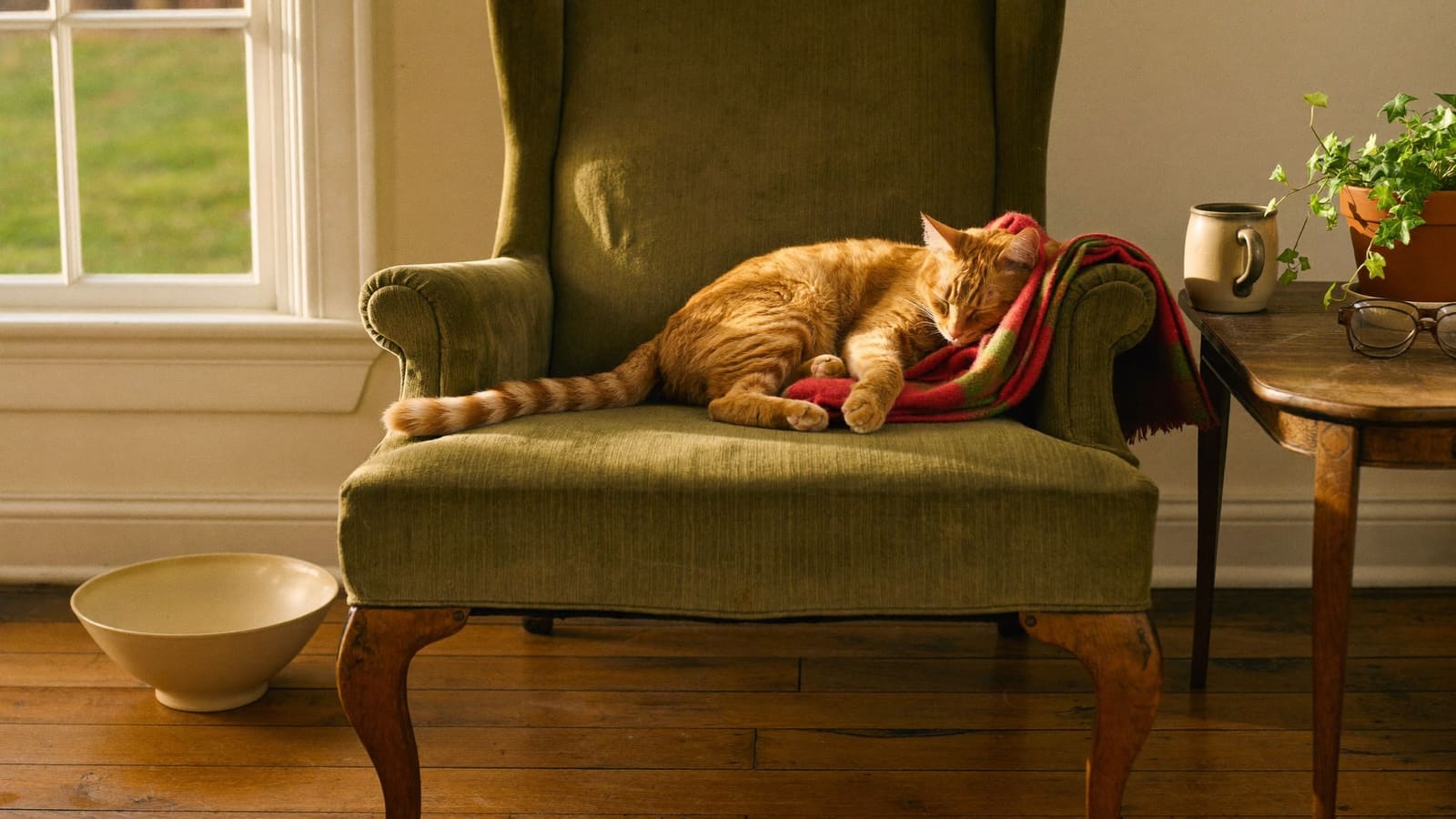
Illustrative. Does not depict Aldera clients or staff.
Ask an older person why they will not move and you will often get an answer about the garden, the neighbours, or the stairs they have managed for thirty years. Ask a second time and quite frequently it is the dog.
That is not sentimentality getting in the way of a sensible decision. A pet gets someone out of the chair, gives the day a shape, and is company in a house that has become quiet. It is also, if nobody plans for it, the single practical thing that tips a household from managing to not managing.
This is a list for closing that gap while everything is still fine.
Sort these now
- Write down who takes the animal in an emergency. A name, a phone number, and a second name in case the first is away. Put it with your emergency information sheet on the fridge, where an ambulance officer will look.
- Make sure that person can get in. A key, a lockbox code, or a neighbour who has one. An arrangement that depends on someone being home to answer the door is not an arrangement.
- Write the animal’s basics down. What it eats and how much, medications and doses, the vet’s name and number, microchip number, and whether it is registered and desexed. One page, kept with the pet’s things.
- Put the vet on the contacts list, alongside the GP and the pharmacy.
- Check the registration and the council rules are current, so nothing is a problem at the worst moment.
Make the day easier
- Move the food and water to bench height. Bending to a floor bowl twice a day is one of the most common small daily strains, and a raised stand fixes it for very little.
- Buy smaller bags. A 15kg bag of dry food is a fall waiting for a wet floor. Smaller bags cost slightly more and are worth it.
- Get the food delivered. Most pet shops and supermarkets deliver, and this removes the heaviest regular shopping trip entirely.
- Look at the lead. A retractable lead is a trip hazard and gives no control if the dog pulls. A short fixed lead and a harness rather than a collar is steadier for everyone.
- Sort the litter tray or the yard access. A tray on the floor of a small bathroom is awkward to kneel to and easy to trip over. A dog flap or a propped door can remove a dozen trips to let an animal out.
- Deal with the trip hazards the animal creates. Bowls in a doorway, a lead across a hall, toys on a rug, a cat that sleeps on the stairs. Worth walking through once with fresh eyes, alongside the home safety checklist.
- Check the claws. An untrimmed dog’s claws mean less grip on floorboards and more pulling on the person holding the lead.
Ask about these
- Ask your provider what a worker can and cannot do with the animal, and get the answer in the care plan rather than in a conversation. Feeding, water, letting a dog out during a visit and picking up food on a shop run are often possible. A dedicated daily walk usually is not.
- Ask at your assessment. Raise the animal when you have your My Aged Care assessment, because an assessor cannot account for something nobody mentions. Our assessment checklist is the page to take in with you.
- Ask what your plan can be spent on. Do not assume either way. What a Support at Home budget can be spent on covers how that is decided, and your provider should confirm in writing.
- Ask the vet about a home visit if getting the animal into a car has become the hard part. Many practices do them.
- Ask what exists locally. RSPCA state branches and some councils run pet support and pet food programmes for older people. Availability varies by area, so ask rather than reading a general claim about it.
- Ask about dog walking separately. A neighbour, a family member, a paid walker or a local volunteer scheme. This is usually solved outside the care arrangement, and solved easily once it is named as its own job.
If a hospital stay is coming
For a planned admission, arrange the animal before the date, not the night before. For an unplanned one, the fridge list above is what makes it survivable. Either way, mention the pet in the discharge conversation, because going home to an animal that needs walking changes what the first week needs. Questions before hospital discharge is written for that conversation.
Say it out loud
The last item is the most useful. Tell your provider the animal matters, and why.
A support worker who knows the dog is the reason this house is still a home behaves differently from one who sees an obstacle in the hallway. She fills the water bowl without being asked. She notices when the food is running low. She mentions that the cat has not eaten for two days, which is sometimes the first sign that the person has not either.
At Aldera that goes in the One Story record with everything else that matters in a household, so the same small Care Circle works with it rather than around it. Loneliness and companionship is about the wider version of the same point.
If a pet is part of why staying home matters, tell us at the first conversation.
Part of our Our services guide.
Not sure where you fit?
Call us and a real person will talk it through, no obligation and no script.
Call 1300 998 928Common questions
Can a support worker walk the dog or feed the cat?
Sometimes, and it depends on the provider and on how the task is written into the plan. Feeding an animal, filling a water bowl or letting a dog into the yard during a visit is often manageable. A daily dedicated dog walk usually is not, and is better arranged separately. Ask directly rather than assuming, and get the answer written into the care plan so it does not depend on who is rostered.
What happens to the pet if someone goes into hospital suddenly?
This is the gap worth closing before it happens. Write down who will take the animal, feed it or check on it, put that name and number on the fridge with the emergency information, and make sure that person has a key or knows where one is. An unplanned admission with no arrangement in place is how animals end up surrendered.
Is pet care covered by Support at Home funding?
Do not assume it is, and do not assume it is not. Funded support is assessed against the person's needs, and what a plan can be spent on is decided at assessment and set out in your agreement. Ask at your assessment and ask your provider to confirm in writing. Where it is not funded, RSPCA state branches and some local councils run pet support programmes for older people, and it is worth asking what exists in your area.
More resources
-
Resources
An emergency grab bag checklist
What to pack in a grab bag for an older person, for a fire, flood, power cut or sudden hospital trip, and how to keep it up to date.
15 October 2026
-

Resources
Protecting an older parent from scams
A practical checklist for families to help an older person spot scams, set up simple safeguards and know what to do if money has already been lost.
7 October 2026
-

Resources
Questions to ask about a new medicine
A short list to take to the GP or pharmacy whenever a new medicine is started, so you leave knowing what it is for, how to take it and what to watch for.
5 October 2026