Blog
Bringing help into a home of forty years
The Aldera team Published 3 September 2026
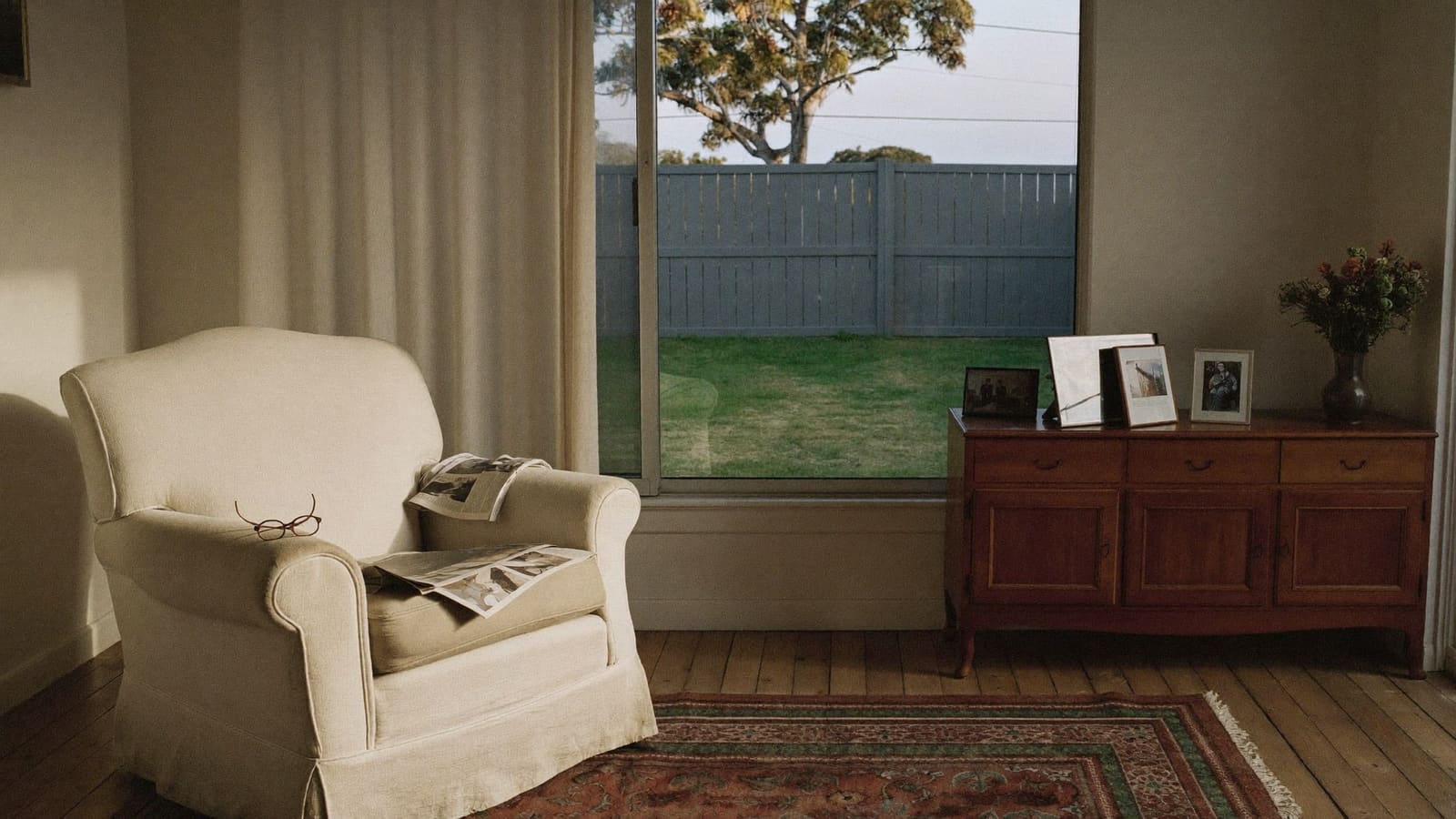
Illustrative. Does not depict Aldera clients or staff.
The house was bought when the street was still half paddock. The back step is worn in one spot from forty years of the same shoes. The kitchen drawer sticks and everybody who lives there knows to lift it while they pull. Nothing in that house is accidental. It is the accumulated record of a life, arranged by the person who lived it.
Then someone new is standing in the hallway on a Tuesday morning, holding a folder, being pleasant.
Families are often surprised by how hard the first few weeks are, because on paper it is good news. The shopping gets done. The shower is safer. The problem is not the help. It is that help arrives carrying a message, and the message is that things have changed.
What is actually being resisted
When an older person says they do not want anyone in the house, they are almost never talking about the vacuuming.
They are talking about being managed. About a stranger seeing the bathroom. About the arrangement of the linen cupboard, which has been correct since 1994, being reorganised by someone who thinks they are being useful. About the possibility that this is the first step in a sequence that ends somewhere they do not want to go.
Most of all they are talking about who decides. For forty years, they did. If help arrives and it is decided for them, the help itself becomes proof of the thing they fear.
That is worth understanding before anyone tries to persuade anybody, and it is the reason persuasion so often fails. How to talk to a parent who refuses help goes further into that conversation.
Start with what nobody is attached to
The tasks people accept first are the ones that carry no meaning. Nobody’s identity is built on cleaning the shower recess or carrying the bins out. Almost everybody’s identity is somewhere near cooking their own dinner, driving, or washing themselves.
So start at the edges. Domestic tasks, the heavy garden work, the shopping trip that has become too much to carry home. Leave the personal things until there is a working relationship, unless safety says otherwise.
It is slower and it works better, because by the time the harder conversation is needed, it is happening with someone known rather than someone new. Our services can be arranged in almost any order, and starting narrow is a legitimate choice rather than a half measure.
The house has rules. Ask for them.
Every long-lived-in home runs on rules that nobody has ever said out loud, because everyone who matters already knows them.
The good mugs. Which door gets used. The cat is not allowed in the front room. Tea is made in the pot, not the cup. The photograph on the sideboard does not get moved to dust under it. Shoes off past the hallway.
These are not fussiness. They are the last territory where the person is still unambiguously in charge of their own life, and getting them wrong is felt out of all proportion to their size.
The right move is simply to ask, at the start, and to write the answers down where every worker will read them rather than leaving each new person to learn by getting it wrong. That is what our One Story is for. It is not a care plan, it is the household’s own operating manual, and it means nobody has to explain the good mugs three times.
Let them keep doing what they can still do
The instinct of a helpful person is to take the whole task. It is faster, it looks kinder, and it is usually the wrong call.
If someone can dry while another washes, let them dry. If they can fold their own laundry sitting down, let them fold. If they can direct the shopping list even though they cannot carry it, let them direct it. The task is not the point. Being someone who still contributes to their own household is the point.
We have written about this elsewhere in the small things that keep independence, because it is the difference families notice most and mention least.
Same faces, or none of it works
Everything above depends on one thing, and it is the one most providers cannot deliver: the same small group of people, turning up.
A stranger in the hallway is an intrusion. The same person, on the fourth Tuesday, is a person. They know the drawer sticks. They know not to move the photograph. They know that the answer “I’m fine” said in a particular tone means the hip is bad again, and that is knowledge no care plan can hold, only a person can.
Rotating faces resets that to zero every week, and the household is permanently hosting a guest. That is why we build a small Care Circle around each person rather than sending whoever is free, and it is why carer consistency is the thing we would ask you to test hardest, in us or in anyone else you consider.
What it looks like when it has worked
Six months on, in the houses where this goes well, nobody is talking about care.
They are talking about how Thursday works. The back door is unlocked at the right time. The kettle goes on without anyone asking. There is a running conversation about the tomatoes, or the cricket, or a daughter in Perth. Something gets done properly and quietly, and the person whose house it is stays the person whose house it is.
The house does not become a place where care happens. It stays a home, with a few more people in the story of it.
If you are at the beginning of this, what to expect from your first visit sets out the practical side of week one.
Part of our Our services guide.
Not sure where you fit?
Call us and a real person will talk it through, no obligation and no script.
Call 1300 998 928Common questions
How long does it take to stop feeling like an intrusion?
For most households, several weeks rather than several days, and it moves faster when the same few people keep coming. What shortens it is not effort or friendliness, it is repetition. Familiarity is the thing that turns a stranger into somebody expected.
My father says he does not want anyone in the house. Do we push?
Not head-on, usually. What people are refusing is almost never the vacuuming, it is what accepting it seems to say about them. Starting small and on his terms tends to work where persuading does not.
Should I be there for the first few visits?
For the first one or two, yes, if you can. After that, staying every time can make it harder for a working relationship to form directly between the two of them, and it keeps you as the person everything routes through.
More blog
-
Blog
Grandchildren and a grandparent's care
Grandchildren often want to help when a grandparent starts needing care but do not know how. Practical ways for younger family to stay close and useful.
15 October 2026
-
Blog
Staying at home after losing a partner
When a husband or wife dies, the house changes overnight. Some gentle, practical thoughts on grief, routine and getting the right help at home.
7 October 2026
-
Blog
When your husband or wife becomes your carer
Caring for a partner is not like caring for a parent. Staying a couple, accepting help without feeling you have failed, and looking after yourself.
5 October 2026