Guides
Arthritis and staying independent at home
The Aldera team Published 7 September 2026
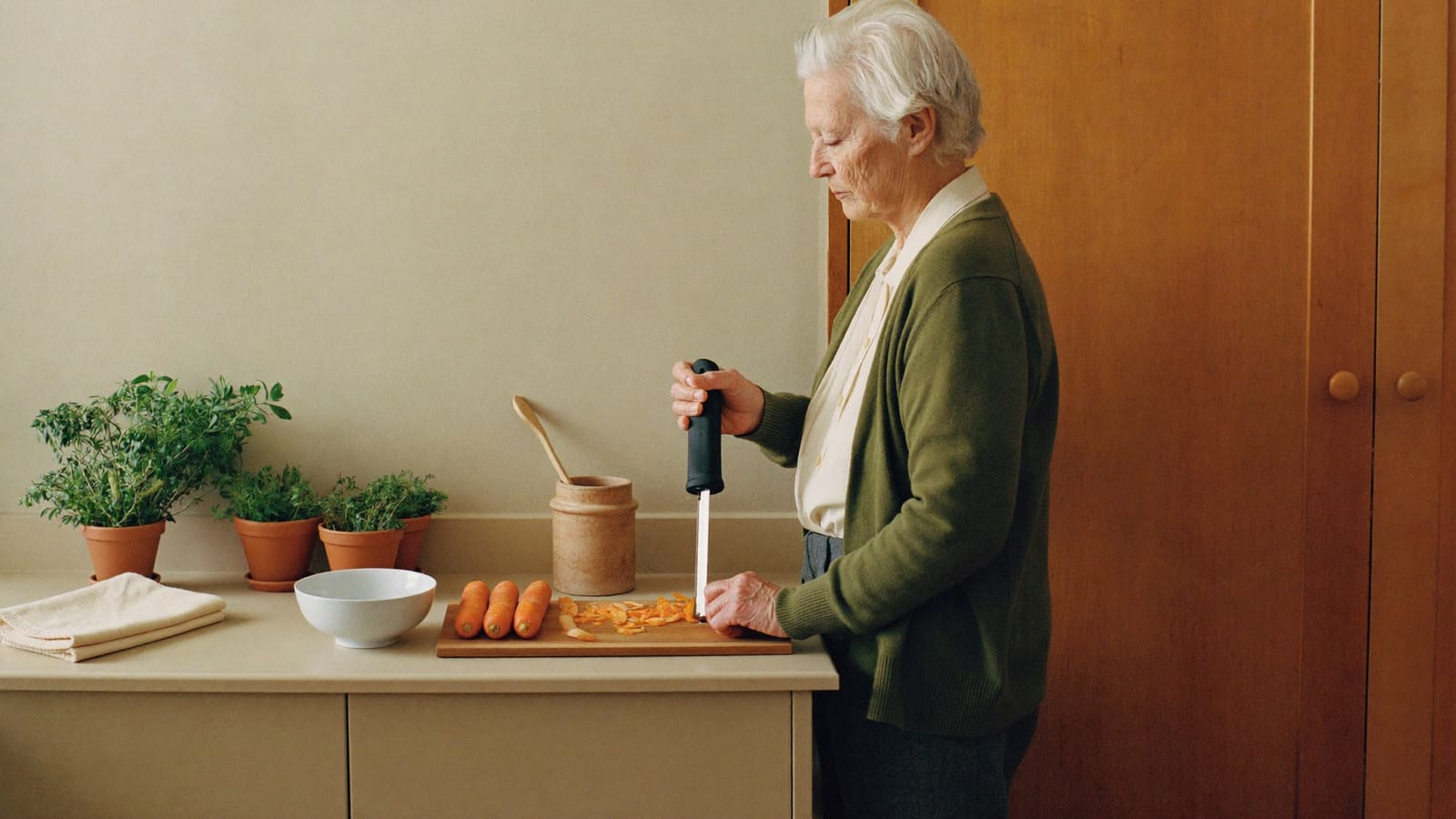
Illustrative. Does not depict Aldera clients or staff.
Arthritis rarely announces itself as a reason to change how you live. It arrives as a jar that will not open, a bedsheet that will not tuck, a shower that takes twenty minutes instead of eight.
That is the honest shape of it. Not a sudden loss of independence, but a slow accumulation of small tasks that cost more than they used to, until the day is spent on the tasks and there is nothing left for anything else.
This is general information, not medical advice. Talk to your GP about your own arthritis, your pain and your treatment.
The pattern worth noticing
Most people describe the same three shifts, usually in this order.
Mornings get longer. Stiffness is worst on waking, so dressing, showering and breakfast expand to fill the first part of the day.
Tasks get avoided rather than modified. The jar goes back in the cupboard. The sheets get changed less often. The shower gets shorter. Nobody decides this, it just happens.
The good days get spent catching up. Instead of using a good day for something enjoyable, it goes on the washing, the cleaning and the shopping that piled up during a flare.
The goal of help at home is to break that third pattern. If support takes the sustained, grip-heavy, standing-up tasks, the good days come back to you.
What actually helps
Change the tool before you change the task. Thick-handled peelers and cutlery, tap turners, lever door handles, jar openers, long-handled shoehorns and a shower stool solve a surprising amount for very little, and most of it can be funded through a home care budget.
Get an occupational therapist through the door early. An OT will watch you do the things that are hard and change the method, the height or the equipment. This is the single highest-value visit for arthritis, and it is available under home care funding. See what an occupational therapist does.
Hand over the joint-punishing chores, not the enjoyable ones. Bed changing, shower and oven cleaning, vacuuming, hanging heavy washing and carrying shopping are the usual candidates. Domestic assistance is built for exactly this, and handing it over is not a step down.
Ask for help with showering before it becomes unsafe. Hair washing with painful shoulders, and standing on a wet floor with painful knees, are two of the most common reasons people accept personal care. Bringing it forward by a year is usually the right call.
Keep moving on your terms. Movement matters for most kinds of arthritis, and a physiotherapist or exercise physiologist can build something realistic around your joints rather than against them, at home rather than in a clinic.
Small changes to the house
- Lever handles instead of round door knobs, on doors and on taps.
- A raised bed height, so getting up does not start from a deep bend.
- Items you use daily moved to between hip and shoulder height, out of low cupboards.
- A chair with arms in the kitchen, so preparation can be done seated.
- A trolley for moving things between rooms, so nothing has to be carried.
- A second handrail where you already put a hand on the wall.
The last one is worth pausing on. Most people already have an unofficial route through the house, marked by handprints on the paint. Put a rail where the hand already goes. Our home safety checklist walks the whole house this way.
Flares change what you need, and that is normal
Arthritis is not steady, and support built for an average week fails in a bad one. Ask your provider directly how extra help is arranged during a flare, how much notice it takes, and whether it comes out of the same budget.
This is where consistency earns its keep. A worker who has been coming for months knows what your hands look like on a bad morning without being told, and knows to change the plan without a conversation about it. That is why we keep the same small Care Circle around you rather than sending whoever is free.
If you are not sure where to start, an assessment costs nothing and My Aged Care is the front door. When you get there, describe the bad days rather than the good ones. Playing it down is the mistake almost everybody makes.
Part of our Our services guide.
Not sure where you fit?
Call us and a real person will talk it through, no obligation and no script.
Call 1300 998 928Common questions
Can you get help at home just for arthritis?
Help at home is assessed on what you can and cannot manage day to day, not on a diagnosis. Arthritis often shows up in an assessment as difficulty with showering, dressing, cooking, cleaning or getting out, and those are the things support is built around. Start with a My Aged Care assessment.
What kind of help makes the most difference with arthritis?
Usually the tasks that need grip, twisting or sustained standing. Changing sheets, cleaning a shower, opening jars and lids, chopping and peeling, hanging washing, and hair washing come up again and again. Most people need less help than they fear, and they need it on the bad days more than the good ones.
Should you rest a painful joint or keep moving it?
That depends on your arthritis and your joints, and it is a question for your GP or a physiotherapist rather than for an article. Broadly, most types benefit from movement within comfortable limits, but the right answer for you is a clinical one. This page is general information, not medical advice.
More guides
-
Guides
Drinking enough water in later life
Why older people drink less without noticing, the signs of dehydration to watch for, and small habits that make drinking easier at home.
15 October 2026
-
Guides
Recognising elder abuse and where to get help
The forms elder abuse takes, the quiet signs families and workers notice, and who to contact in NSW if you are worried about an older person.
15 October 2026
-
Guides
Talking to a parent about giving up driving
Signs driving is getting harder, how to raise it without a fight, who can give an independent view, and how to keep a parent getting out once the keys go.
15 October 2026