Guides
What an occupational therapist does
The Aldera team Published 2 September 2026
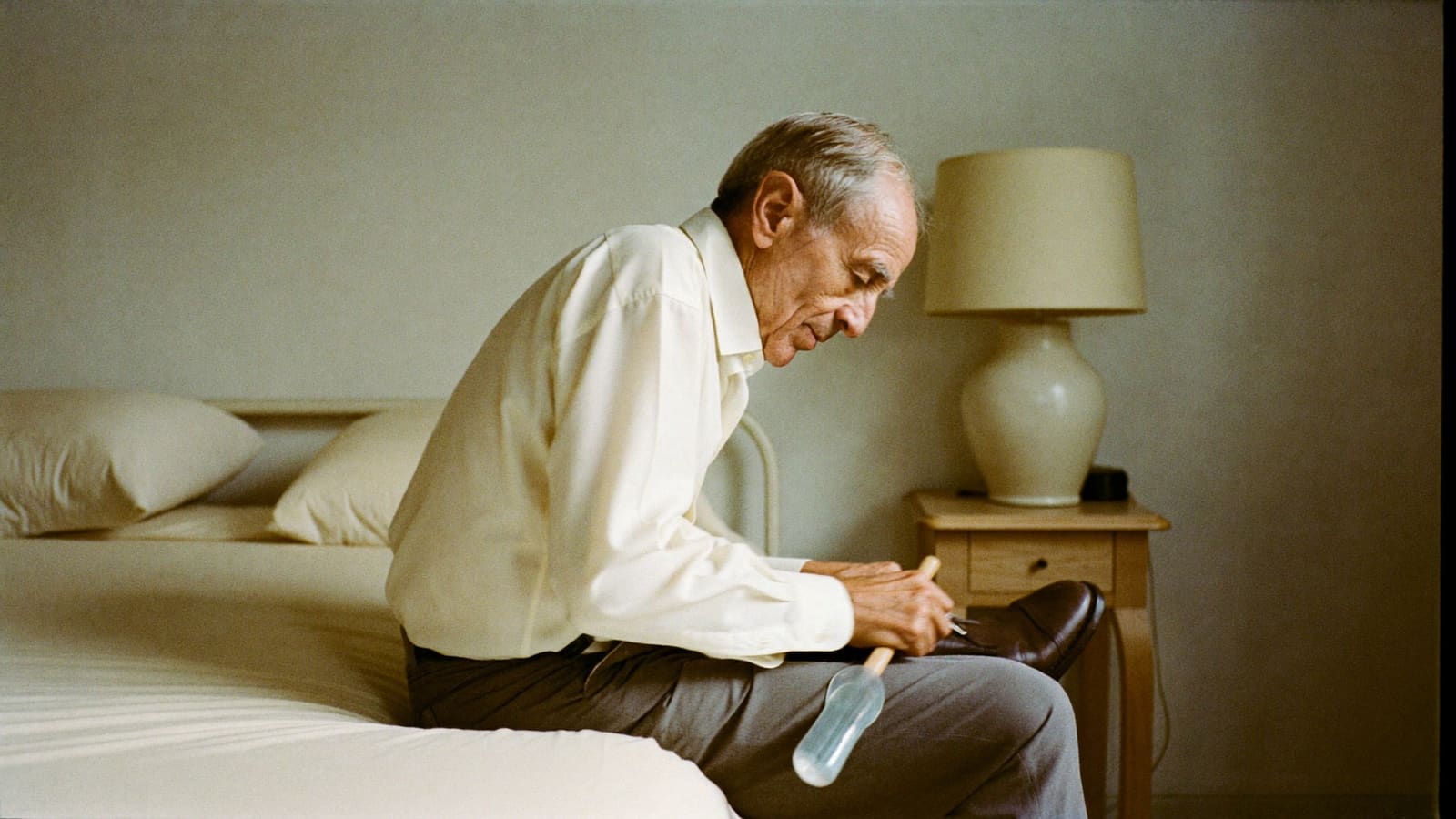
Illustrative. Does not depict Aldera clients or staff.
If you only get one clinician into the house, this is often the one to get.
An occupational therapist is not interested in your diagnosis so much as in your Tuesday: whether you can get out of that bed, into that shower, and make lunch in that kitchen. Then they change the task, the equipment or the building until you can.
This is general information, not advice. Equipment and modifications that carry risk should be prescribed by a clinician who has seen the person and the house.
What the visit involves
Expect an hour or more, and expect to be asked to actually do things rather than describe them.
They will watch you get out of a chair and off the bed. Walk your hallway with you. Go into the bathroom and look at the shower recess, the toilet height and what there is to hold. Look at the kitchen, the bench height, the cupboards you can and cannot reach, the kettle. Walk the path from the bed to the toilet, which is where night falls happen. Look at the back step, the front step and the letterbox.
Then they write a specification. Not “she needs a rail”, but which wall, what length, what height, what type, and whether the wall behind it will hold. That specificity is the entire value, and it is what separates equipment that gets used from equipment that gets funded and ignored.
What they can change
Equipment. Shower stools, rails, bed levers, chair raisers, reachers, jar openers, sock aids, long-handled shoehorns, dressing sticks. Most of it cheap and most of it more effective than people expect. Our equipment and assistive technology list works through the categories.
The building. Rails, lever taps, a level-entry shower, a ramp, widening a doorway, step edging, lighting. Covered in home modifications for ageing in place.
The method. Often the cheapest fix of all. Sitting to dress instead of standing. Showering at a different time of day. Keeping the things you use daily between hip and shoulder height so nothing needs a stool. Doing the hard task first while energy is highest.
Pressure care and seating, where someone is sitting or lying for long periods and skin is at risk.
Cognitive and memory supports, including how a kitchen is set up for someone with dementia so that habit can do the remembering. That sits alongside keeping routines that work when someone has dementia.
When to ask for one
- After a fall, or after a hospital stay that changed what someone can do
- When showering or dressing has become the sticking point
- Before spending money on equipment or building work
- When a new diagnosis will change what the house needs
- When someone is managing but you can see how thin the margin is
- When a carer is doing tasks that equipment could do instead
That last one is underrated. A daughter lifting her father in and out of a chair twice a day is a problem with an equipment answer, and it is her back that will end the arrangement.
Getting the most out of it
Do not tidy up for the visit, and do not perform. The instinct is to present the house at its best and to manage the task better than usual because someone is watching. Both make the assessment useless. Let them see the real thing.
Say what you have stopped doing. People report what they struggle with and forget to mention what they have quietly given up. The abandoned tasks are the most useful information in the visit.
Have the person who will use the equipment present and deciding. Equipment chosen for someone rather than with them is the equipment that does not get used.
Ask what is free or cheap and can happen this week. There is almost always something: moving furniture, changing a height, taking up a rug, a five dollar tap turner.
Ask about the review. Needs change, and a specification written eight months ago may be wrong now.
How it gets paid for
Occupational therapy can be funded through aged care arrangements, and the equipment and modifications an OT specifies sit under a separate funding pool from your ongoing services, which is explained in what the AT-HM scheme pays for. Some people also access OT through Medicare arrangements set up by a GP, or through DVA if they are eligible.
Because the rules depend on your assessment and change over time, ask your GP and your provider what applies to you rather than assuming. Current information is at myagedcare.gov.au.
If you want an OT assessment arranged and the recommendations then followed through day to day, that is part of what we coordinate. Ring us and a person will answer.
Part of our Our services guide.
Not sure where you fit?
Call us and a real person will talk it through, no obligation and no script.
Call 1300 998 928Common questions
What is the difference between an occupational therapist and a physiotherapist?
A physiotherapist works on the body, meaning strength, balance, mobility and pain. An occupational therapist works on the task, meaning whether you can actually shower, dress, cook and move around your own house, and what equipment or changes to the building would make that possible. Many households need both, and they should be working from the same plan.
Why does an occupational therapist need to visit the house?
Because the answers depend entirely on the building. Which side a rail goes on depends on which hand is stronger and where the person actually reaches. Whether a ramp will work depends on the fall of the land and the width of the landing. None of that can be decided from a catalogue or over the phone, and equipment chosen without it is what ends up in the garage.
Do you need an OT to get a grab rail?
For a single simple rail, often not. For anything structural, a ramp, a bathroom conversion or a stairlift, a clinician's assessment is normally required. Even for the simple items an OT is worth having, because rail placement is much less obvious than it looks and a rail in the wrong spot does not get used.
More guides
-
Guides
Drinking enough water in later life
Why older people drink less without noticing, the signs of dehydration to watch for, and small habits that make drinking easier at home.
15 October 2026
-
Guides
Recognising elder abuse and where to get help
The forms elder abuse takes, the quiet signs families and workers notice, and who to contact in NSW if you are worried about an older person.
15 October 2026
-
Guides
Talking to a parent about giving up driving
Signs driving is getting harder, how to raise it without a fight, who can give an independent view, and how to keep a parent getting out once the keys go.
15 October 2026