Guides
Support for you, the family carer
The Aldera team Published 3 September 2026

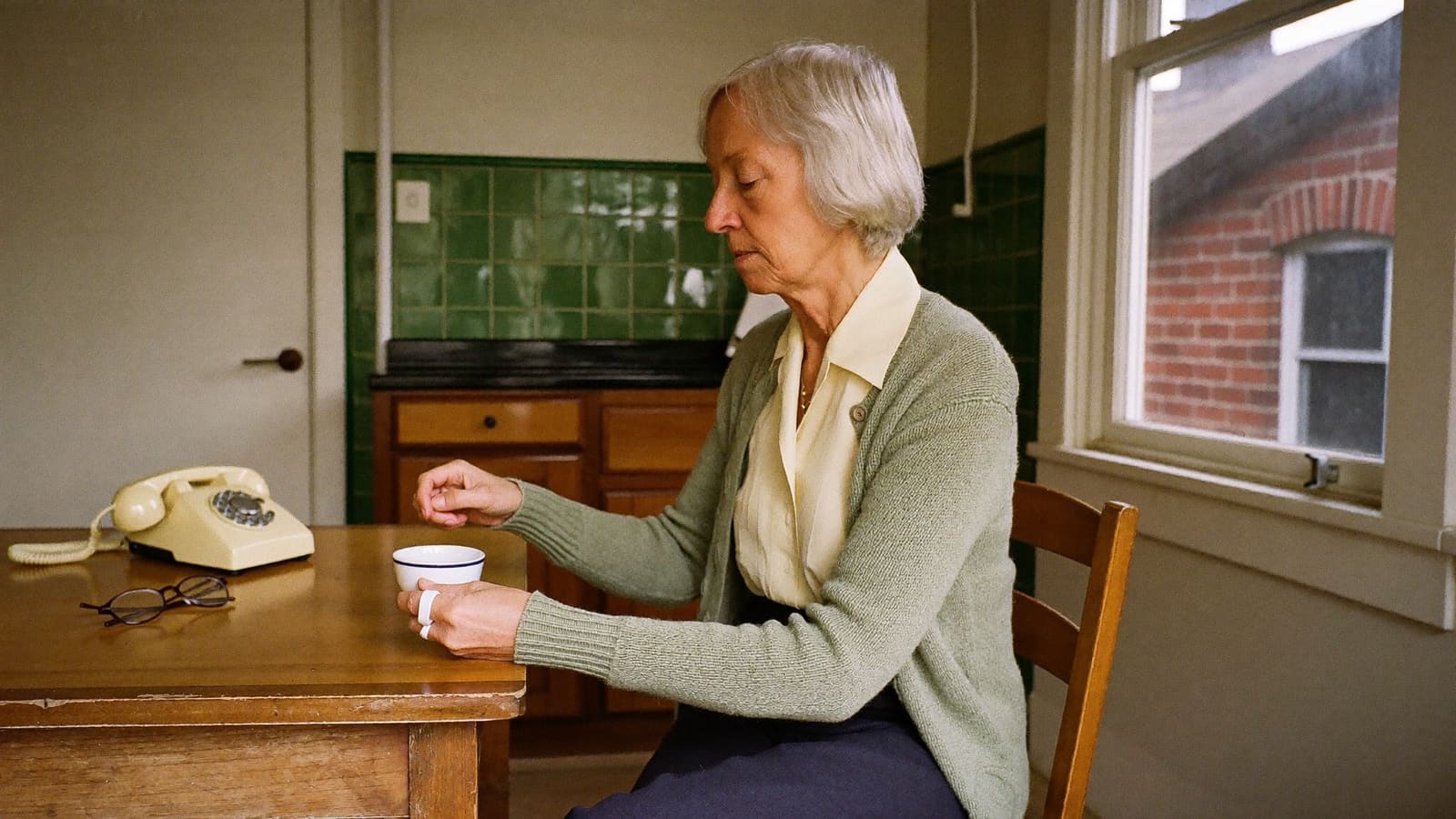
Illustrative. Does not depict Aldera clients or staff.
Nearly all of the aged care system points at the person receiving care. The assessment is about them, the budget is about them, the paperwork arrives in their name. The person quietly holding it together, driving to appointments, taking the 11pm phone calls and doing the mental arithmetic about whether Mum is still safe on her own, is usually not in the record anywhere.
There is support for that person. Most families find out about it about two years later than they should have.
This is general information, not financial or medical advice. Your own eligibility should be confirmed with the services named below.
Carer Gateway is the front door
Carer Gateway is the national service for carers, funded by the Australian Government. It is separate from My Aged Care, and you contact it on your own behalf rather than the person you care for.
What it offers, in plain terms:
- Counselling, in person or by phone, with someone who works with carers all day and will not be surprised by anything you say.
- Coaching, which is more practical than it sounds. Structured sessions on managing the load, setting limits and planning ahead.
- Peer support, meaning other carers. For many people this is the part that helps most, because it is the first conversation where nothing has to be explained from the beginning.
- Skills courses, on things like safe lifting, managing changed behaviour, and the legal and financial side.
- Emergency respite, when something happens to you and care has to continue anyway.
- Practical help in some circumstances, such as a hand with transport or domestic tasks.
You can approach them yourself. You do not need a referral, and the person you care for does not have to be assessed, receiving services, or told.
Ask for the plan before the crisis
The single most useful thing on that list is the one nobody sets up in advance: what happens if you cannot do it.
Not a hypothetical. You get influenza, you throw your back out, your own child is admitted to hospital, your work sends you interstate for four days. Care does not pause while that happens, and a carer arranging cover at 6am on the day is choosing from whatever is left.
Write down now, on one page, who to call and in what order. Emergency respite, the provider’s after-hours number, the two neighbours who have a key, the sibling who can be on a plane. Our one-page plan for arranging care is a good place to keep it.
Planned respite is the other half of this, and it is not a last resort. Respite care explained covers how it works and the options available.
Payments are a separate system
Carer payments and supplements come from Services Australia, not from Carer Gateway and not from aged care. They have their own eligibility rules, their own means testing and their own claim process.
We are not going to print figures here, because they change and because what applies to you depends on your income, your assets, how much care you provide and your circumstances. Check directly with Services Australia and get the answer for your situation rather than the answer someone got in 2023.
Two things worth knowing before you call. Claims take time, so start earlier than feels necessary. And the assessment of how much care you provide usually asks about a typical week in detail, so a fortnight of notes about what you actually do will serve you better than trying to remember on the phone.
Bring yourself into the aged care conversation
When the My Aged Care assessment happens, the assessor will ask about the supports already in place. That means you. Say what you actually do, in specifics and without minimising it.
People routinely undersell this, out of loyalty or pride, and it distorts the result. “I help out a bit” and “I do the shopping, all the medications, three appointments a month, the banking, and I stay over when she is unwell” describe the same person and lead to different care plans.
If several of you are sharing it, get the picture straight between yourselves first. How families share the load and when siblings disagree about care both cover the version of this conversation that goes wrong.
The unglamorous signs to watch in yourself
Carer strain rarely announces itself. It shows up as:
- Sleep that has been broken for months and has stopped registering as unusual.
- Your own appointments being postponed twice.
- Resentment that arrives and then gets swallowed, because it feels shameful.
- Not being able to name the last time you did something purely because you wanted to.
- Doing more than you did six months ago, without ever having decided to.
None of those mean you are failing. They mean the load has grown, which is what loads do. It is worth reading signs it might be time for help at home with yourself in mind rather than only the person you care for.
Where a provider should fit
Good home care should reduce your load, not relocate it. If you are spending your evenings chasing rosters, re-explaining the same history to a new face, or working out why Thursday did not happen, the arrangement is costing you time rather than giving it back.
With us, one named Care Lead is accountable for the plan, so there is one number to call rather than a queue. The One Story means the household’s history is written down once and read by everyone who comes, instead of being retold by you each time. And a small Care Circle means the people who arrive already know the house. That is the whole design, and the reason for it is on the Aldera way.
Being able to be the daughter again, rather than the coordinator, is not a soft benefit. For most families it is the point.
Part of our How funding works guide.
Not sure where you fit?
Call us and a real person will talk it through, no obligation and no script.
Call 1300 998 928Common questions
Do I count as a carer if it is just my mum?
Yes. You do not need a title, a diagnosis or an arrangement with anyone. If you help a family member or friend with daily life because of age, illness or disability, the support that exists for carers is meant for you, including if you work full time and including if you live elsewhere.
Is there any payment for caring for a parent?
There are income support payments and supplements for carers, administered by Services Australia and subject to eligibility rules and means testing. Whether you qualify depends on your circumstances, so check with Services Australia rather than relying on what a friend received. This is general information, not financial advice.
I do not want to take help away from someone who needs it more.
Carer support is not a fixed pot you are taking from. It exists because a carer who stops coping is the single most common reason an older person moves out of home earlier than they needed to. Using it protects the person you care for.
More guides
-

Guides
Drinking enough water in later life
Why older people drink less without noticing, the signs of dehydration to watch for, and small habits that make drinking easier at home.
15 October 2026
-
Guides
Recognising elder abuse and where to get help
The forms elder abuse takes, the quiet signs families and workers notice, and who to contact in NSW if you are worried about an older person.
15 October 2026
-

Guides
Talking to a parent about giving up driving
Signs driving is getting harder, how to raise it without a fight, who can give an independent view, and how to keep a parent getting out once the keys go.
15 October 2026