Guides
Parkinson's disease and help at home
The Aldera team Published 8 September 2026

Illustrative. Does not depict Aldera clients or staff.
Most conditions are described as a slope. Parkinson’s is better described as a tide. The same person who dressed himself unaided at nine can be unable to get out of a chair at eleven, and by two o’clock be walking to the letterbox again. Nothing has deteriorated in between.
That single fact is the thing home support most often gets wrong, and getting it right changes almost everything else.
This is general information, not medical advice. Medication and therapy decisions belong with your GP, neurologist or Parkinson’s nurse.
Build the roster around the medication, not the clock
Parkinson’s medicines run to a tight schedule, often at intervals that ignore normal mealtimes entirely, and a dose given half an hour late can cost a good part of the morning. This is not a preference. It is the most consequential detail in the whole arrangement.
So the sequence is: get the exact schedule in writing from the prescriber, then build support around it.
In practice that usually means a personal care visit lands after a dose has taken effect rather than before, so showering and dressing happen in an on period and take a fraction of the time. It means a worker who understands that the eight o’clock tablet is not flexible. And it means writing down what an off period actually looks like in this person, because a support worker meeting someone mid-off for the first time can easily read it as a sudden decline and ring an ambulance nobody needed.
If several medicines are in play, a home medicines review is worth asking your GP about. It is done at the kitchen table by a pharmacist and it regularly finds timing problems nobody had looked at.
The things that actually cause trouble at home
Freezing. A sudden inability to start walking, usually at a doorway, on a turn, or when both hands are full. Pulling on someone’s arm makes it worse and risks a fall. What works is a cue that changes the movement pattern: counting aloud, a rhythm to step to, stepping sideways first, rocking weight from foot to foot. Which cue works is individual, so it is worth a physiotherapist working it out once and everyone then using the same one. Doorways and thresholds are worth looking at too, and home modifications covers what small changes are usually funded.
Getting out of a chair and out of bed. Often the first real difficulty, and often solved with equipment rather than a person: a firmer chair with arms at the right height, a bed lever, a satin sheet strip to reduce friction. Equipment and assistive technology at home lists what to ask about.
Fatigue that is not tiredness. Parkinson’s fatigue is not fixed by a nap and it is not laziness. It means the day has a budget. Two big tasks in a morning may empty it. Support that helps with the depleting jobs, showering, laundry, cooking, leaves energy for the things worth spending it on.
A voice that gets quieter without the person noticing. Very common, and easy to mistake for hearing loss in the listener or withdrawal in the speaker. It responds well to speech pathology, and the same discipline covers swallowing, which is a genuine safety issue as things progress. See speech pathology and swallowing.
Small handwriting, small steps, a quiet voice. These shrink together, and the therapy answer is the same in each case: consciously make the movement bigger than it feels necessary. Exercise physiologists and physios teach this properly, and exercise physiology and falls explains how it is funded at home.
Constipation, low blood pressure on standing, and disturbed sleep. All three are common, all three are treatable, and all three go unmentioned because they do not feel like Parkinson’s. Raise them at the next appointment. Take what to take to a GP appointment with you.
What support usually looks like
Early on, the useful help is often not personal care at all. It is domestic assistance that clears the depleting jobs, and transport once driving becomes tiring or a specialist appointment is across town.
As dressing and showering slow down, personal care timed to an on period does more for a morning than an extra hour of anything else. Later, if nights become broken, overnight and 24-hour care is the arrangement to ask about rather than trying to stretch a day roster over a night.
Through all of it, the family carer is doing the work nobody counts. Support for the family carer covers what is available to them in their own right, and respite exists to be used before it is desperately needed.
Why worker consistency matters more here than almost anywhere
With most conditions, a new face is an inconvenience. With Parkinson’s it is a safety issue.
A worker who knows this person knows that the shuffle at eleven is an off period and not a stroke. She knows the cue that unsticks a freeze at the bathroom door. She knows the quiet voice is the illness and leans in rather than talking over it. She knows that the tablet at eight is not negotiable. A stranger has to learn all of that live, in a bathroom, with someone who cannot easily explain it in the moment.
That is the whole reason Aldera builds a small named Care Circle rather than sending whoever is free, and why the One Story record holds the cues, the timings and the off-period picture in one place instead of in one worker’s memory. Parkinson’s Australia has good condition-specific information, and My Aged Care is the front door for arranging assessed support.
If Parkinson’s is changing what a day at home needs, get in touch and we will work out the timings with you.
Part of our Our services guide.
Not sure where you fit?
Call us and a real person will talk it through, no obligation and no script.
Call 1300 998 928Common questions
Why does the same task take five minutes one day and half an hour the next?
Because Parkinson's fluctuates through the day, largely with medication. In an on period movement is close to normal. In an off period the same person can be slow, stiff and unable to start a movement at all. Nothing has gone backwards. It means support has to be timed around the medication rather than around a convenient hour.
Why is medication timing treated so strictly with Parkinson's?
Parkinson's medicines work on a narrow schedule and a dose given late can cost hours of good movement. Doses are often set at intervals that do not line up with normal mealtimes or shift times, and they are among the most frequently missed medicines when someone is admitted to hospital. Ask your GP or specialist for the exact schedule in writing and build the roster around it, not the other way around.
What is freezing, and what helps in the moment?
Freezing is a sudden inability to start or continue walking, most often at doorways, on turns, or when carrying something. Pulling on the person makes it worse. What usually helps is a cue to shift the movement pattern: counting out loud, a rhythm to step to, stepping sideways first, or shifting weight from foot to foot. Ask a physiotherapist to work out which cue suits the person, because it is individual.
More guides
-
Guides
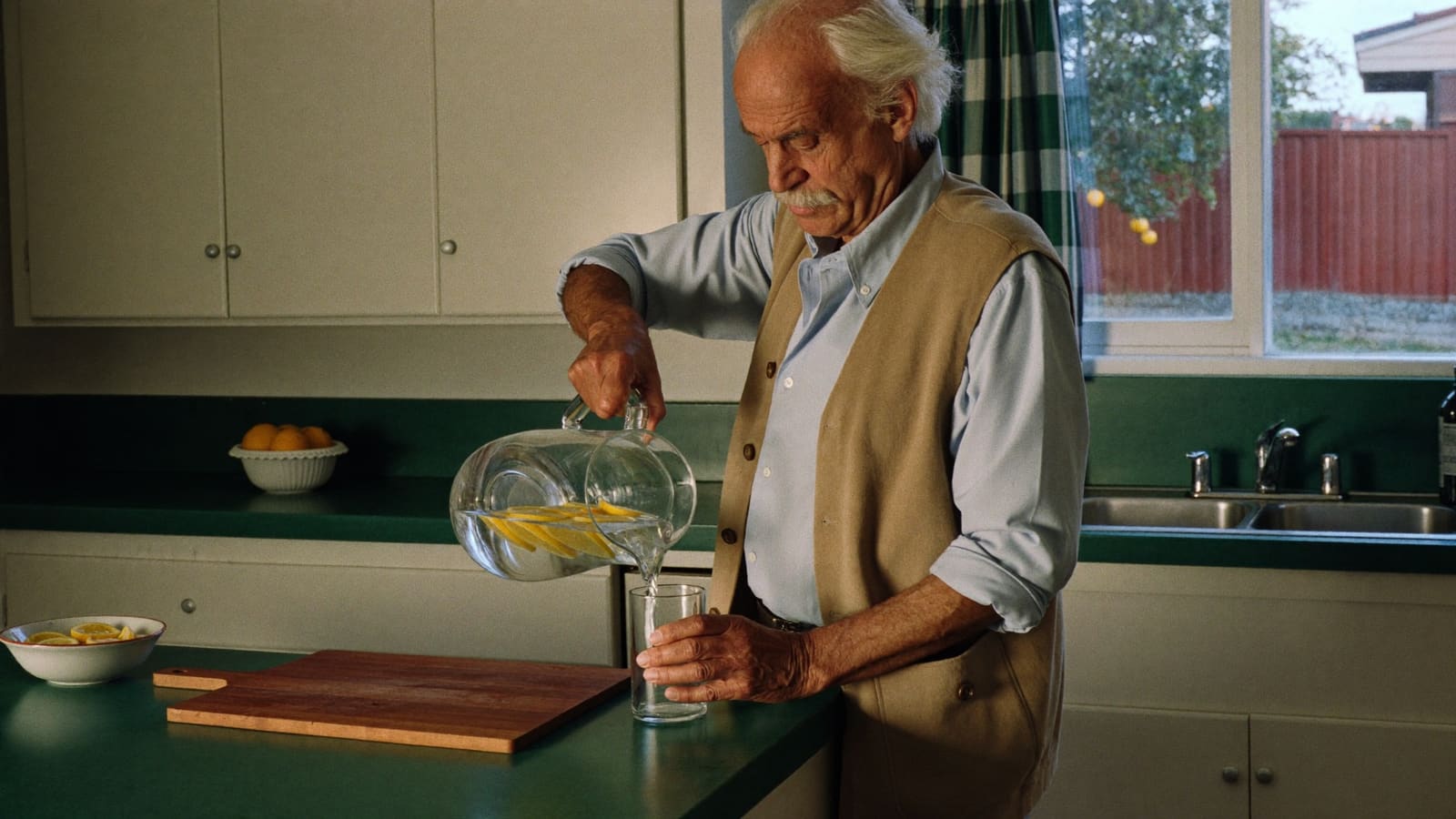
Drinking enough water in later life
Why older people drink less without noticing, the signs of dehydration to watch for, and small habits that make drinking easier at home.
15 October 2026
-
Guides
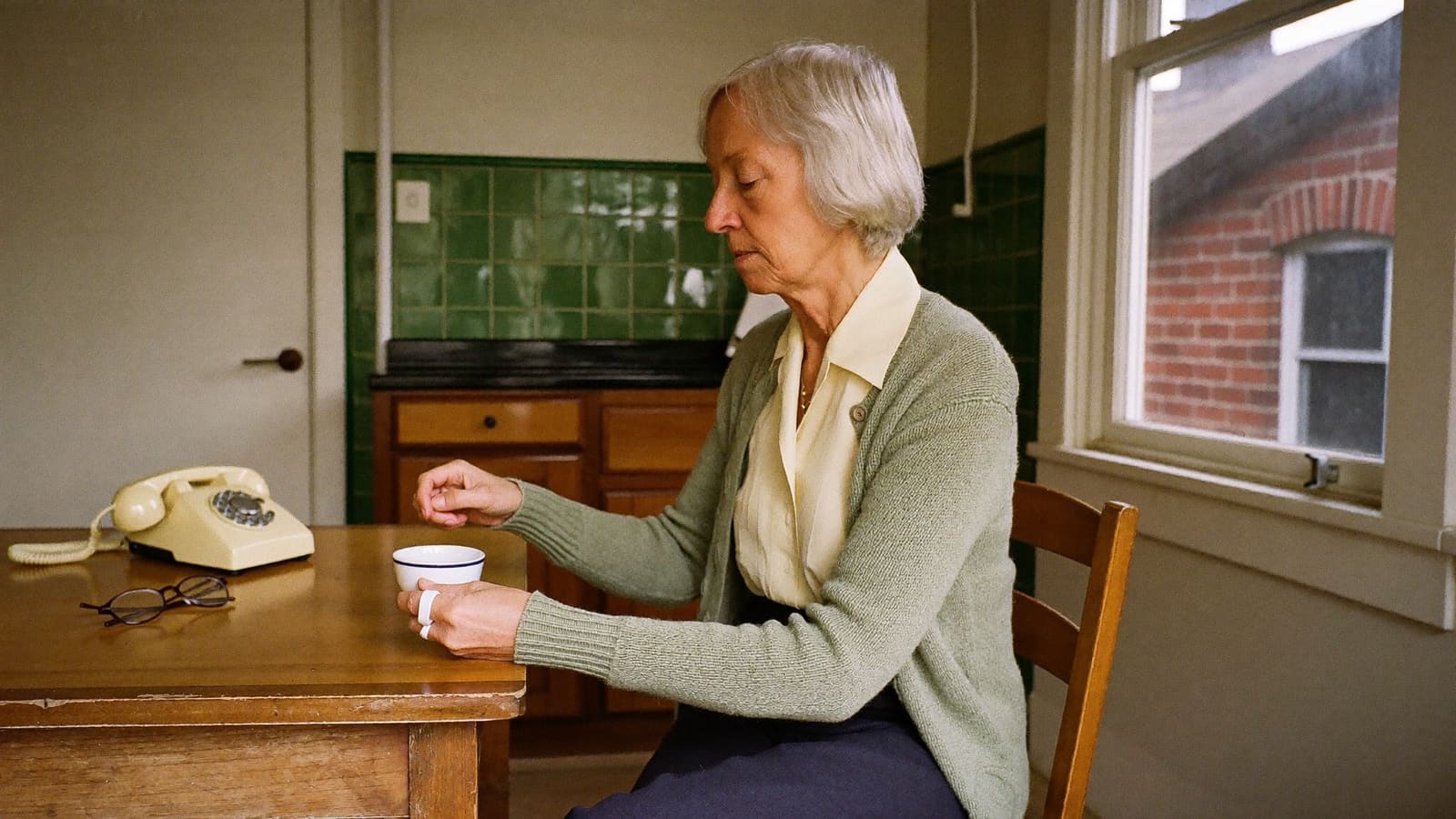
Recognising elder abuse and where to get help
The forms elder abuse takes, the quiet signs families and workers notice, and who to contact in NSW if you are worried about an older person.
15 October 2026
-

Guides
Talking to a parent about giving up driving
Signs driving is getting harder, how to raise it without a fight, who can give an independent view, and how to keep a parent getting out once the keys go.
15 October 2026